Baldanzi Sigrid, Bevilacqua Francesca, Lorio Rita, Volpi Leda, Simoncini Costanza, Petrucci Antonio, Cosottini Mirco, Massimetti Gabriele, Tognoni Gloria, Ricci Giulia, Angelini Corrado, Siciliano Gabriele
Department of Clinical and Experimental Medicine, Neurological Unit, University of Pisa, Via Roma 67, 56126, Pisa, Italy.
IRCCS San Camillo Venezia, Via Alberoni 70, Venezia, 30126, Italy.
Orphanet J Rare Dis. 2016 Apr 4;11:34. doi: 10.1186/s13023-016-0417-z.
Myotonic dystrophy type 1 (Steinert's disease or DM1), the most common form of autosomal dominant muscular dystrophy in adults, is a multisystem disorder, affecting skeletal muscle as well as eyes, heart, gastrointestinal tract, endocrine system, and central nervous system, finally responsible of increasing disabilities and secondary social consequences. To date, DM1-related brain involvement represents a challenging field of research. It is well known that DM1 patients frequently present neuropsychological disturbances and psychiatric comorbidities among which reduced awareness of disease burden and its progression, also defined as anosognosia, is common in clinical practice, this leading to secondary misattribution of symptoms, delay in timely diagnostic procedures and low compliance to treatment.
Here we present an observational cross sectional study in which disease-related cognitive dysfunctions and quality of life were assessed by a protocol finally designed to estimate the prevalence of disease awareness in a sample of 65 adult-onset DM1 patients.
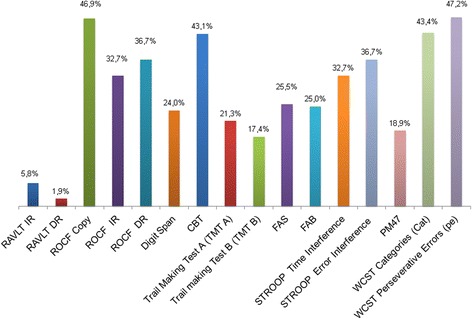
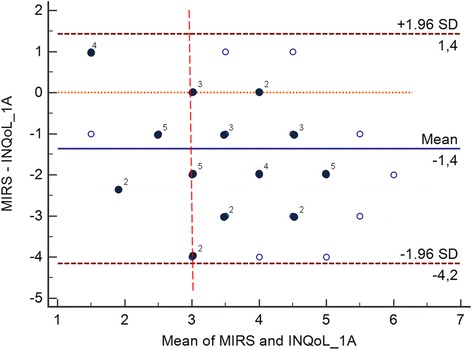
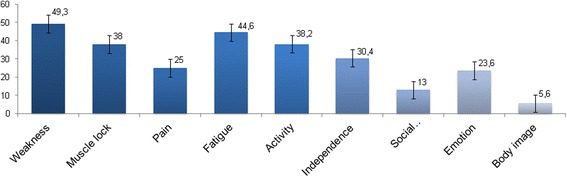
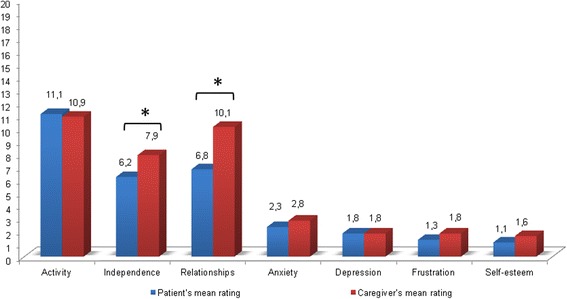
Our analysis showed that in DM1 patients several cognitive functions, including executive and mnesic domains with visuo-spatial involvement, were affected. The assessment of anosognosia revealed that a high percentage (51.6%) of DM1 subjects was disease unaware. The reduced illness awareness occurs across different physical and life domains, and it appears more prominent in Activities and Independence domains investigated by the Individualized Neuromuscular Quality Of Life (INQoL) questionnaire. Moreover, the unawareness resulted significantly related (at p <0.05 and p < 0.01) to the performance failure in cognitive tests, specifically in the domains of visuo-spatial memory, cognitive flexibility and conceptualization.
The obtained data confirm, by a systematic analysis, what's the common clinical perceiving of disease unawareness in Steinert's disease, this related to the already known cognitive-behavioural impairment of frontal type in affected patients. We believe that a deep knowledge of this aspect will be useful for medical practice in the management of patients with DM1, also for guidance in occupational and social interventions, definition of outcome measures and in preparation of trial readiness.
1型强直性肌营养不良症(斯坦纳特病或DM1)是成人中最常见的常染色体显性遗传性肌营养不良症,是一种多系统疾病,会影响骨骼肌以及眼睛、心脏、胃肠道、内分泌系统和中枢神经系统,最终导致残疾增加和继发社会后果。迄今为止,DM1相关的脑部受累仍是一个具有挑战性的研究领域。众所周知,DM1患者经常出现神经心理障碍和精神共病,其中对疾病负担及其进展的认识降低,即疾病感缺失,在临床实践中很常见,这会导致症状的继发错误归因、及时诊断程序的延迟以及治疗依从性低。
在此,我们展示了一项观察性横断面研究,其中通过一项最终设计用于估计65例成人起病的DM1患者样本中疾病知晓率的方案,对与疾病相关的认知功能障碍和生活质量进行了评估。
我们的分析表明,在DM1患者中,包括执行和记忆领域以及视觉空间参与的多种认知功能受到影响。疾病感缺失的评估显示,高比例(51.6%)的DM1受试者未意识到自己患病。疾病意识降低发生在不同的身体和生活领域,并且在个性化神经肌肉生活质量(INQoL)问卷所调查的活动和独立领域中显得更为突出。此外,这种无意识与认知测试中的表现失败显著相关(p<0.05和p<0.01),特别是在视觉空间记忆、认知灵活性和概念化领域。
通过系统分析获得的数据证实了斯坦纳特病中疾病无意识的常见临床认知,这与受影响患者中已知的额叶型认知行为损害有关。我们认为,深入了解这一方面将有助于DM1患者管理中的医疗实践,也有助于职业和社会干预的指导、结局指标的定义以及试验准备的制定。