Institute of Environmental Medicine, Karolinska Institutet, Nobels väg 13, 17177, Stockholm, Sweden.
ICON plc, Stockholm, Sweden.
J Neurol. 2019 Apr;266(4):998-1006. doi: 10.1007/s00415-019-09228-w. Epub 2019 Feb 20.
The objective of this cross-sectional, observational study was to investigate the disease burden of myotonic dystrophy type 1 (DM1), a disabling muscle disorder.
Adults with DM1 were recruited as part of the PhenoDM1 study from Newcastle University (Newcastle upon Tyne, UK). Disease burden data were recorded through the Individualized Neuromuscular Quality of Life (INQoL) questionnaire. Results were examined by sex and clinical variables [e.g. the six-minute walk test (6MWT), the Mini Mental State Examination, and estimated progenitor and modal allele CTG repeat length].
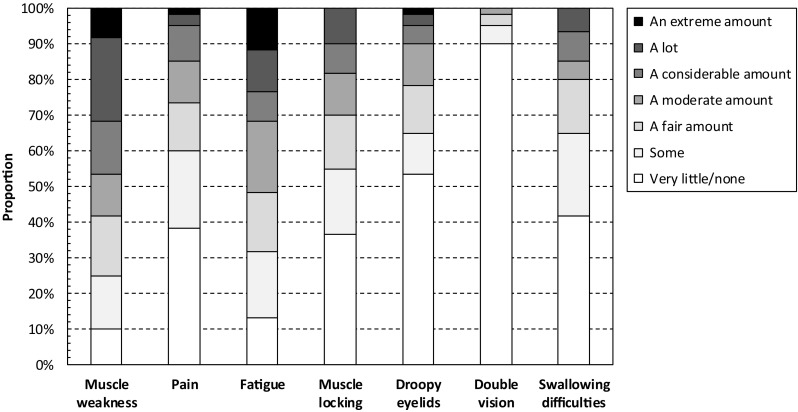
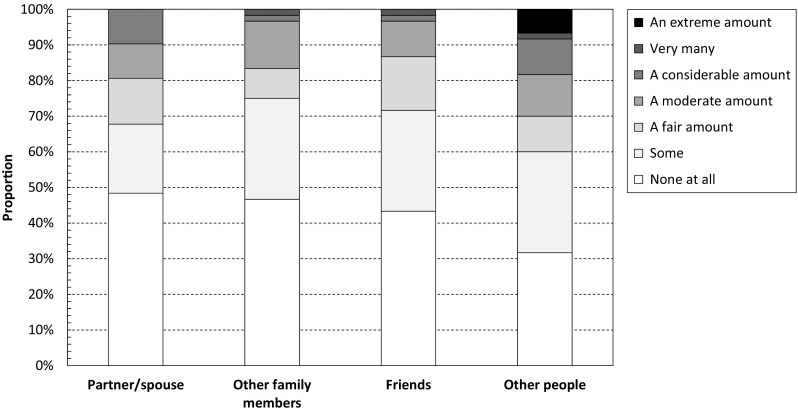
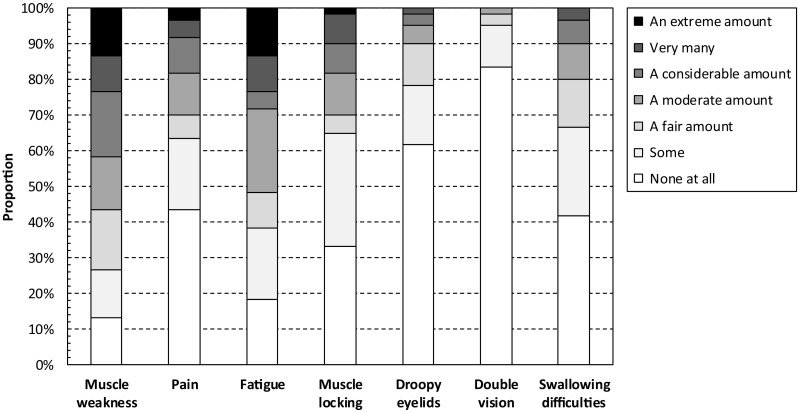
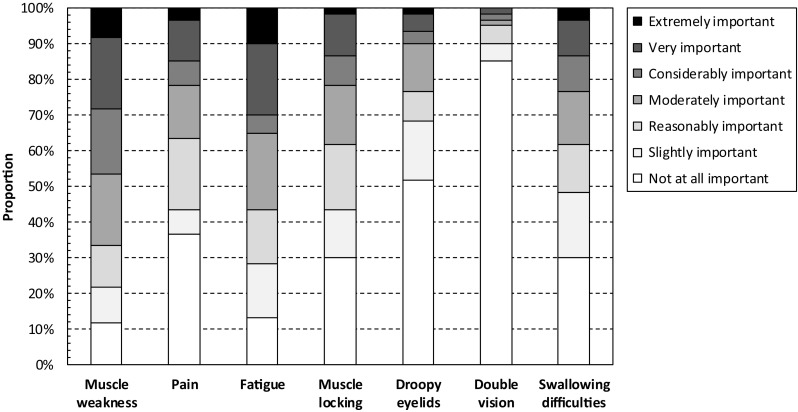
Our sample consisted of 60 patients with DM1 (mean age: 45 years; 45% female). Muscle weakness and fatigue constituted the two most common disease manifestations, reported by 93% and 90% of patients, respectively, followed by muscle locking (73%). Most patients (> 55%) reported feeling anxious/worried, depressed, frustrated, and/or having low confidence/self-esteem, 23% and 33% indicated substantial impairment of daily and leisure activities, respectively, and 47% did not work as a consequence of the disease. Estimated progenitor CTG length corrected by age correlated surprisingly well with INQoL scores. Differences by sex were generally minor.
We show that DM1 is associated with a substantial disease burden resulting in impairment across many different domains of patients' lives, emphasizing the need for a holistic approach to medical management. Our results also show that the INQoL records relevant information about patients with DM1, but that further investigation of the psychometric properties of the scale is needed for meaningful interpretation of instrument scores.
本横断面观察性研究的目的是调查 1 型肌强直性营养不良(DM1)这种使人丧失活动能力的肌肉疾病的疾病负担。
DM1 成年患者作为来自英国纽卡斯尔大学(纽卡斯尔)的 PhenoDM1 研究的一部分被招募入组。疾病负担数据通过个体化神经肌肉生活质量(INQoL)问卷进行记录。结果按性别和临床变量(例如 6 分钟步行试验(6MWT)、简易精神状态检查和估计前体和模态等位基因 CTG 重复长度)进行了检查。
我们的样本包括 60 名 DM1 患者(平均年龄:45 岁;45%为女性)。肌肉无力和疲劳构成了两种最常见的疾病表现,分别有 93%和 90%的患者报告,其次是肌肉锁定(73%)。大多数患者(>55%)报告感到焦虑/担忧、抑郁、沮丧和/或自信心低/自尊心低,23%和 33%分别表示日常生活和休闲活动受到了实质性的影响,47%的患者因疾病而无法工作。按年龄校正的估计前体 CTG 长度与 INQoL 评分惊人地相关。性别的差异通常较小。
我们表明,DM1 与相当大的疾病负担相关,导致患者生活的许多不同领域受损,强调需要采取整体方法进行医疗管理。我们的研究结果还表明,INQoL 记录了 DM1 患者的相关信息,但需要进一步研究该量表的心理测量学特性,以便对量表评分进行有意义的解释。