Saraya Takeshi
Department of Respiratory Medicine, Kyorin University School of Medicine Mitaka, Japan.
Front Microbiol. 2016 Mar 22;7:364. doi: 10.3389/fmicb.2016.00364. eCollection 2016.
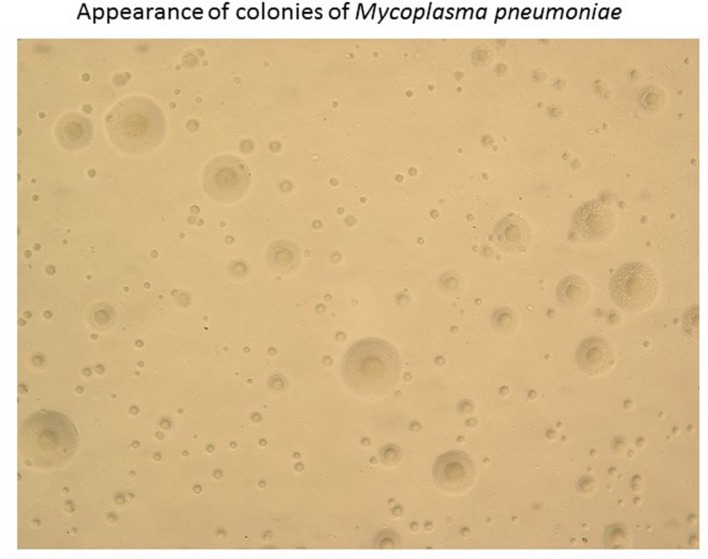
In the United States in the 1930s, although the pathogen was not known, atypical pneumonia was clinically distinguished from pneumococcal pneumonia by its resistance to sulfonamides. Reimann (1938) reported seven patients with an unusual form of tracheo bronchopneumonia and severe constitutional symptoms. He believed the clinical picture of this disease differed from that of the disease caused by influenza viruses or known bacteria and instead suspected "primary atypical pneumonia." For many years, the responsible infectious agent was tentatively classified as a filterable virus that could pass through a Seitz filter to remove bacteria and was reported to be a psittacosis-like or new virus. After that, Eaton et al. (1942, 1944, 1945) identified an agent that was the principal cause of primary atypical pneumonia using cotton rats, hamsters, and chick embryos. Eaton et al. (1942, 1944, 1945) did not perform an inoculation study in human volunteers. During the 1940s, there were three groups engaged in discovering the etiology of the primary atypical pneumonia. (1) Commission on Acute Respiratory Diseases Diseases directed by John Dingle, (2) Dr. Monroe Eaton's group, the Virus Research Laboratory of the California State Public Health Department, (3) The Hospital of the Rockefeller Institute for Medical Research directed by Horsfall. During 1940s, the members of the Commission on Acute Respiratory Diseases concluded that the bacteria-free filtrates obtained from the patients, presumably containing a virus, could induce primary atypical pneumonia in human volunteers via Pinehurst trials. During 1950s, serological approaches for identification of the Eaton agent developed such as Fluorescent-Stainable Antibody, and at the beginning of the1960s, the Eaton agent successfully grew in media, and finally accepted as a cause of primary atypical pneumonia. Thus, technical difficulties with visualizing the agent and failure to recognize the full significance of the Pinehurst transmission experiments resulted in a lapse of 20 years before acceptance of the Eaton agent as Mycoplasma pneumoniae. This review describes the history of M. pneumoniae pneumonia with a special focus on the recognition between the 1930 and 1960s of the Eaton agent as the infectious cause.
20世纪30年代在美国,尽管病原体尚不明确,但非典型肺炎在临床上因其对磺胺类药物耐药而与肺炎球菌肺炎相区分。赖曼(1938年)报告了7例患有特殊形式气管支气管炎肺炎并伴有严重全身症状的患者。他认为这种疾病的临床表现与由流感病毒或已知细菌引起的疾病不同,而是怀疑为“原发性非典型肺炎”。多年来,致病病原体暂时被归类为一种可滤过性病毒,它能通过赛茨滤器以去除细菌,据报道类似鹦鹉热病毒或新型病毒。此后,伊顿等人(1942年、1944年、1945年)利用棉鼠、仓鼠和鸡胚鉴定出一种病原体,它是原发性非典型肺炎的主要病因。伊顿等人(1942年、1944年、1945年)未在人类志愿者身上进行接种研究。在20世纪40年代,有三个团队致力于探寻原发性非典型肺炎的病因。(1)由约翰·丁格尔领导的急性呼吸道疾病委员会;(2)门罗·伊顿博士的团队,加利福尼亚州公共卫生部病毒研究实验室;(3)由霍斯福尔领导的洛克菲勒医学研究所医院。在20世纪40年代,急性呼吸道疾病委员会的成员得出结论,从患者身上获取的不含细菌的滤液(可能含有一种病毒)可通过派恩赫斯特试验在人类志愿者中诱发原发性非典型肺炎。在20世纪50年代,用于鉴定伊顿病原体的血清学方法得到了发展,如荧光可染抗体法,在20世纪60年代初,伊顿病原体在培养基中成功培养,最终被确认为原发性非典型肺炎的病因。因此,病原体可视化方面的技术难题以及未能认识到派恩赫斯特传播实验的全部意义,导致在伊顿病原体被确认为肺炎支原体之前过去了20年。本综述描述了肺炎支原体肺炎的历史,特别关注20世纪30年代至60年代期间伊顿病原体被确认为感染病因的过程。