
中风患者进行飞轮阻力训练后的肌肉、功能和认知适应性:一项前瞻性随机对照试验。
Muscle, functional and cognitive adaptations after flywheel resistance training in stroke patients: a pilot randomized controlled trial.
作者信息
Fernandez-Gonzalo Rodrigo, Fernandez-Gonzalo Sol, Turon Marc, Prieto Cristina, Tesch Per A, García-Carreira Maria del Carmen
机构信息
Department of Physiology and Pharmacology, Karolinska Institutet, Stockholm, Sweden.
Research Department, Parc Taulí Hospital Universitari. Institut d'Investigació i Innovació Parc Taulí I3PT. Universitat Autònoma de Barcelona, Sabadell, Spain.
出版信息
J Neuroeng Rehabil. 2016 Apr 6;13:37. doi: 10.1186/s12984-016-0144-7.
BACKGROUND
Resistance exercise (RE) improves neuromuscular function and physical performance after stroke. Yet, the effects of RE emphasizing eccentric (ECC; lengthening) actions on muscle hypertrophy and cognitive function in stroke patients are currently unknown. Thus, this study explored the effects of ECC-overload RE training on skeletal muscle size and function, and cognitive performance in individuals with stroke.
METHODS
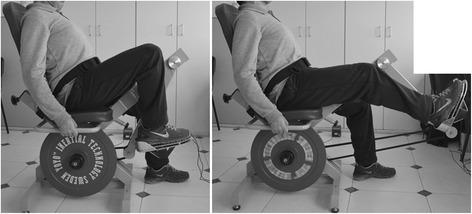
Thirty-two individuals with chronic stroke (≥6 months post-stroke) were randomly assigned into a training group (TG; n = 16) performing ECC-overload flywheel RE of the more-affected lower limb (12 weeks, 2 times/week; 4 sets of 7 maximal closed-chain knee extensions; <2 min of contractile activity per session) or a control group (CG; n = 16), maintaining daily routines. Before and after the intervention, quadriceps femoris volume, maximal force and power for each leg were assessed, and functional and dual task performance, and cognitive functions were measured.
RESULTS
Quadriceps femoris volume of the more-affected leg increased by 9.4 % in TG. Muscle power of the more-affected, trained (48.2 %), and the less-affected, untrained limb (28.1 %) increased after training. TG showed enhanced balance (8.9 %), gait performance (10.6 %), dual-task performance, executive functions (working memory, verbal fluency tasks), attention, and speed of information processing. CG showed no changes.
CONCLUSION
ECC-overload flywheel resistance exercise comprising 4 min of contractile activity per week offers a powerful aid to regain muscle mass and function, and functional performance in individuals with stroke. While the current intervention improved cognitive functions, the cause-effect relationship, if any, with the concomitant neuromuscular adaptations remains to be explored.
TRIAL REGISTRATION
Clinical Trials NCT02120846.
背景
抗阻运动(RE)可改善卒中后的神经肌肉功能和身体机能。然而,目前尚不清楚强调离心(ECC;拉长)动作的抗阻运动对卒中患者肌肉肥大和认知功能的影响。因此,本研究探讨了ECC超负荷抗阻训练对卒中个体骨骼肌大小、功能及认知表现的影响。
方法
32例慢性卒中患者(卒中后≥6个月)被随机分为训练组(TG;n = 16),进行受影响较重下肢的ECC超负荷飞轮抗阻运动(12周,每周2次;4组,每组7次最大闭链膝关节伸展;每次训练收缩活动<2分钟)或对照组(CG;n = 16),维持日常活动。干预前后,评估双侧股四头肌体积、每条腿的最大力量和功率,并测量功能和双任务表现以及认知功能。
结果
TG中受影响较重腿的股四头肌体积增加了9.4%。训练后,受影响较重的训练腿(48.2%)和受影响较轻的未训练腿(28.1%)的肌肉力量增加。TG的平衡能力(8.9%)、步态表现(10.6%)、双任务表现、执行功能(工作记忆、语言流畅性任务)、注意力和信息处理速度均有所提高。CG无变化。
结论
每周进行4分钟收缩活动的ECC超负荷飞轮抗阻运动有助于卒中个体恢复肌肉质量和功能以及功能表现。虽然目前的干预改善了认知功能,但与伴随的神经肌肉适应之间的因果关系(如果存在)仍有待探索。
试验注册
临床试验NCT02120846。



 Zotero 插件