Fernandez-Gonzalo Rodrigo, Nissemark Catarina, Åslund Birgitta, Tesch Per A, Sojka Peter
Department of Physiology & Pharmacology, Karolinska Institutet, 171 77 Stockholm, Sweden.
J Neuroeng Rehabil. 2014 Oct 30;11:150. doi: 10.1186/1743-0003-11-150.
Resistance exercise comprising eccentric (ECC) muscle actions enhances muscle strength and function to aid stroke patients in conducting daily tasks. The purpose of this study was to assess the efficacy of a novel ECC-overload flywheel resistance exercise paradigm to induce muscle and functional performance adaptations in chronic stroke patients.
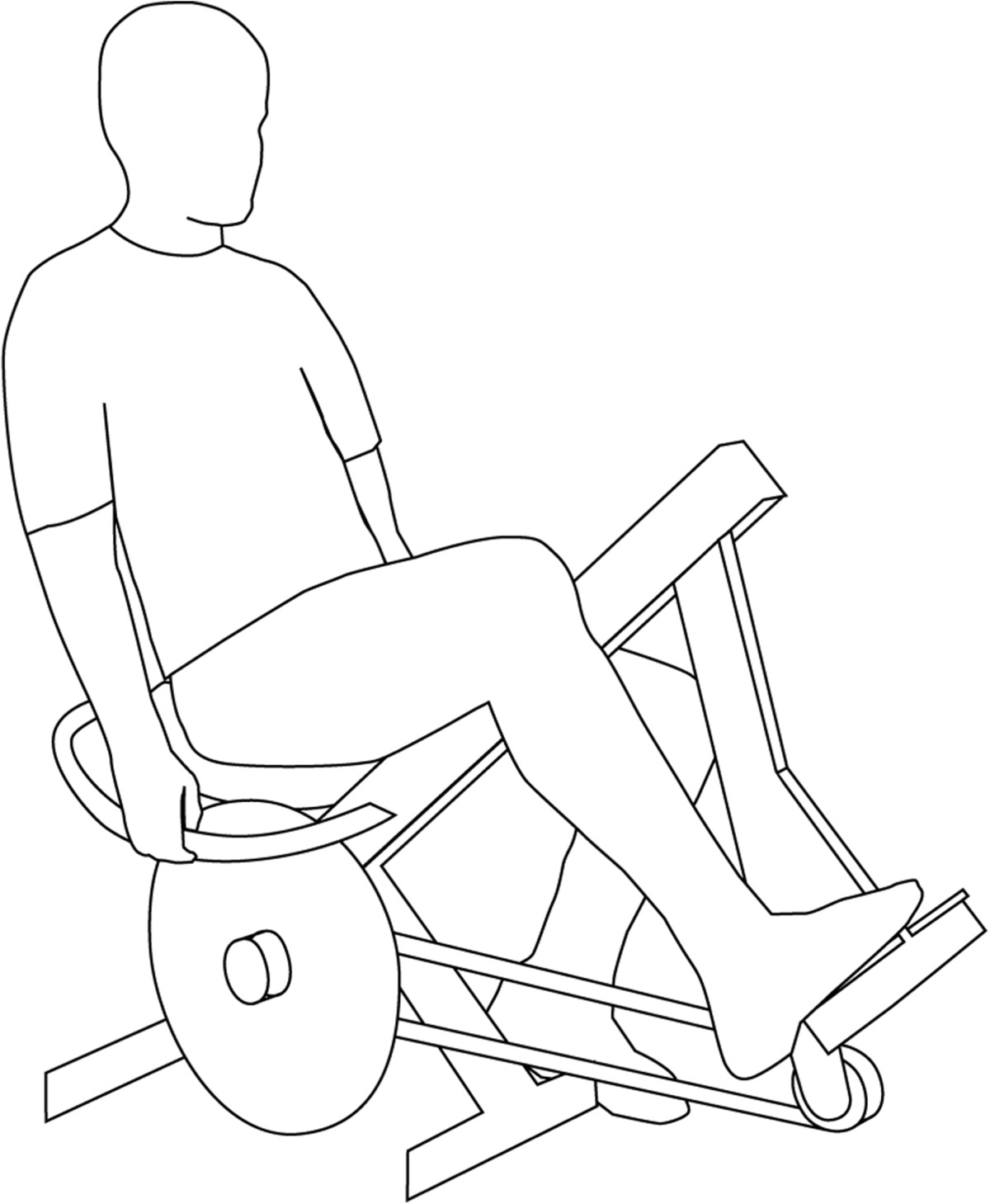
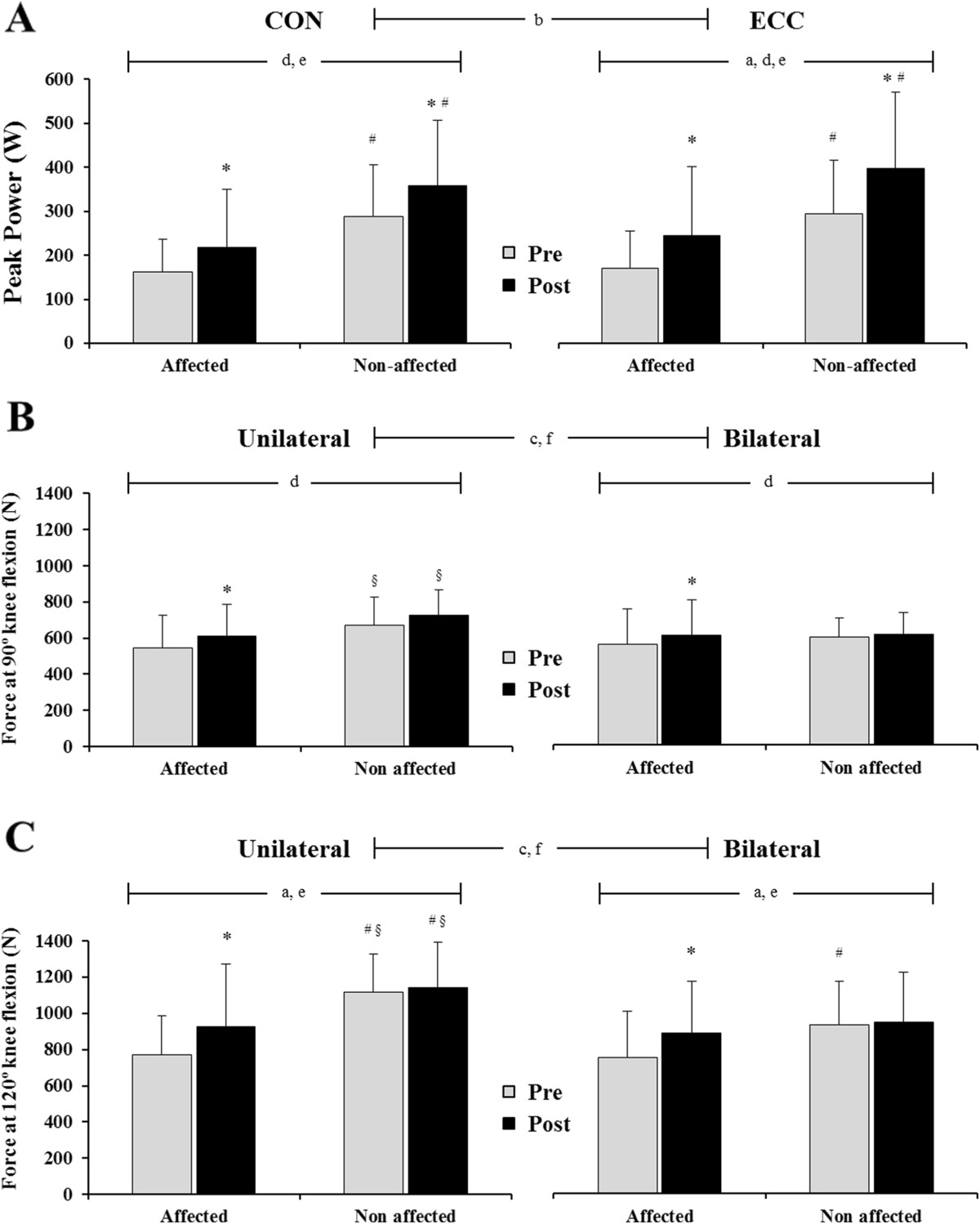
Twelve patients (~8 years after stroke onset) performed 4 sets of 7 coupled concentric (CON) and ECC actions using the affected limb on a flywheel leg press (LP) device twice weekly for 8 weeks. Maximal CON and ECC isokinetic torque at 30, 60 and 90°/s, isometric knee extension and LP force, and CON and ECC peak power in LP were measured before and after training. Balance (Berg Balance Scale, BBS), gait (6-Min Walk test, 6MWT; Timed-Up-and-Go, TUG), functional performance (30-s Chair-Stand Test, 30CST), spasticity (Modified Ashworth Scale) and perceived participation (Stroke Impact Scale, SIS) were also determined.
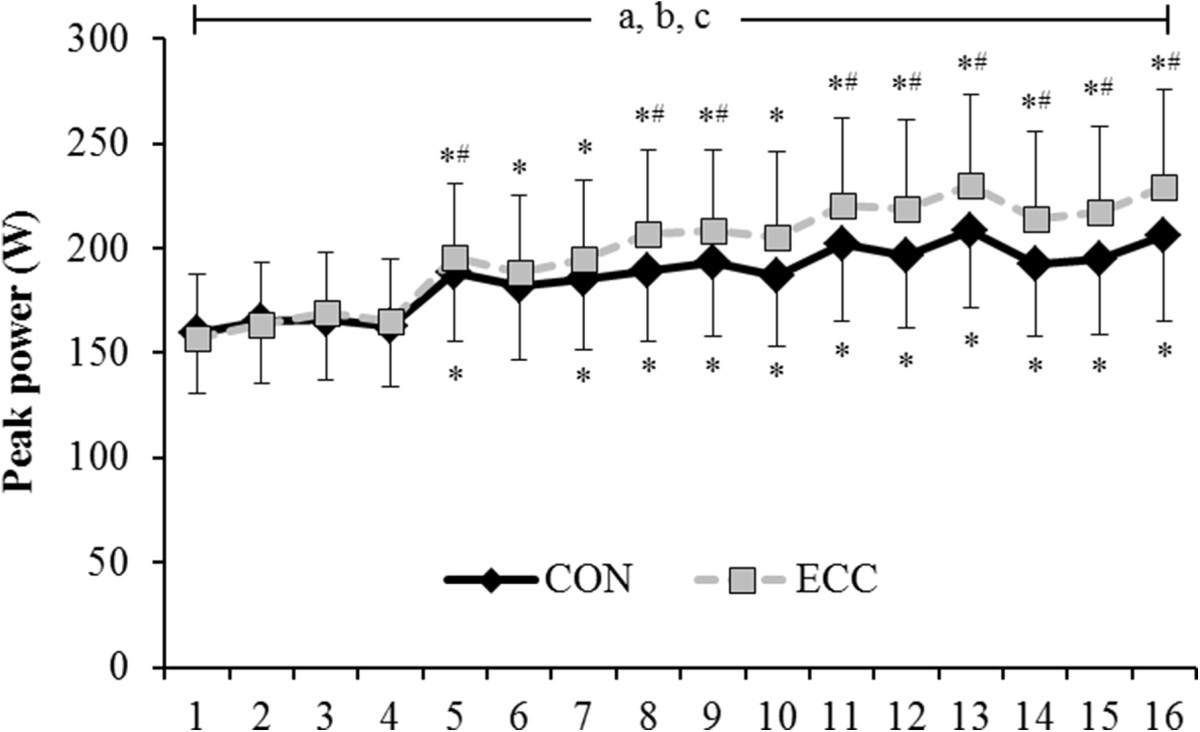
CON and ECC peak power increased in both the trained affected (34 and 44%; P < 0.01), and the untrained, non-affected leg (25 and 34%; P < 0.02). Power gains were greater (P = 0.008) for ECC than CON actions. ECC isokinetic torque at 60 and 90°/s increased in the affected leg (P < 0.04). The increase in isometric LP force for the trained, affected leg across tests ranged 10-20% (P < 0.05). BBS (P = 0.004), TUG (P = 0.018), 30CST (P = 0.024) and SIS (P = 0.058) scores improved after training. 6MWT and spasticity remained unchanged.
This novel, short-term ECC-overload flywheel RE training regime emerges as a valid, safe and viable method to improve muscle function, balance, gait and functional performance in men and women suffering from chronic stroke.
包含离心(ECC)肌肉动作的抗阻训练可增强肌肉力量和功能,以帮助中风患者完成日常任务。本研究的目的是评估一种新型的ECC超负荷飞轮抗阻训练模式对慢性中风患者肌肉和功能表现适应性的影响。
12名患者(中风发病约8年后)每周两次,使用患侧肢体在飞轮腿举(LP)设备上进行4组,每组7次的向心(CON)和ECC联合动作,共进行8周。在训练前后测量30、60和90°/s时的最大CON和ECC等速扭矩、等长膝关节伸展和LP力量,以及LP中的CON和ECC峰值功率。还测定了平衡(伯格平衡量表,BBS)、步态(6分钟步行试验,6MWT;起立行走试验,TUG)、功能表现(30秒椅子站立试验,30CST)、痉挛(改良Ashworth量表)和自我感知参与度(中风影响量表,SIS)。
训练后的患侧(分别增加34%和44%;P<0.01)以及未训练的非患侧腿部(分别增加25%和34%;P<0.02)的CON和ECC峰值功率均增加。ECC动作的功率增加幅度大于CON动作(P=0.008)。患侧腿部在60和90°/s时的ECC等速扭矩增加(P<0.04)。训练后的患侧腿部在各测试中等长LP力量的增加幅度为10%-至20%(P<0.05)。训练后BBS(P=0.004)、TUG(P=0.018)、30CST(P=0.024)和SIS(P=0.058)评分有所改善。6MWT和痉挛情况保持不变。
这种新型的短期ECC超负荷飞轮抗阻训练方案是一种有效、安全且可行的方法,可改善慢性中风患者的肌肉功能、平衡、步态和功能表现。