Sheakley Maria L, Gilbert Gregory E, Leighton Kim, Hall Maureen, Callender Diana, Pederson David
Department of Biomedical Sciences, Western Michigan University Homer Stryker M.D. School of Medicine, Kalamazoo, MI, USA;
Center for Teaching and Learning, Ross University School of Medicine, Commonwealth of Dominica, West Indies.
Med Educ Online. 2016 Apr 7;21:30744. doi: 10.3402/meo.v21.30744. eCollection 2016.
The United States Medical Licensing Examination (USMLE) is increasing clinical content on the Step 1 exam; thus, inclusion of clinical applications within the basic science curriculum is crucial. Including simulation activities during basic science years bridges the knowledge gap between basic science content and clinical application.
To evaluate the effects of a one-off, 1-hour cardiovascular simulation intervention on a summative assessment after adjusting for relevant demographic and academic predictors.
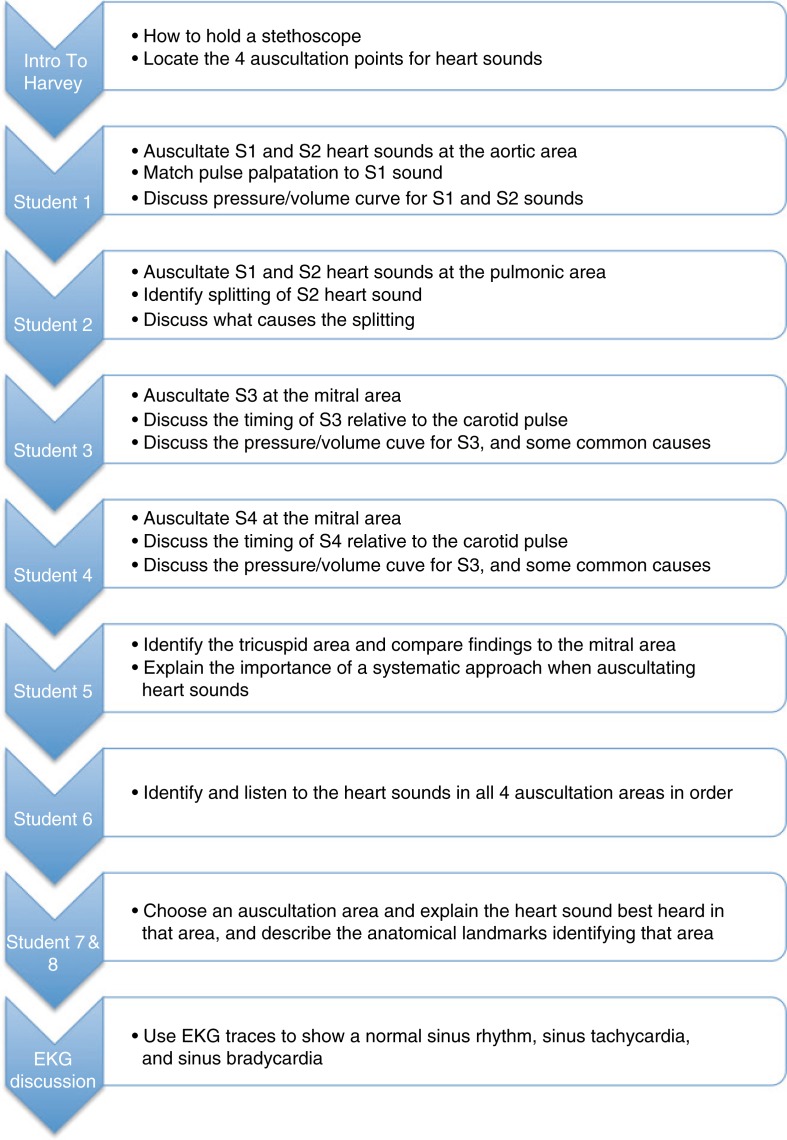
This study was a non-randomized study using historical controls to evaluate curricular change. The control group received lecture (n l=515) and the intervention group received lecture plus a simulation exercise (n l+s=1,066). Assessment included summative exam questions (n=4) that were scored as pass/fail (≥75%). USMLE-style assessment questions were identical for both cohorts. Descriptive statistics for variables are presented and odds of passage calculated using logistic regression.
Undergraduate grade point ratio, MCAT-BS, MCAT-PS, age, attendance at an academic review program, and gender were significant predictors of summative exam passage. Students receiving the intervention were significantly more likely to pass the summative exam than students receiving lecture only (P=0.0003).
Simulation plus lecture increases short-term understanding as tested by a written exam. A longitudinal study is needed to assess the effect of a brief simulation intervention on long-term retention of clinical concepts in a basic science curriculum.
美国医师执照考试(USMLE)正在增加其第一步考试中的临床内容;因此,在基础科学课程中纳入临床应用至关重要。在基础科学学习阶段开展模拟活动,能够弥合基础科学内容与临床应用之间的知识差距。
在对相关人口统计学和学术预测因素进行调整后,评估一次性1小时的心血管模拟干预对总结性评估的影响。
本研究是一项使用历史对照来评估课程变化的非随机研究。对照组接受讲座(n l = 515),干预组接受讲座加模拟练习(n l + s = 1,066)。评估包括总结性考试问题(n = 4),这些问题按通过/未通过(≥75%)评分。两个队列的USMLE风格评估问题相同。给出变量的描述性统计数据,并使用逻辑回归计算通过的几率。
本科平均绩点、医学院入学考试生物科学部分成绩、医学院入学考试物理科学部分成绩、年龄、参加学术复习课程情况和性别是总结性考试通过的显著预测因素。接受干预的学生比仅接受讲座的学生通过总结性考试的可能性显著更高(P = 0.0003)。
模拟加讲座能够提高笔试所测试的短期理解能力。需要进行一项纵向研究,以评估简短模拟干预对基础科学课程中临床概念长期记忆的影响。