Wei Fang, Gan Jin, Wang Chong, Zhu Caixia, Cai Qiliang
ShengYushou Center of Cell Biology and Immunology, School of Life Sciences and Biotechnology, Shanghai Jiao Tong University Shanghai, China.
MOE & MOH Key Laboratory of Medical Molecular Virology, School of Basic Medicine, Shanghai Medical College, Fudan University Shanghai, China.
Front Microbiol. 2016 Mar 30;7:334. doi: 10.3389/fmicb.2016.00334. eCollection 2016.
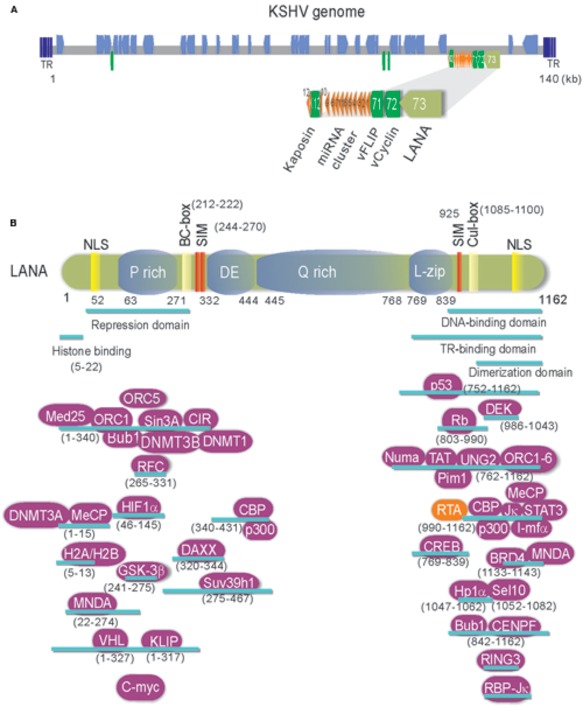
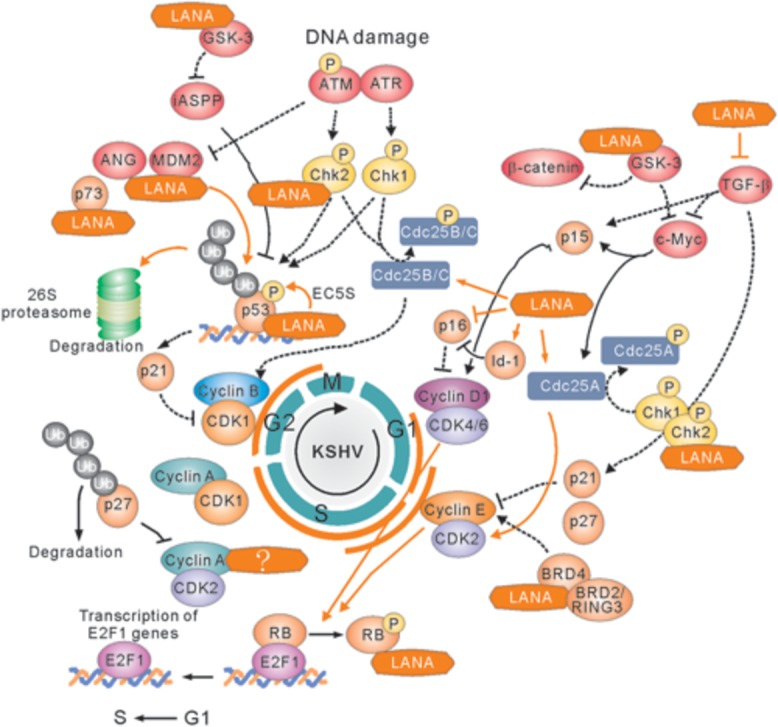
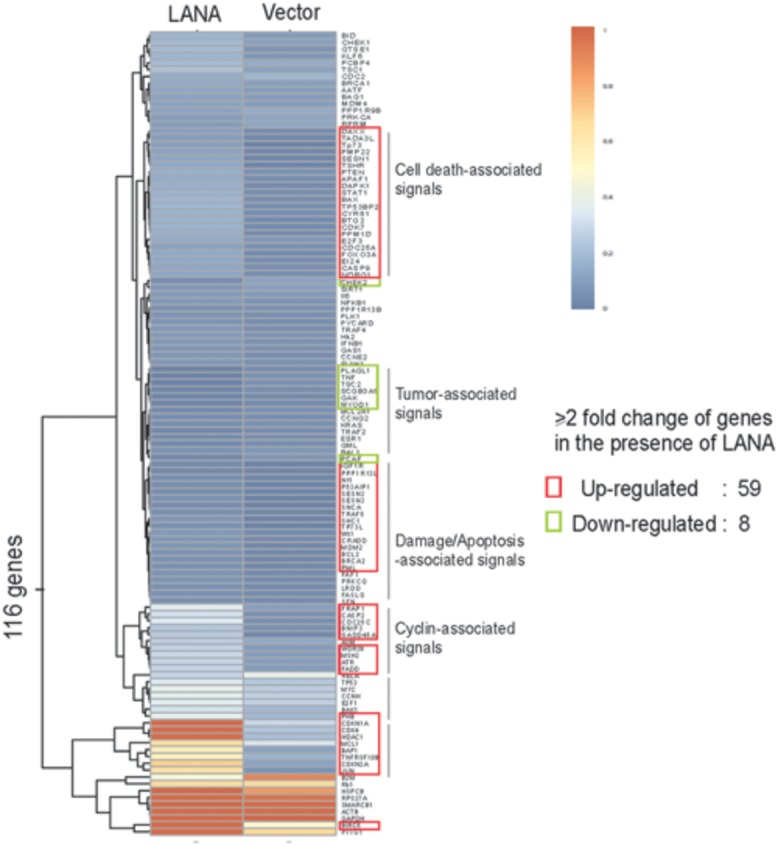
Manipulation of cell cycle is a commonly employed strategy of viruses for achieving a favorable cellular environment during infection. Kaposi's sarcoma-associated herpesvirus (KSHV), the primary etiological agent of several human malignancies including Kaposi's sarcoma, and primary effusion lymphoma, encodes several oncoproteins that deregulate normal physiology of cell cycle machinery to persist with endothelial cells and B cells and subsequently establish a latent infection. During latency, only a small subset of viral proteins is expressed. Latency-associated nuclear antigen (LANA) is one of the latent antigens shown to be essential for transformation of endothelial cells in vitro. It has been well demonstrated that LANA is critical for the maintenance of latency, episome DNA replication, segregation and gene transcription. In this review, we summarize recent studies and address how LANA functions as an oncoprotein to steer host cell cycle-related events including proliferation and apoptosis by interacting with various cellular and viral factors, and highlight the potential therapeutic strategy of disrupting LANA-dependent signaling as targets in KSHV-associated cancers.
操纵细胞周期是病毒在感染期间实现有利细胞环境的常用策略。卡波西肉瘤相关疱疹病毒(KSHV)是包括卡波西肉瘤和原发性渗出性淋巴瘤在内的几种人类恶性肿瘤的主要病原体,它编码多种癌蛋白,这些癌蛋白会破坏细胞周期机制的正常生理功能,从而与内皮细胞和B细胞持续存在,并随后建立潜伏感染。在潜伏期间,仅表达一小部分病毒蛋白。潜伏相关核抗原(LANA)是已证明对体外内皮细胞转化至关重要的潜伏抗原之一。充分证明,LANA对于维持潜伏、附加体DNA复制、分离和基因转录至关重要。在这篇综述中,我们总结了最近的研究,并探讨了LANA如何作为一种癌蛋白,通过与各种细胞和病毒因子相互作用来引导宿主细胞周期相关事件,包括增殖和凋亡,并强调了破坏LANA依赖性信号传导作为KSHV相关癌症靶点的潜在治疗策略。