Wang Weidong, Xin Huahong, Wang Mingle, Ma Qingping, Wang Le, Kaleri Najeeb A, Wang Yuhua, Li Xinghui
College of Horticulture, Nanjing Agricultural University Nanjing, China.
Front Plant Sci. 2016 Mar 30;7:385. doi: 10.3389/fpls.2016.00385. eCollection 2016.
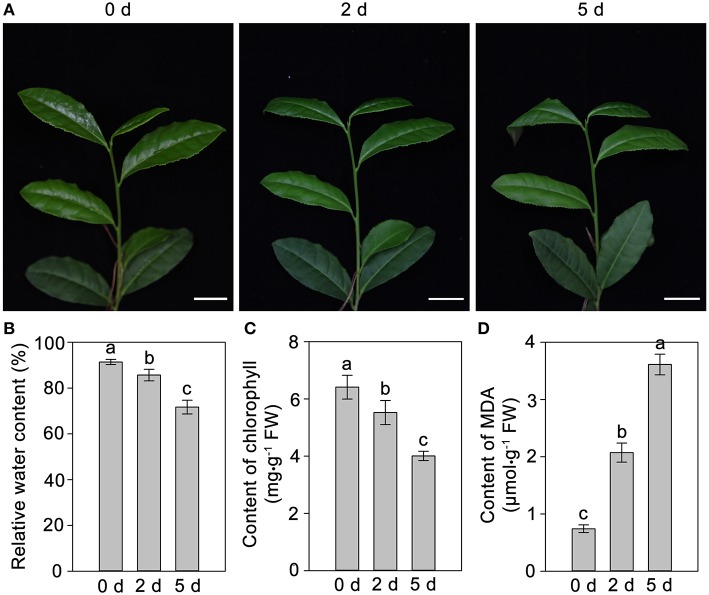
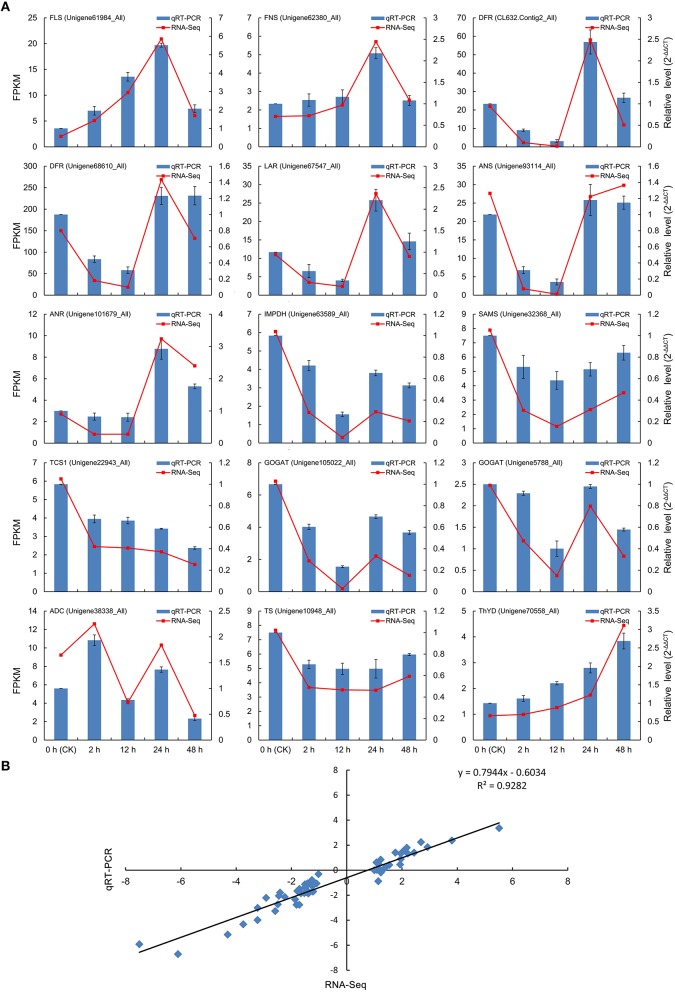
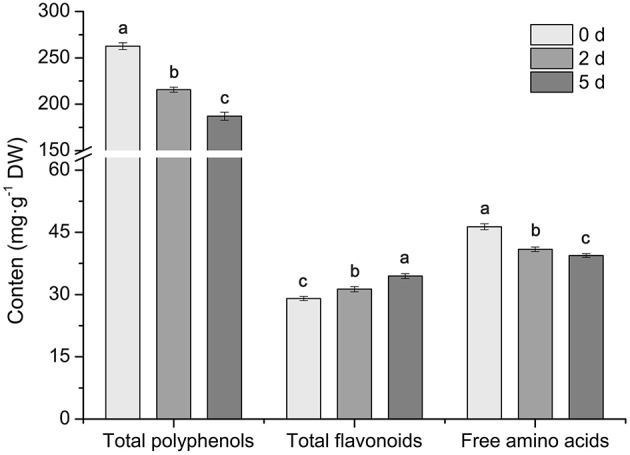
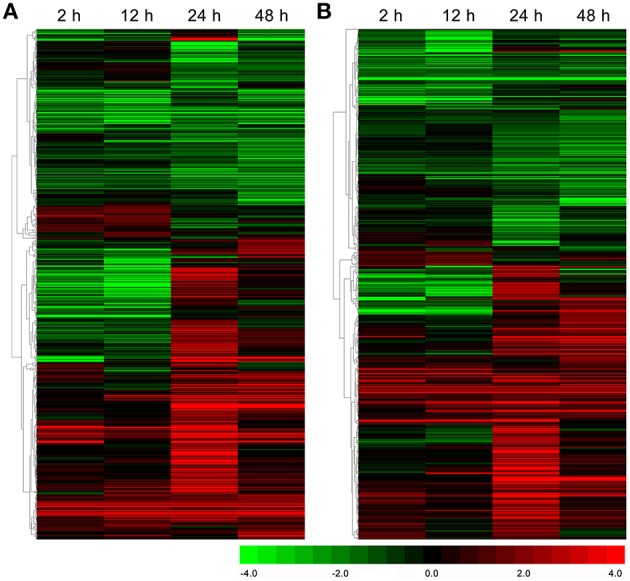
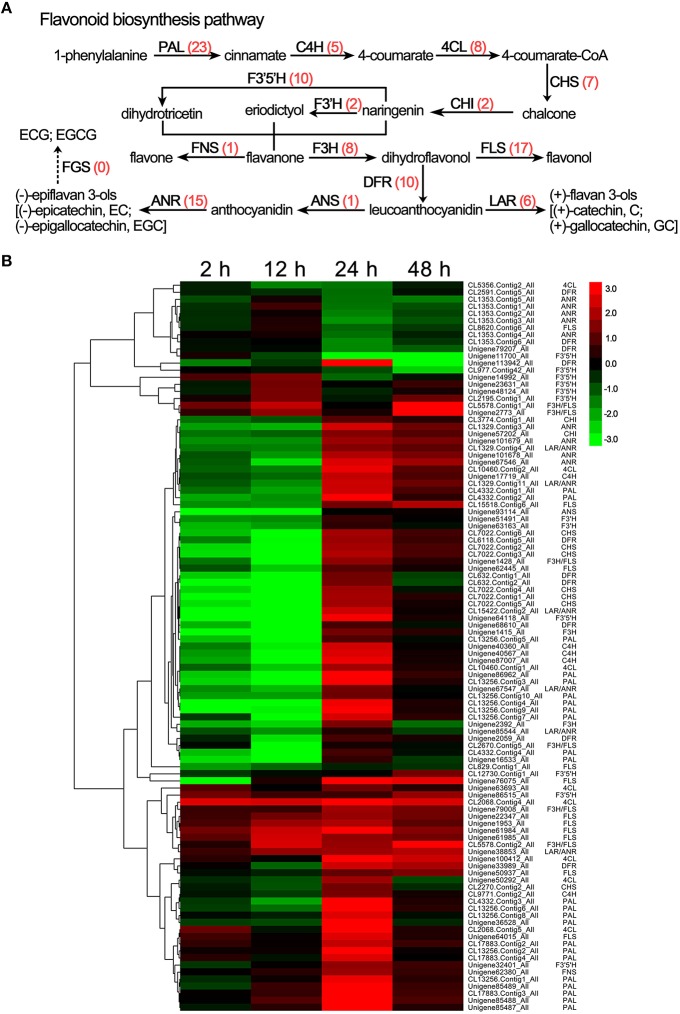
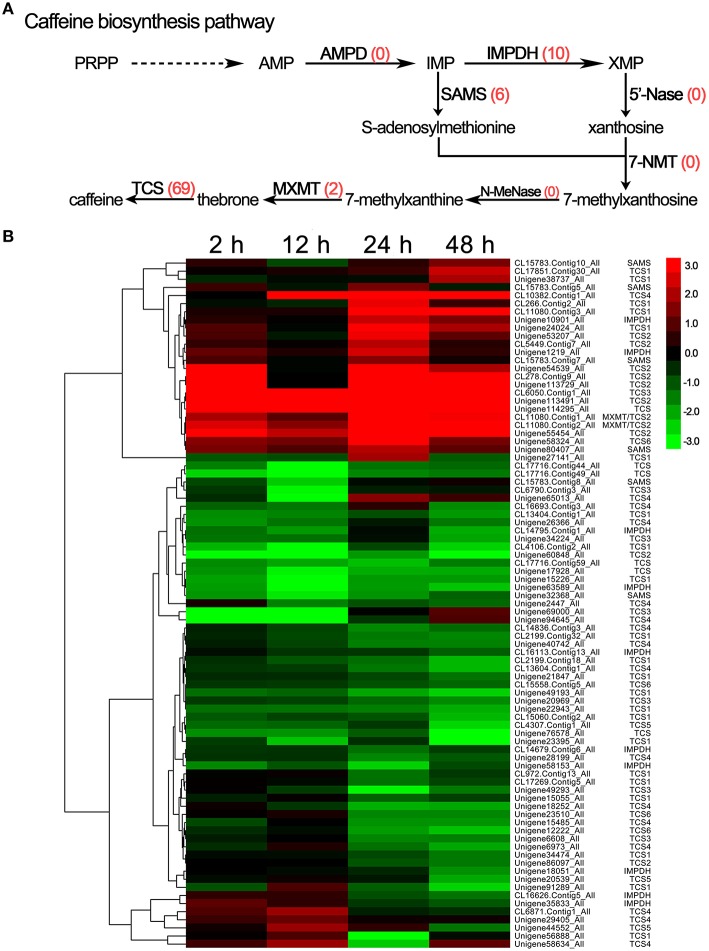
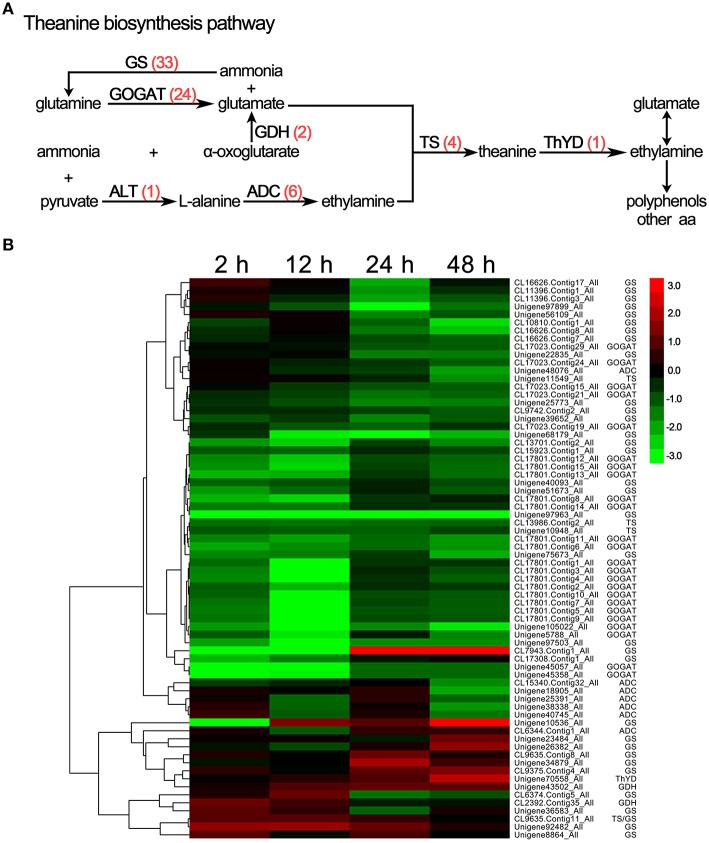
The tea plant [Camellia sinensis (L.) O. Kuntze] is an important commercial crop rich in bioactive ingredients, especially catechins, caffeine, theanine and other free amino acids, which the quality of tea leaves depends on. Drought is the most important environmental stress affecting the yield and quality of this plant. In this study, the effects of drought stress on the phenotype, physiological characteristics and major bioactive ingredients accumulation of C. sinensis leaves were examined, and the results indicated that drought stress resulted in dehydration and wilt of the leaves, and significant decrease in the total polyphenols and free amino acids and increase in the total flavonoids. In addition, HPLC analysis showed that the catechins, caffeine, theanine and some free amino acids in C. sinensis leaves were significantly reduced in response to drought stress, implying that drought stress severely decreased the quality of C. sinensis leaves. Furthermore, differentially expressed genes (DEGs) related to amino acid metabolism and secondary metabolism were identified and quantified in C. sinensis leaves under drought stress using high-throughput Illumina RNA-Seq technology, especially the key regulatory genes of the catechins, caffeine, and theanine biosynthesis pathways. The expression levels of key regulatory genes were consistent with the results from the HPLC analysis, which indicate a potential molecular mechanism for the above results. Taken together, these data provide further insights into the mechanisms underlying the change in the quality of C. sinensis leaves under environmental stress, which involve changes in the accumulation of major bioactive ingredients, especially catechins, caffeine, theanine and other free amino acids.
茶树[Camellia sinensis (L.) O. Kuntze]是一种重要的经济作物,富含生物活性成分,尤其是儿茶素、咖啡因、茶氨酸和其他游离氨基酸,而茶叶的品质取决于这些成分。干旱是影响该植物产量和品质的最重要环境胁迫因素。在本研究中,考察了干旱胁迫对茶树叶片表型、生理特性和主要生物活性成分积累的影响,结果表明干旱胁迫导致叶片脱水和萎蔫,总多酚和游离氨基酸显著减少,总黄酮增加。此外,高效液相色谱分析表明,干旱胁迫下茶树叶片中的儿茶素、咖啡因、茶氨酸和一些游离氨基酸显著减少,这意味着干旱胁迫严重降低了茶树叶片的品质。此外,利用高通量Illumina RNA-Seq技术对干旱胁迫下茶树叶片中与氨基酸代谢和次生代谢相关的差异表达基因(DEGs)进行了鉴定和定量,特别是儿茶素、咖啡因和茶氨酸生物合成途径的关键调控基因。关键调控基因的表达水平与高效液相色谱分析结果一致,这表明了上述结果的潜在分子机制。综上所述,这些数据为环境胁迫下茶树叶片品质变化的潜在机制提供了进一步的见解,这些机制涉及主要生物活性成分,特别是儿茶素、咖啡因、茶氨酸和其他游离氨基酸积累的变化。