Mygind Naja Dam, Michelsen Marie Mide, Pena Adam, Frestad Daria, Dose Nynne, Aziz Ahmed, Faber Rebekka, Høst Nis, Gustafsson Ida, Hansen Peter Riis, Hansen Henrik Steen, Bairey Merz C Noel, Kastrup Jens, Prescott Eva
Department of Cardiology, Bispebjerg Hospital, University of Copenhagen, Denmark Department of Cardiology, Rigshospitalet, University of Copenhagen, Denmark
Department of Cardiology, Bispebjerg Hospital, University of Copenhagen, Denmark.
J Am Heart Assoc. 2016 Mar 15;5(3):e003064. doi: 10.1161/JAHA.115.003064.
The majority of women with angina-like chest pain have no obstructive coronary artery disease when evaluated with coronary angiography. Coronary microvascular dysfunction is a possible explanation and associated with a poor prognosis. This study evaluated the prevalence of coronary microvascular dysfunction and the association with symptoms, cardiovascular risk factors, psychosocial factors, and results from diagnostic stress testing.
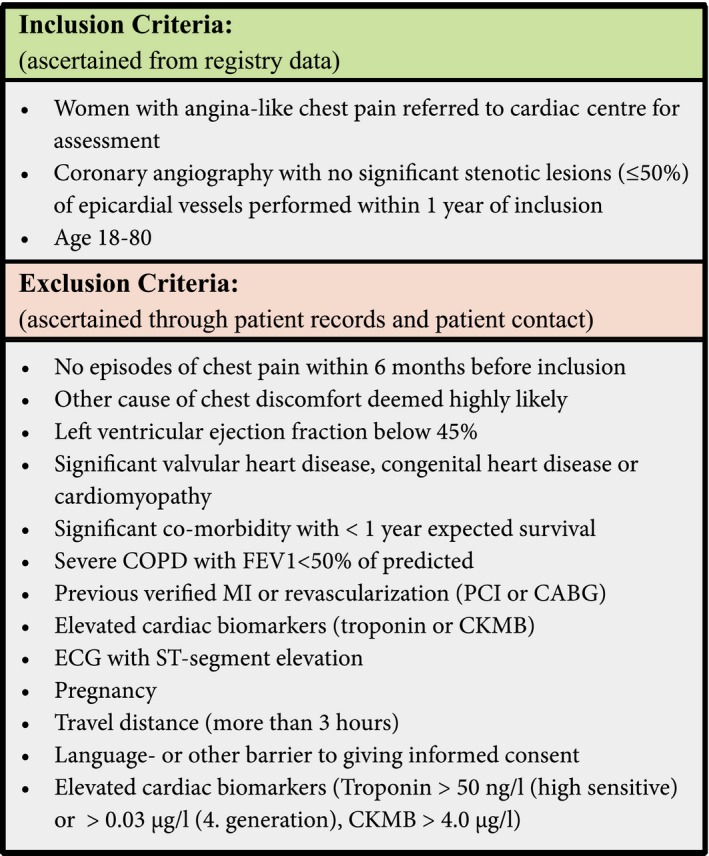
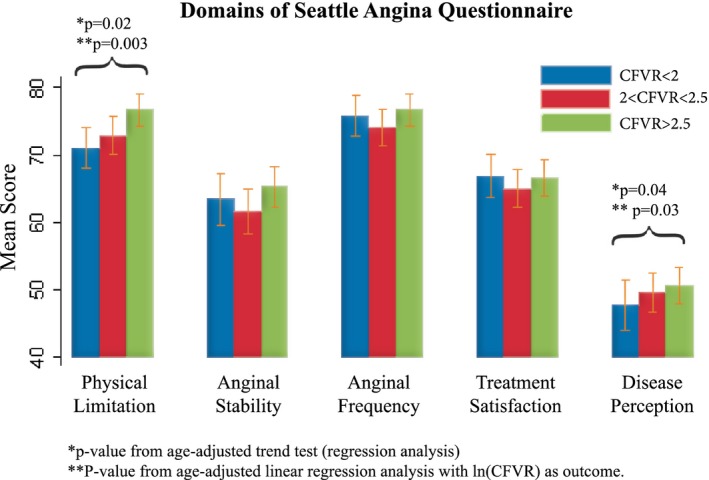
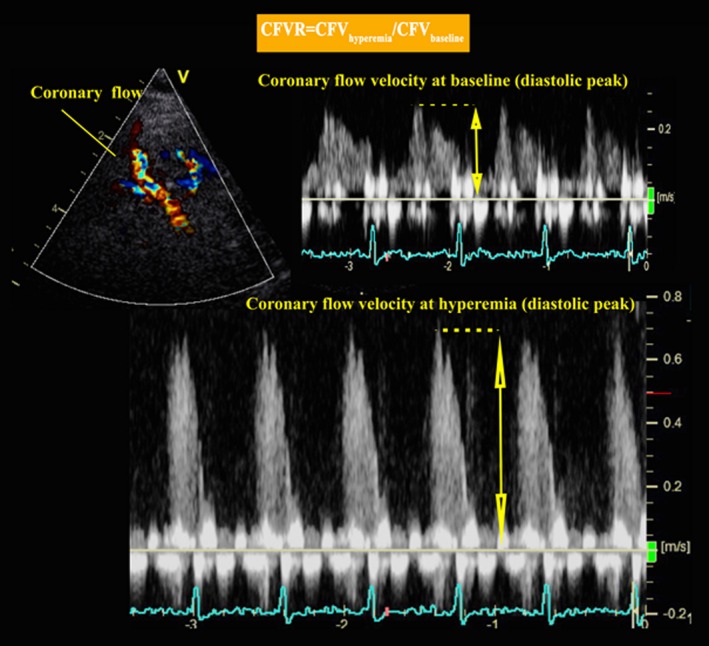
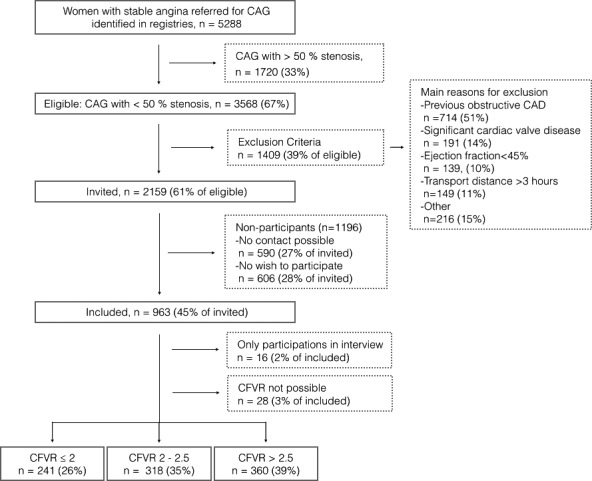
After screening 3568 women, 963 women with angina-like chest pain and a diagnostic coronary angiogram without significant coronary artery stenosis (<50%) were consecutively included. Mean age (SD) was 62.1 (9.7). Assessment included demographic and clinical data, blood samples, questionnaires, and transthoracic echocardiography during rest and high-dose dipyridamole (0.84 mg/kg) with measurement of coronary flow velocity reserve (CFVR) by Doppler examination of the left anterior descending coronary artery. CFVR was successfully measured in 919 (95%) women. Median (IQR) CFVR was 2.33 (1.98-2.76), and 241 (26%) had markedly impaired CFVR (<2). In multivariable regression analysis, predictors of impaired CFVR were age (P<0.01), hypertension (P=0.02), current smoking (P<0.01), elevated heart rate (P<0.01), and low high-density lipoprotein cholesterol (P=0.02), but these variables explained only a little of the CFVR variation (r(2)=0.09). CFVR was not associated with chest pain characteristics or results from diagnostic stress testing.
Impaired CFVR was detected in a substantial proportion, which suggests that coronary microvascular dysfunction plays a role in the development of angina pectoris. CFVR was associated with few cardiovascular risk factors, suggesting that CFVR is an independent parameter in the risk evaluation of these women. Symptom characteristics and results from stress testing did not identify individuals with impaired CFVR.
大多数有类心绞痛胸痛症状的女性在接受冠状动脉造影评估时并无阻塞性冠状动脉疾病。冠状动脉微血管功能障碍是一种可能的解释,且与预后不良相关。本研究评估了冠状动脉微血管功能障碍的患病率以及与症状、心血管危险因素、心理社会因素和诊断性应激试验结果之间的关联。
在对3568名女性进行筛查后,连续纳入了963名有类心绞痛胸痛症状且诊断性冠状动脉造影显示无明显冠状动脉狭窄(<50%)的女性。平均年龄(标准差)为62.1(9.7)岁。评估内容包括人口统计学和临床数据、血样、问卷调查以及静息状态下和高剂量双嘧达莫(0.84mg/kg)负荷试验时的经胸超声心动图检查,并通过对左前降支冠状动脉进行多普勒检查测量冠状动脉血流储备(CFVR)。919名(95%)女性成功测量了CFVR。CFVR的中位数(四分位间距)为2.33(1.98 - 2.76),241名(26%)女性的CFVR明显受损(<2)。在多变量回归分析中,CFVR受损的预测因素包括年龄(P<0.01)、高血压(P = 0.02)、当前吸烟(P<0.01)、心率升高(P<0.01)和高密度脂蛋白胆固醇降低(P = 0.02),但这些变量仅解释了CFVR变化的一小部分(r² = 0.09)。CFVR与胸痛特征或诊断性应激试验结果无关。结论:相当一部分女性检测到CFVR受损,这表明冠状动脉微血管功能障碍在心绞痛的发生中起作用。CFVR与少数心血管危险因素相关,这表明CFVR是这些女性风险评估中的一个独立参数。症状特征和应激试验结果无法识别CFVR受损的个体。