El Azzouzi Karim, Wiesner Christiane, Linder Stefan
Institut für medizinische Mikrobiologie, Virologie und Hygiene, Universitätsklinikum Eppendorf, 20246 Hamburg, Germany.
Institut für medizinische Mikrobiologie, Virologie und Hygiene, Universitätsklinikum Eppendorf, 20246 Hamburg, Germany
J Cell Biol. 2016 Apr 11;213(1):109-25. doi: 10.1083/jcb.201510043.
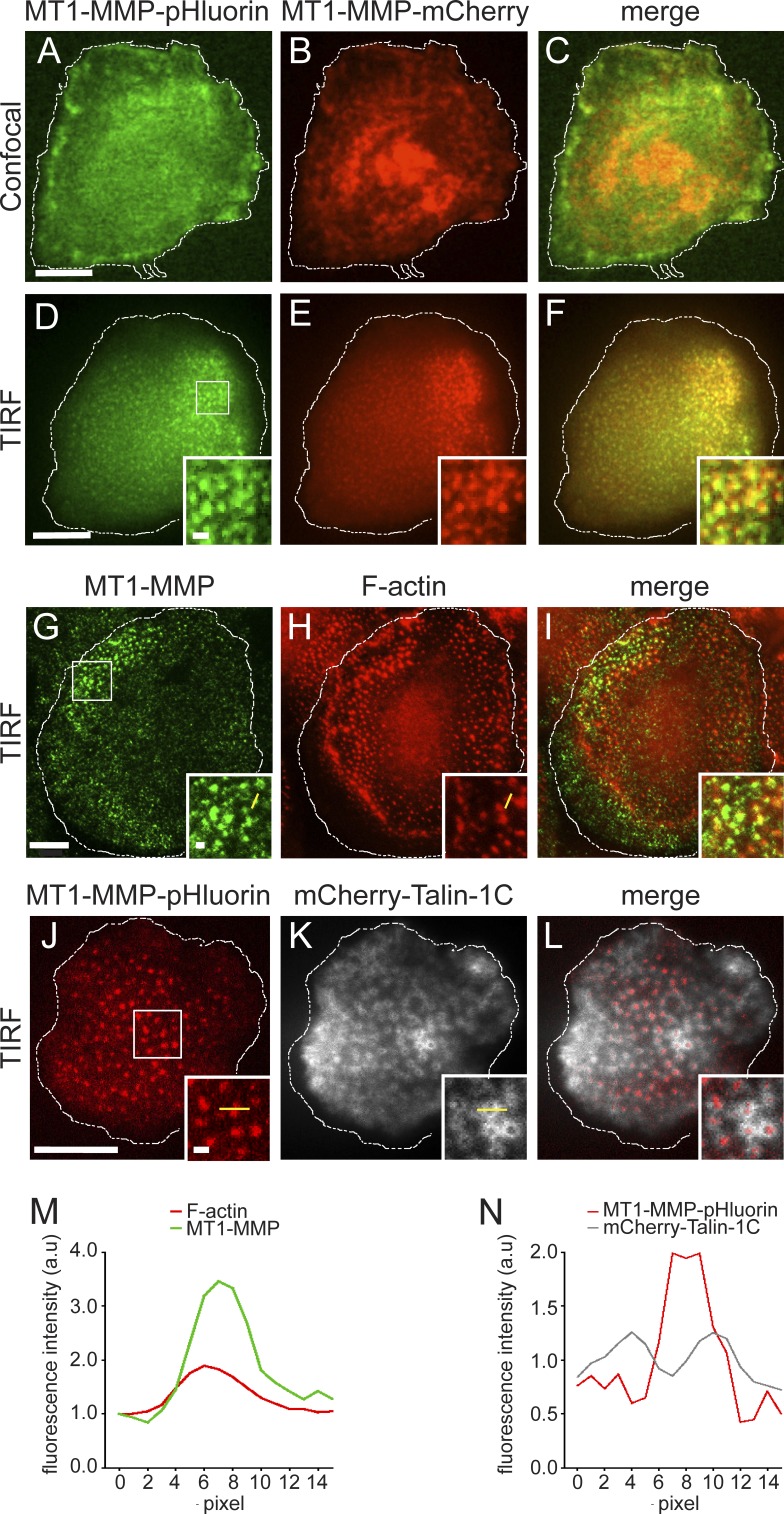
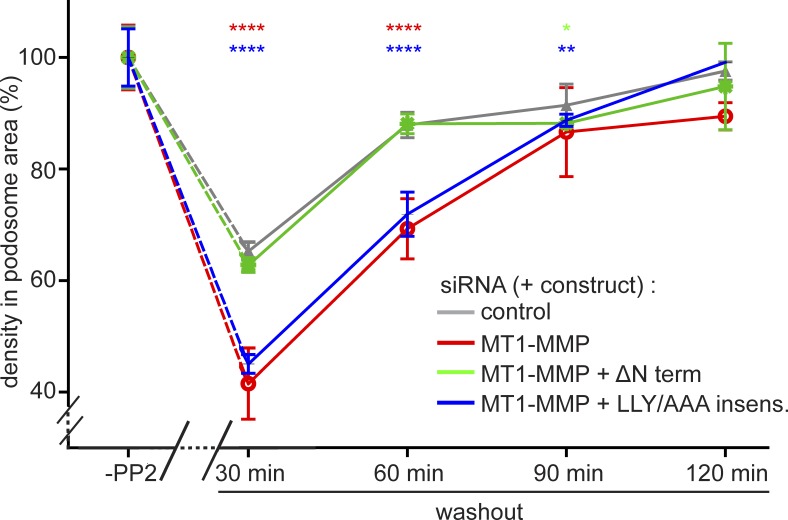
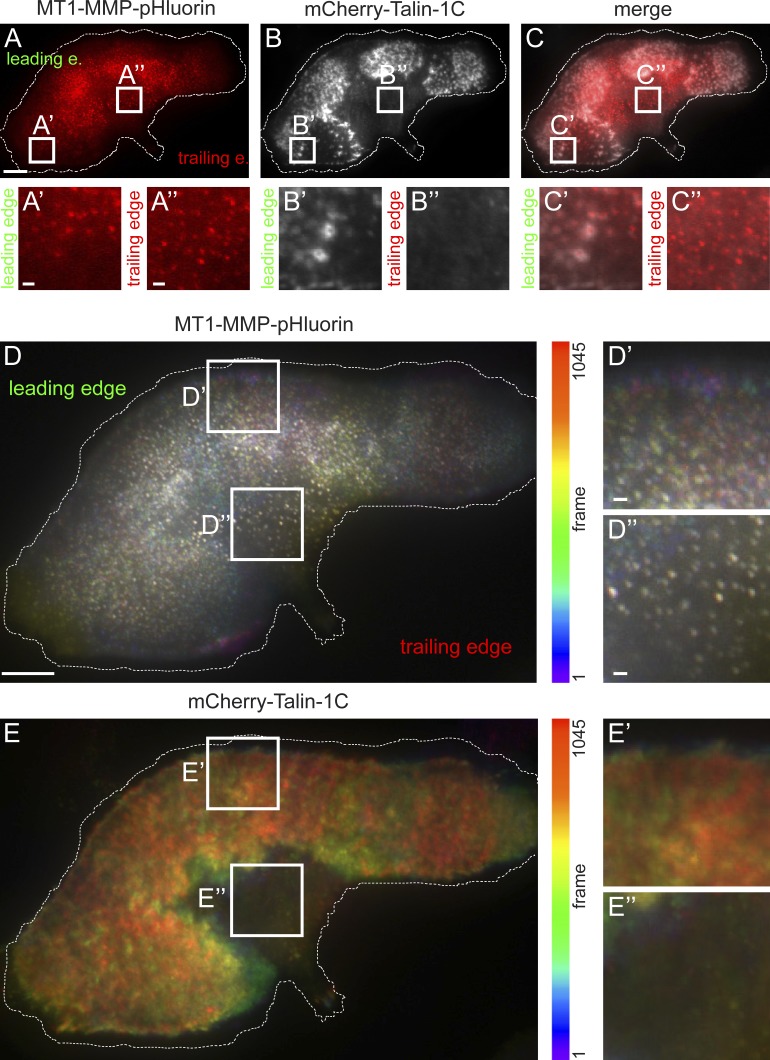
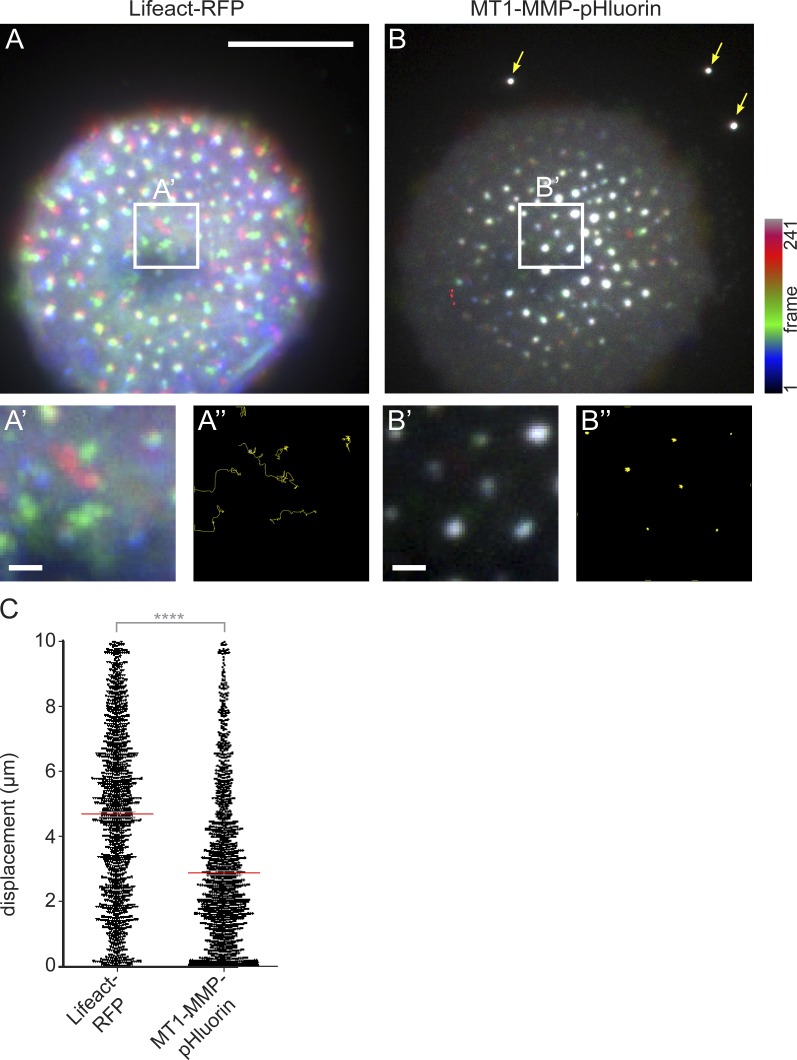
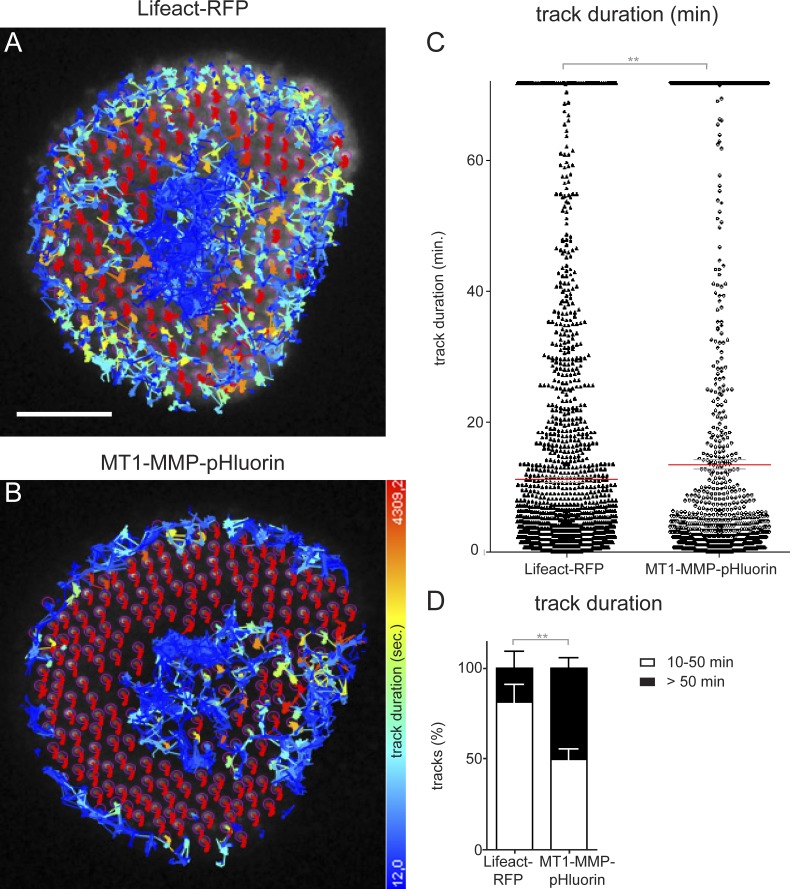
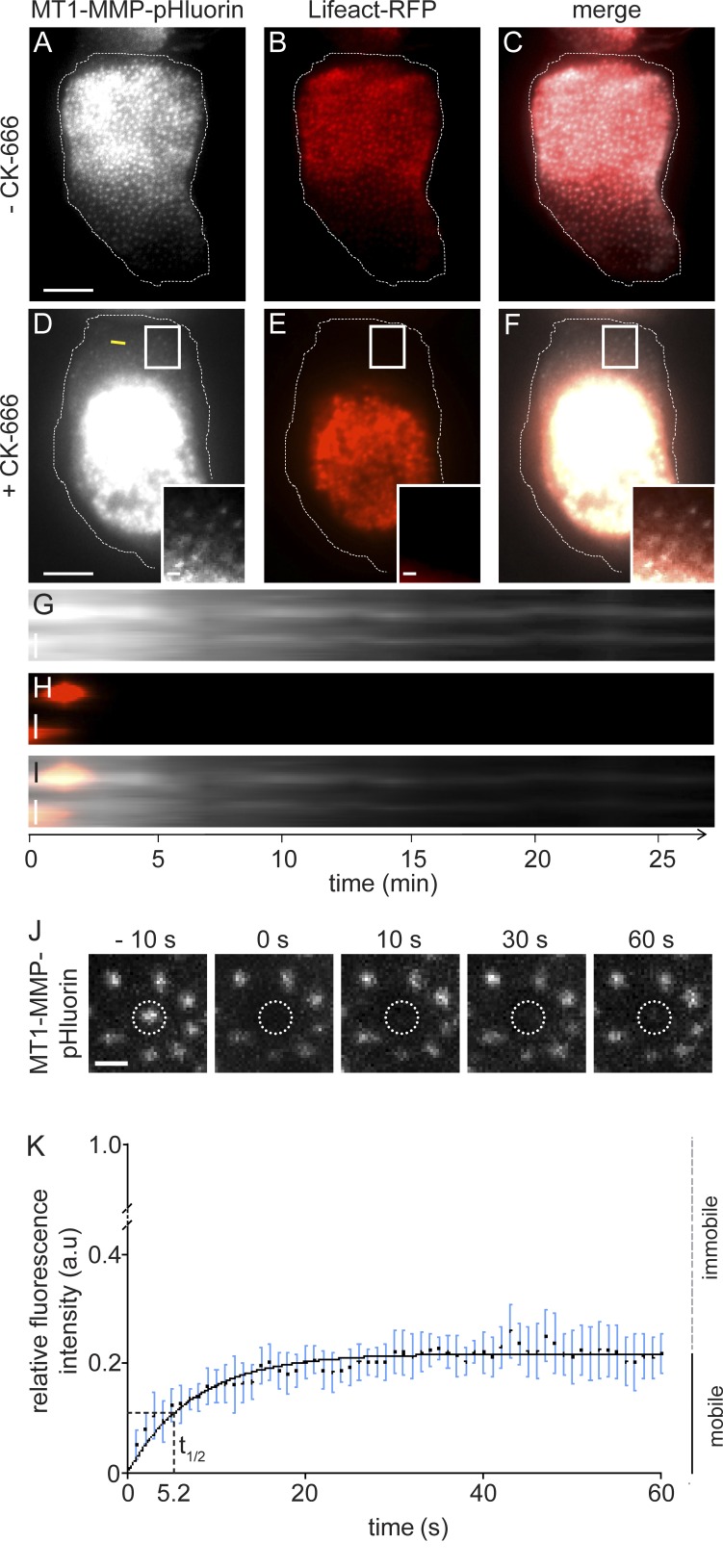
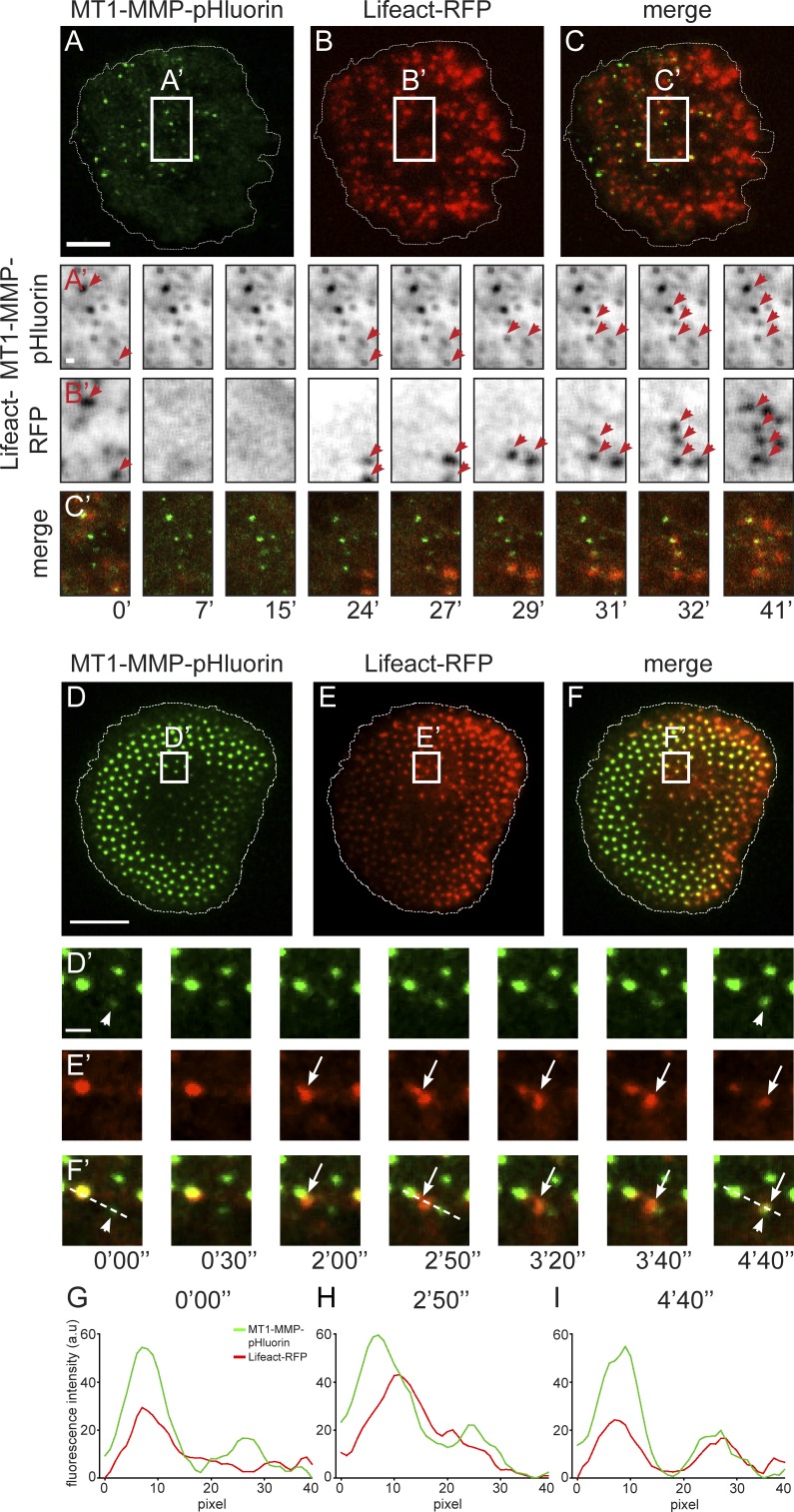
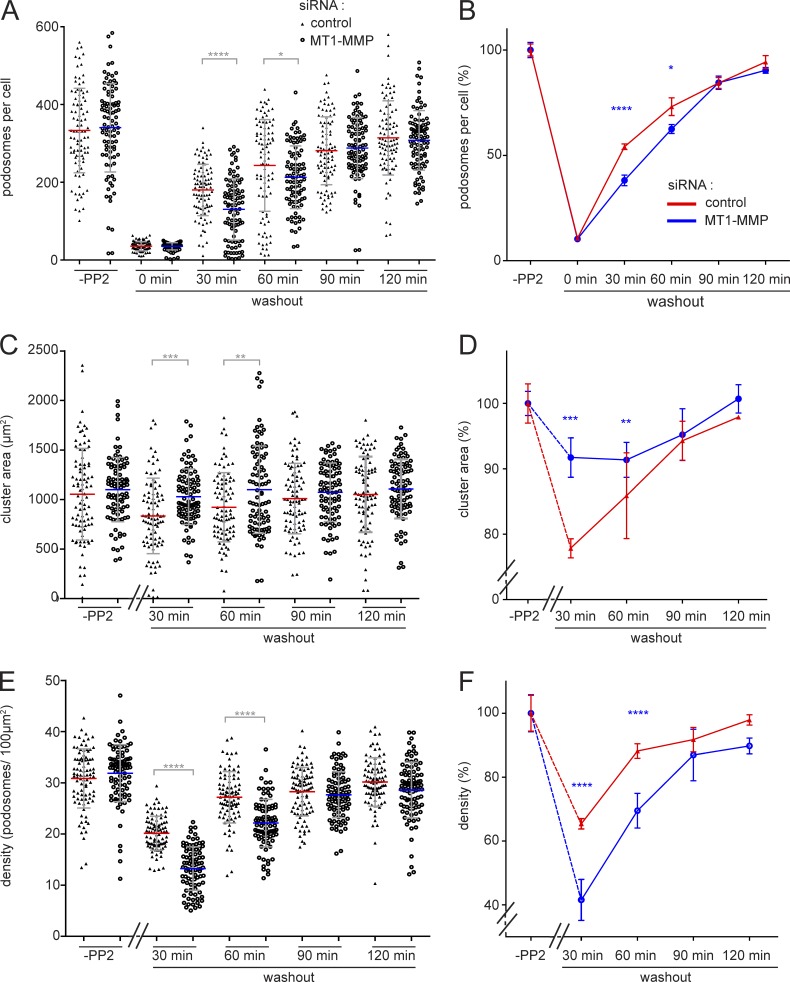
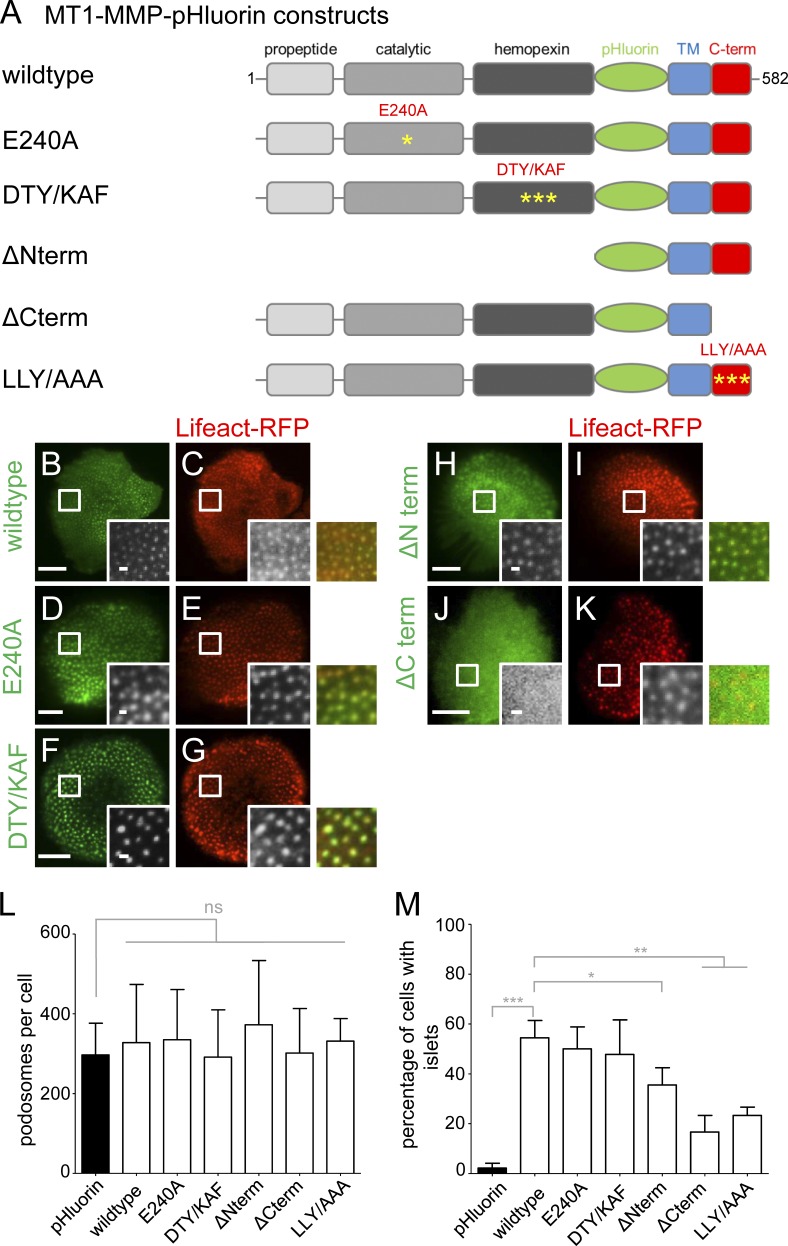
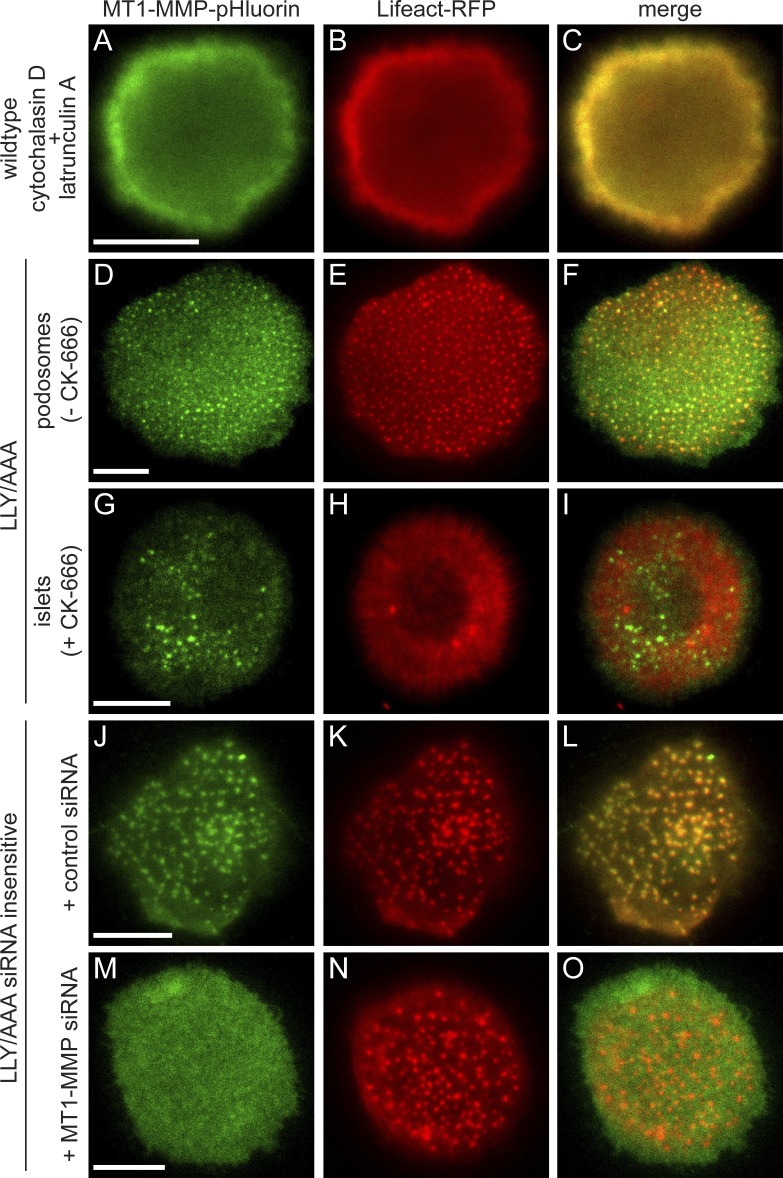
Podosomes are dynamic cell adhesions that are also sites of extracellular matrix degradation, through recruitment of matrix-lytic enzymes, particularly of matrix metalloproteinases. Using total internal reflection fluorescence microscopy, we show that the membrane-bound metalloproteinase MT1-MMP is enriched not only at podosomes but also at distinct "islets" embedded in the plasma membrane of primary human macrophages. MT1-MMP islets become apparent upon podosome dissolution and persist beyond podosome lifetime. Importantly, the majority of MT1-MMP islets are reused as sites of podosome reemergence. siRNA-mediated knockdown and recomplementation analyses show that islet formation is based on the cytoplasmic tail of MT1-MMP and its ability to bind the subcortical actin cytoskeleton. Collectively, our data reveal a previously unrecognized phase in the podosome life cycle and identify a structural function of MT1-MMP that is independent of its proteolytic activity. MT1-MMP islets thus act as cellular memory devices that enable efficient and localized reformation of podosomes, ensuring coordinated matrix degradation and invasion.
足体是动态的细胞黏附结构,也是细胞外基质降解的部位,通过募集基质溶解酶,特别是基质金属蛋白酶来实现。利用全内反射荧光显微镜,我们发现膜结合金属蛋白酶MT1-MMP不仅在足体富集,而且在原代人巨噬细胞质膜中嵌入的不同“小岛”中也有富集。MT1-MMP小岛在足体溶解时变得明显,并在足体寿命结束后持续存在。重要的是,大多数MT1-MMP小岛会被重新用作足体重现的位点。RNA干扰介导的敲低和补充分析表明,小岛的形成基于MT1-MMP的细胞质尾巴及其结合皮质下肌动蛋白细胞骨架的能力。总体而言,我们的数据揭示了足体生命周期中一个以前未被认识的阶段,并确定了MT1-MMP的一种独立于其蛋白水解活性的结构功能。因此,MT1-MMP小岛充当细胞记忆装置,能够高效且局部地重新形成足体,确保协调的基质降解和侵袭。