Bouskila Joseph, Harrar Vanessa, Javadi Pasha, Beierschmitt Amy, Palmour Roberta, Casanova Christian, Bouchard Jean-François, Ptito Maurice
School of Optometry, University of Montreal, Montreal, QC, Canada H3T 1P1; Biomedical Sciences, Faculty of Medicine, University of Montreal, Montreal, QC, Canada H3T 1J4.
School of Optometry, University of Montreal, Montreal, QC, Canada H3T 1P1.
Neural Plast. 2016;2016:1253245. doi: 10.1155/2016/1253245. Epub 2016 Mar 16.
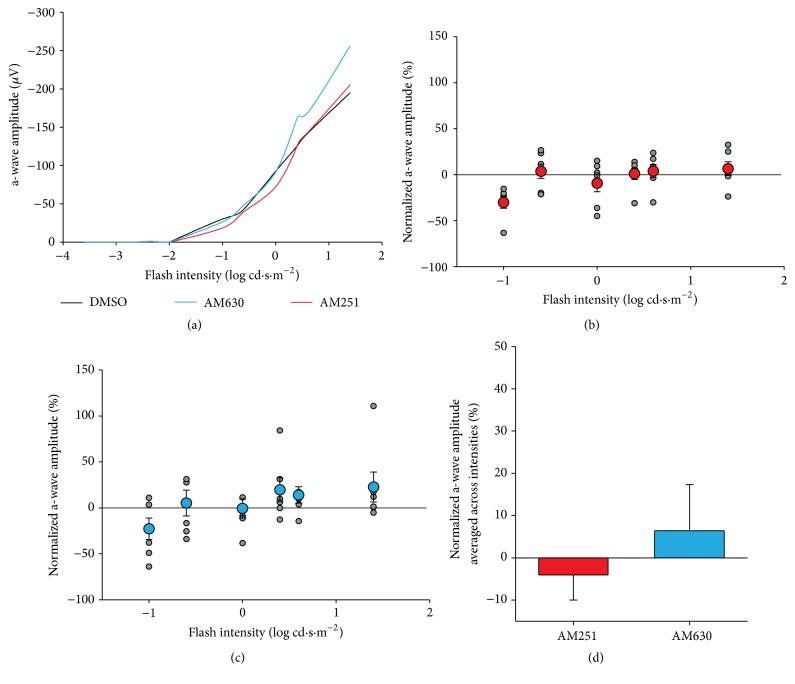
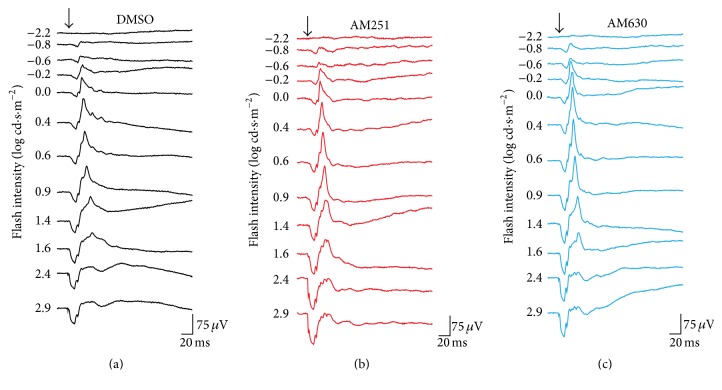
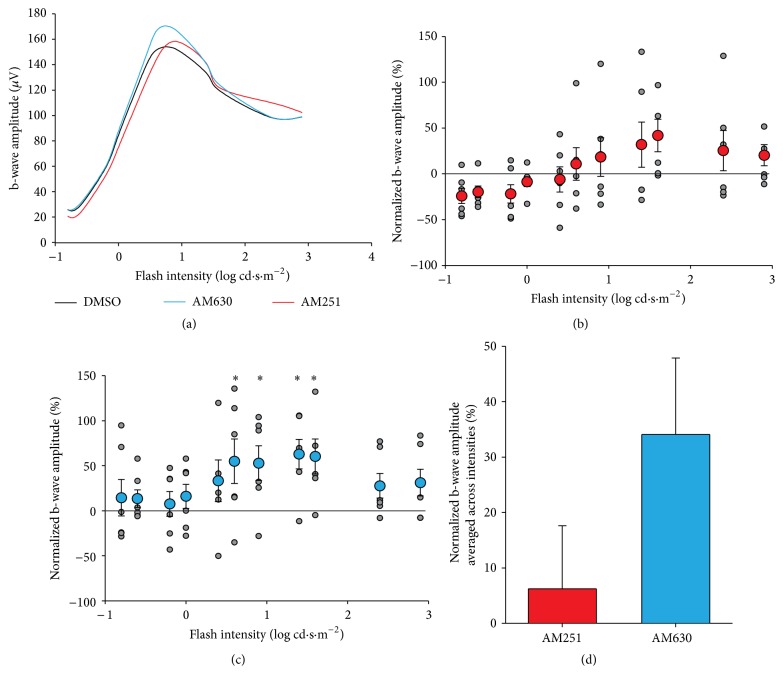
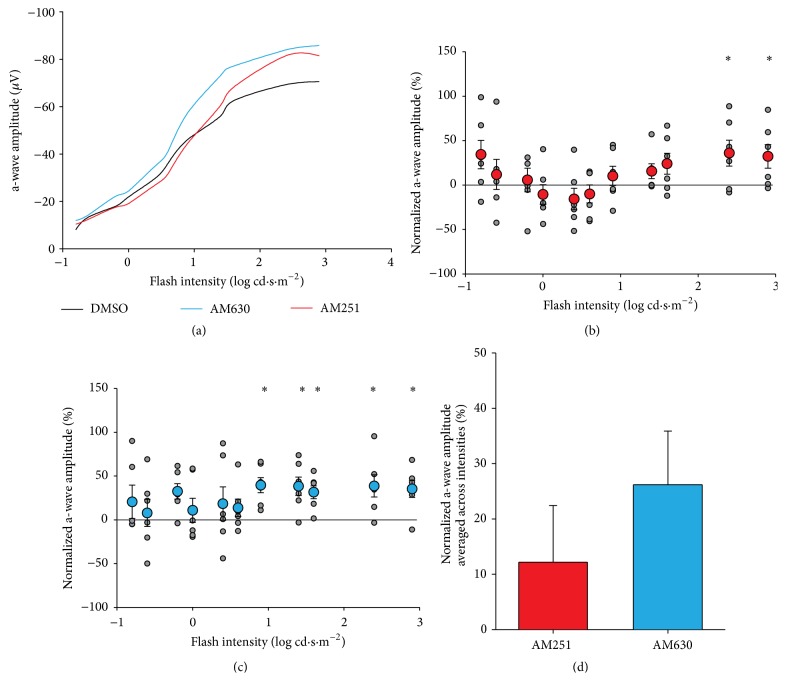
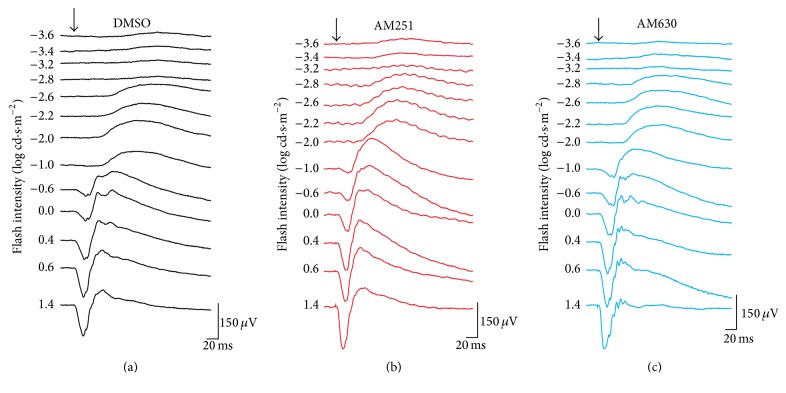
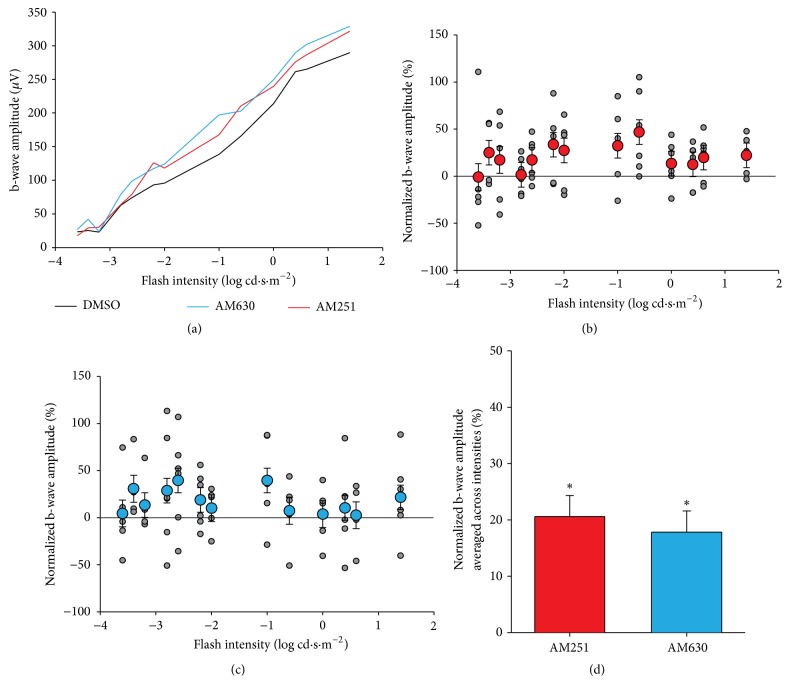
The expression patterns of the cannabinoid receptor type 1 (CB1R) and the cannabinoid receptor type 2 (CB2R) are well documented in rodents and primates. In vervet monkeys, CB1R is present in the retinal neurons (photoreceptors, horizontal cells, bipolar cells, amacrine cells, and ganglion cells) and CB2R is exclusively found in the retinal glia (Müller cells). However, the role of these cannabinoid receptors in normal primate retinal function remains elusive. Using full-field electroretinography in adult vervet monkeys, we recorded changes in neural activity following the blockade of CB1R and CB2R by the intravitreal administration of their antagonists (AM251 and AM630, resp.) in photopic and scotopic conditions. Our results show that AM251 increases the photopic a-wave amplitude at high flash intensities, whereas AM630 increases the amplitude of both the photopic a- and b-waves. In scotopic conditions, both blockers increased the b-wave amplitude but did not change the a-wave amplitude. These findings suggest an important role of CB1R and CB2R in primate retinal function.
大麻素1型受体(CB1R)和大麻素2型受体(CB2R)的表达模式在啮齿动物和灵长类动物中已有充分记载。在绿猴中,CB1R存在于视网膜神经元(光感受器、水平细胞、双极细胞、无长突细胞和神经节细胞)中,而CB2R仅存在于视网膜神经胶质细胞(穆勒细胞)中。然而,这些大麻素受体在正常灵长类视网膜功能中的作用仍不清楚。我们在成年绿猴中使用全视野视网膜电图,记录了在明视和暗视条件下通过玻璃体内注射其拮抗剂(分别为AM251和AM630)阻断CB1R和CB2R后神经活动的变化。我们的结果表明,AM251在高闪光强度下增加了明视a波振幅,而AM630增加了明视a波和b波的振幅。在暗视条件下,两种阻断剂均增加了b波振幅,但未改变a波振幅。这些发现表明CB1R和CB2R在灵长类视网膜功能中起重要作用。