School of Optometry, University of Montreal, Montreal, QC H3Y 1P1, Canada.
Behavioral Science Foundations, Eastern Caribbean, Estridge KN0101, Saint Kitts and Nevis.
Cells. 2021 Nov 13;10(11):3160. doi: 10.3390/cells10113160.
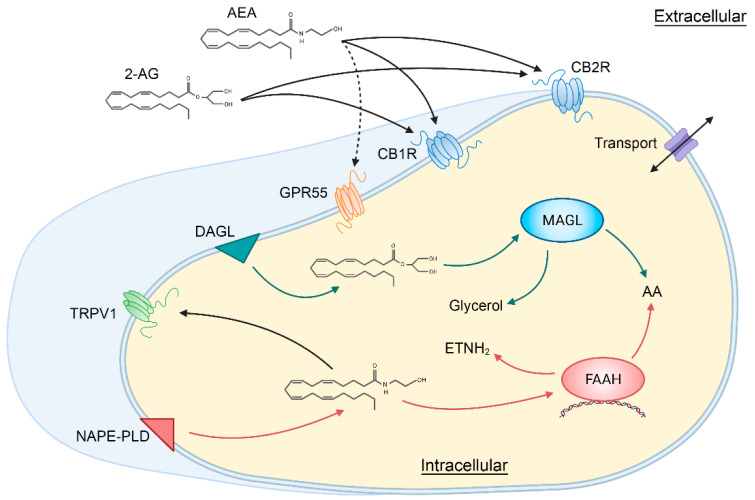
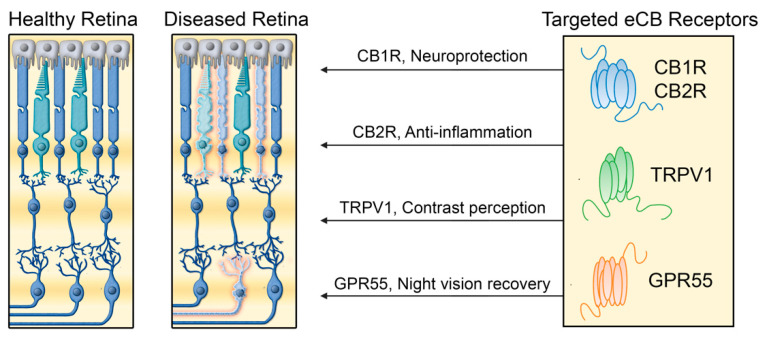
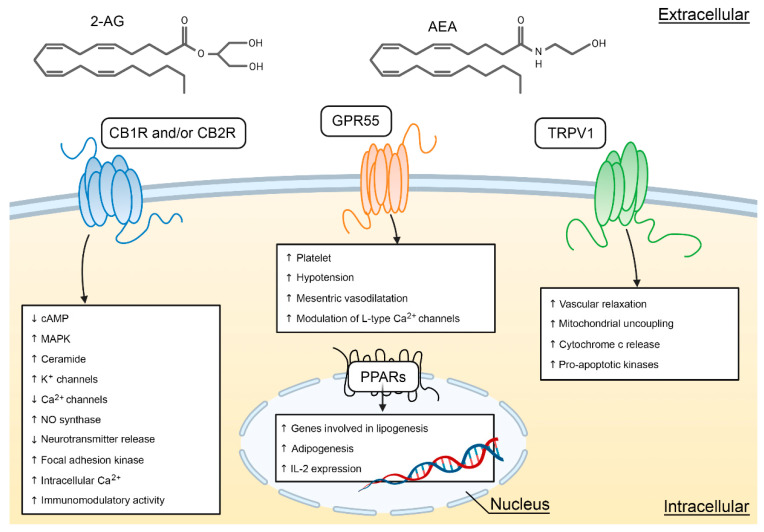
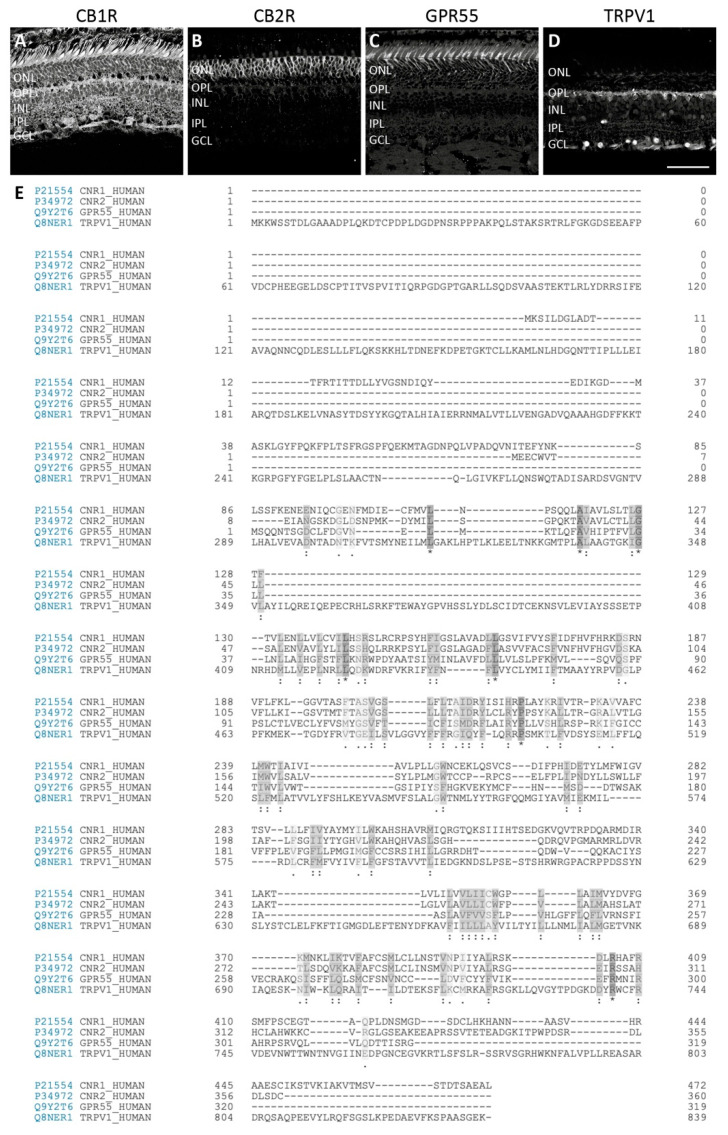
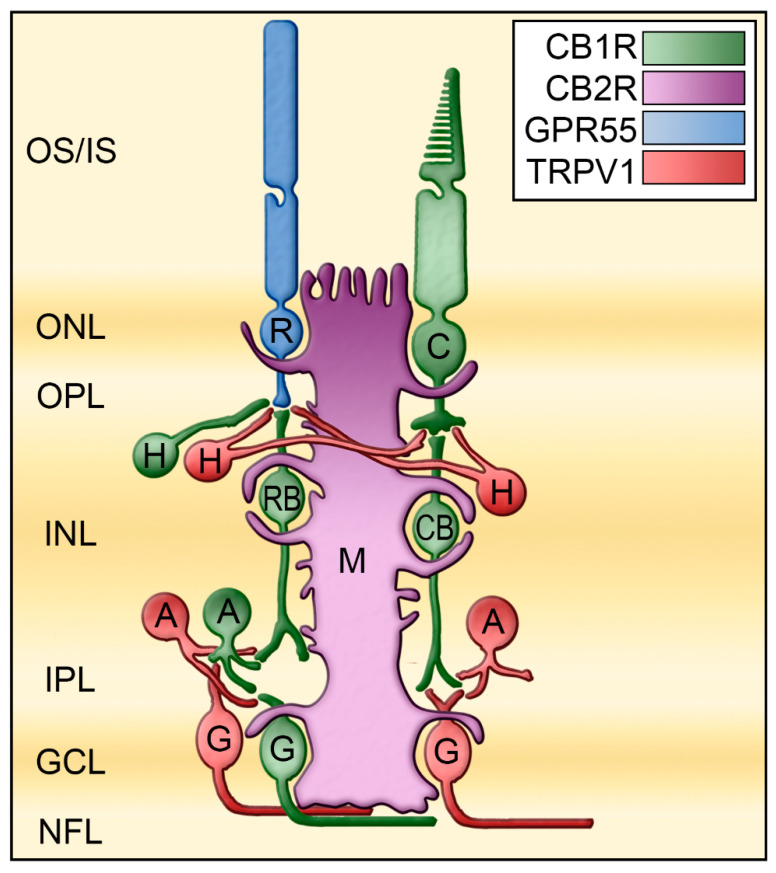
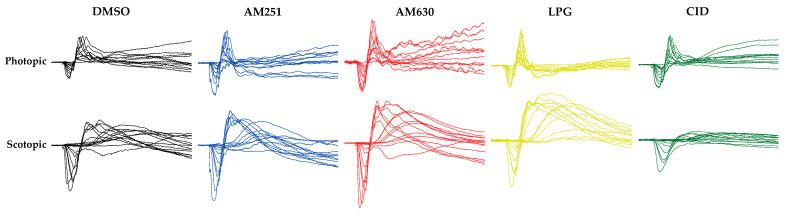
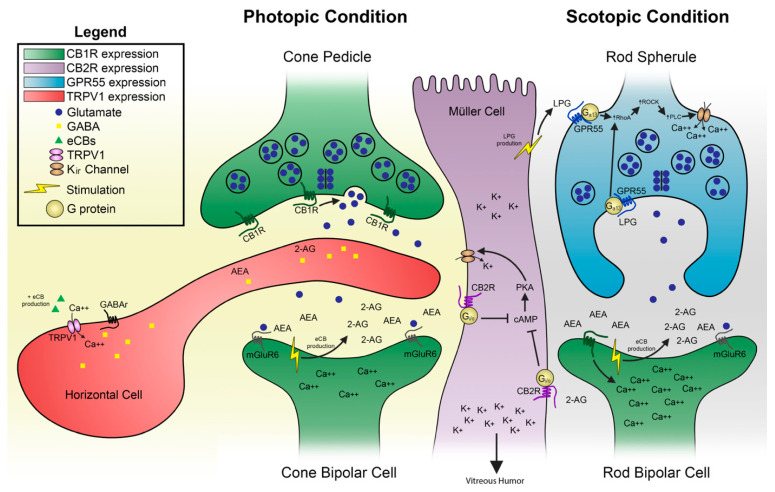
The endocannabinoid (eCB) system has been found in all visual parts of the central ner-vous system and plays a role in the processing of visual information in many species, including monkeys and humans. Using anatomical methods, cannabinoid receptors are present in the monkey retina, particularly in the vertical glutamatergic pathway, and also in the horizontal GABAergic pathway. Modulating the eCB system regulates normal retinal function as demonstrated by electrophysiological recordings. The characterization of the expression patterns of all types of cannabinoid receptors in the retina is progressing, and further research is needed to elucidate their exact role in processing visual information. Typical cannabinoid receptors include G-protein coupled receptor CB1R and CB2R, and atypical cannabinoid receptors include the G-protein coupled receptor 55 (GPR55) and the ion channel transient receptor potential vanilloid 1 (TRPV1). This review focuses on the expression and localization studies carried out in monkeys, but some data on other animal species and humans will also be reported. Furthermore, the role of the endogenous cannabinoid receptors in retinal function will also be presented using intraocular injections of known modulators (agonists and antagonists) on electroretinographic patterns in monkeys. The effects of the natural bioactive lipid lysophosphatidylglucoside and synthetic FAAH inhibitor URB597 on retinal function, will also be described. Finally, the potential of typical and atypical cannabinoid receptor acti-vity regulation in retinal diseases, such as age-related macular degeneration, diabetic retinopathy, glaucoma, and retinitis pigmentosa will be briefly explored.
内源性大麻素(eCB)系统存在于中枢神经系统的所有视觉部分,并在包括猴子和人类在内的许多物种的视觉信息处理中发挥作用。使用解剖学方法,大麻素受体存在于猴子视网膜中,特别是在垂直谷氨酸能途径中,也存在于水平 GABA 能途径中。调节 eCB 系统可调节正常视网膜功能,这已通过电生理记录得到证实。所有类型大麻素受体在视网膜中的表达模式的特征正在得到进一步研究,需要进一步研究以阐明它们在处理视觉信息中的确切作用。典型的大麻素受体包括 G 蛋白偶联受体 CB1R 和 CB2R,非典型大麻素受体包括 G 蛋白偶联受体 55(GPR55)和离子通道瞬时受体电位香草醛 1(TRPV1)。本综述重点介绍在猴子中进行的表达和定位研究,但也将报告其他动物物种和人类的一些数据。此外,还将使用在猴子中进行的眼内注射已知调节剂(激动剂和拮抗剂)对视网膜功能的电视网膜图模式来介绍内源性大麻素受体在视网膜功能中的作用。天然生物活性脂质溶血磷脂酰葡萄糖苷和合成 FAAH 抑制剂 URB597 对视网膜功能的影响也将被描述。最后,将简要探讨典型和非典型大麻素受体活性调节在视网膜疾病(如年龄相关性黄斑变性、糖尿病性视网膜病变、青光眼和色素性视网膜炎)中的潜在作用。