Raashid Rana Arham, Liu Ivy Ziqian, Blakeman Alan, Goltz Herbert C, Wong Agnes M F
Program in Neuroscience and Mental Health The Hospital for Sick Children, Toronto, Canada.
Department of Ophthalmology and Vision Sciences, University of Toronto, Toronto, Canada.
Invest Ophthalmol Vis Sci. 2016 Apr;57(4):1757-64. doi: 10.1167/iovs.16-19126.
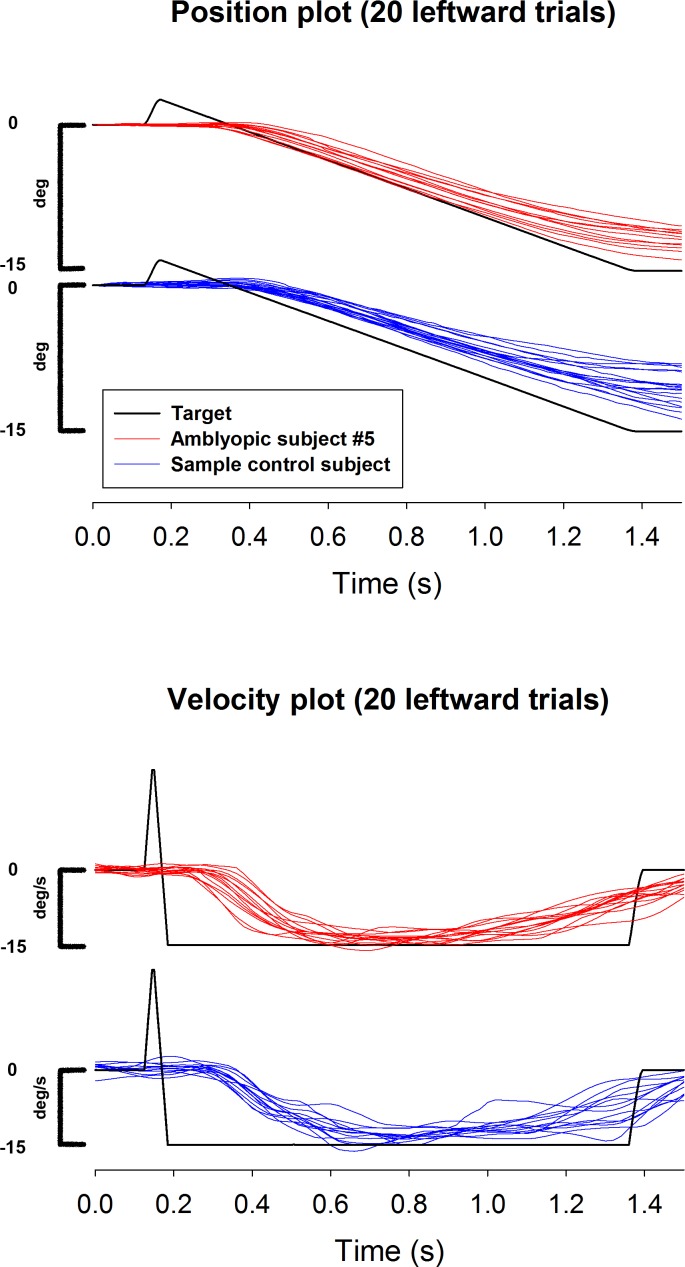
Several behavioral studies have shown that the reaction times of visually guided movements are slower in people with amblyopia, particularly during amblyopic eye viewing. Here, we tested the hypothesis that the initiation of smooth pursuit eye movements, which are responsible for accurately keeping moving objects on the fovea, is delayed in people with anisometropic amblyopia.
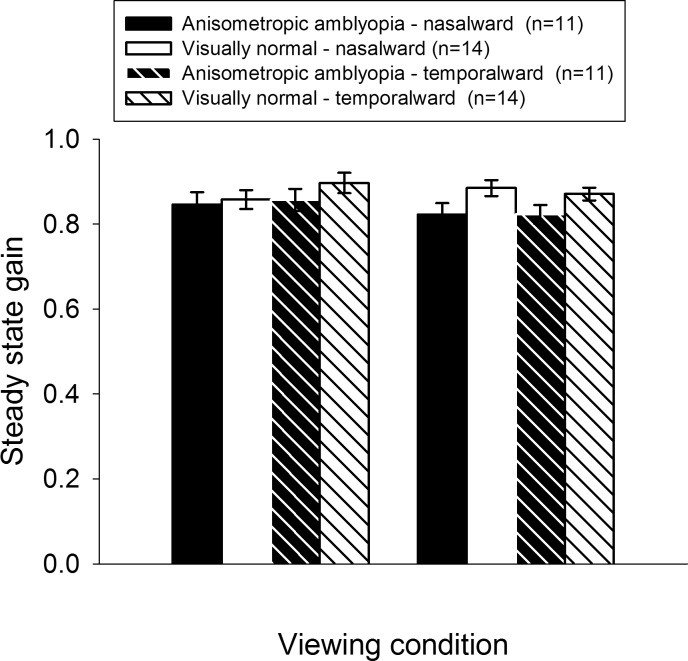
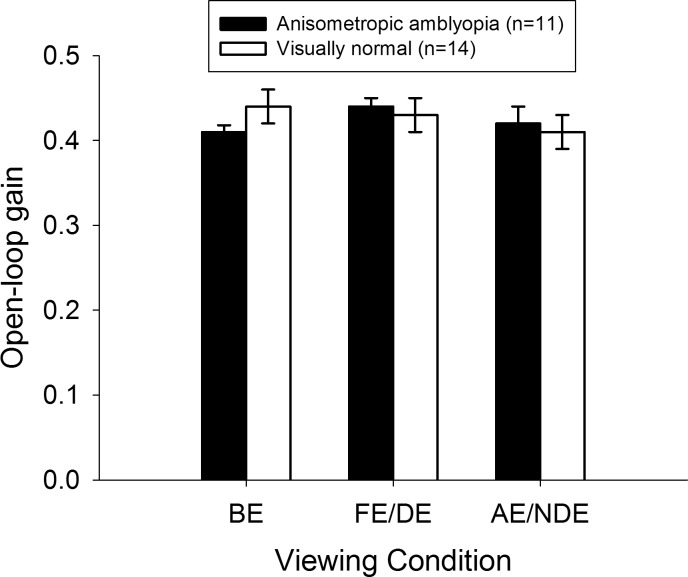
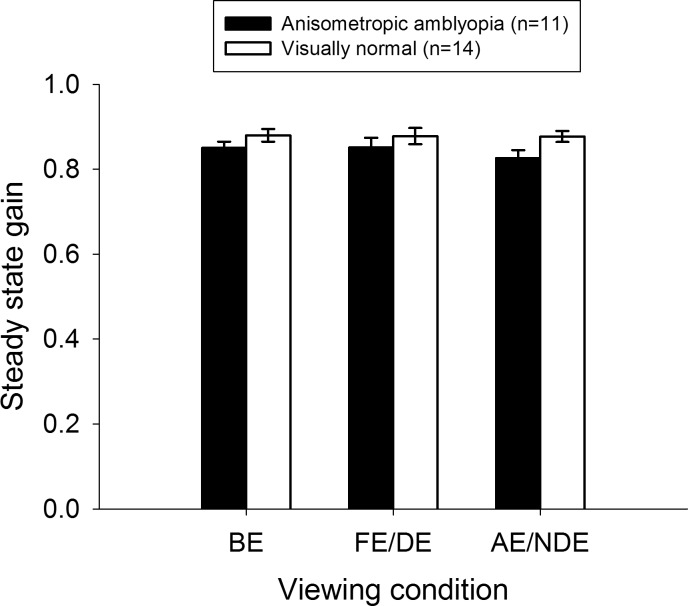
Eleven participants with anisometropic amblyopia and 14 visually normal observers were asked to track a step-ramp target moving at ±15°/s horizontally as quickly and as accurately as possible. The experiment was conducted under three viewing conditions: amblyopic/nondominant eye, binocular, and fellow/dominant eye viewing. Outcome measures were smooth pursuit latency, open-loop gain, steady state gain, and catch-up saccade frequency.
Participants with anisometropic amblyopia initiated smooth pursuit significantly slower during amblyopic eye viewing (206 ± 20 ms) than visually normal observers viewing with their nondominant eye (183 ± 17 ms, P = 0.002). However, mean pursuit latency in the anisometropic amblyopia group during binocular and monocular fellow eye viewing was comparable to the visually normal group. Mean open-loop gain, steady state gain, and catch-up saccade frequency were similar between the two groups, but participants with anisometropic amblyopia exhibited more variable steady state gain (P = 0.045).
This study provides evidence of temporally delayed smooth pursuit initiation in anisometropic amblyopia. After initiation, the smooth pursuit velocity profile in anisometropic amblyopia participants is similar to visually normal controls. This finding differs from what has been observed previously in participants with strabismic amblyopia who exhibit reduced smooth pursuit velocity gains with more catch-up saccades.
多项行为学研究表明,弱视患者视觉引导运动的反应时间较慢,尤其是在用弱视眼观察时。在此,我们检验了以下假设:在屈光参差性弱视患者中,负责将移动物体准确保持在中央凹上的平稳跟踪眼球运动的启动会延迟。
11名屈光参差性弱视参与者和14名视力正常的观察者被要求尽可能快速、准确地跟踪一个以±15°/秒的水平速度移动的阶梯斜坡目标。实验在三种观察条件下进行:弱视眼/非优势眼、双眼和健侧眼/优势眼观察。观察指标包括平稳跟踪潜伏期、开环增益、稳态增益和追赶扫视频率。
屈光参差性弱视参与者在用弱视眼观察时启动平稳跟踪的速度(206±20毫秒)明显慢于视力正常的观察者用非优势眼观察时的速度(183±17毫秒,P = 0.002)。然而,屈光参差性弱视组在双眼和单眼健侧眼观察时的平均跟踪潜伏期与视力正常组相当。两组之间的平均开环增益、稳态增益和追赶扫视频率相似,但屈光参差性弱视参与者的稳态增益变化更大(P = 0.045)。
本研究为屈光参差性弱视中平稳跟踪启动时间延迟提供了证据。启动后,屈光参差性弱视参与者的平稳跟踪速度曲线与视力正常的对照组相似。这一发现与之前在斜视性弱视参与者中观察到的情况不同,后者表现出平稳跟踪速度增益降低,且有更多的追赶扫视。