Basrai Harleen S, Christie Kimberly J, Turbic Alisa, Bye Nicole, Turnley Ann M
Department of Anatomy and Neuroscience, The University of Melbourne, Parkville, Victoria, Australia.
PLoS One. 2016 Apr 12;11(4):e0153418. doi: 10.1371/journal.pone.0153418. eCollection 2016.
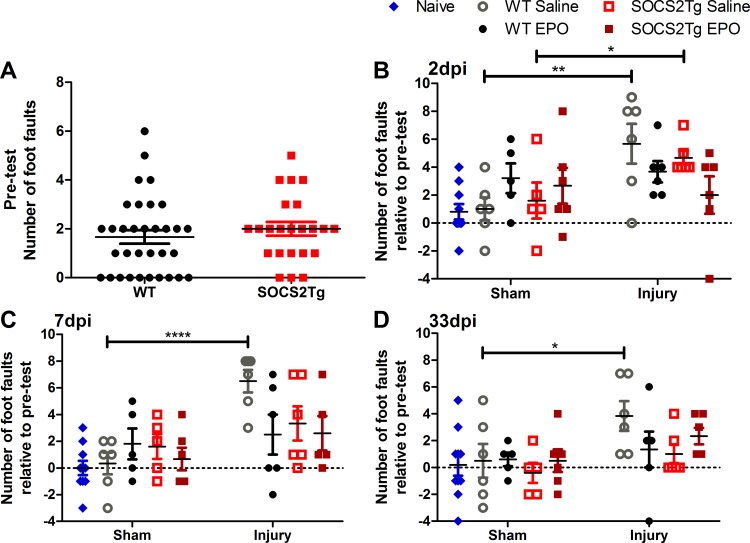
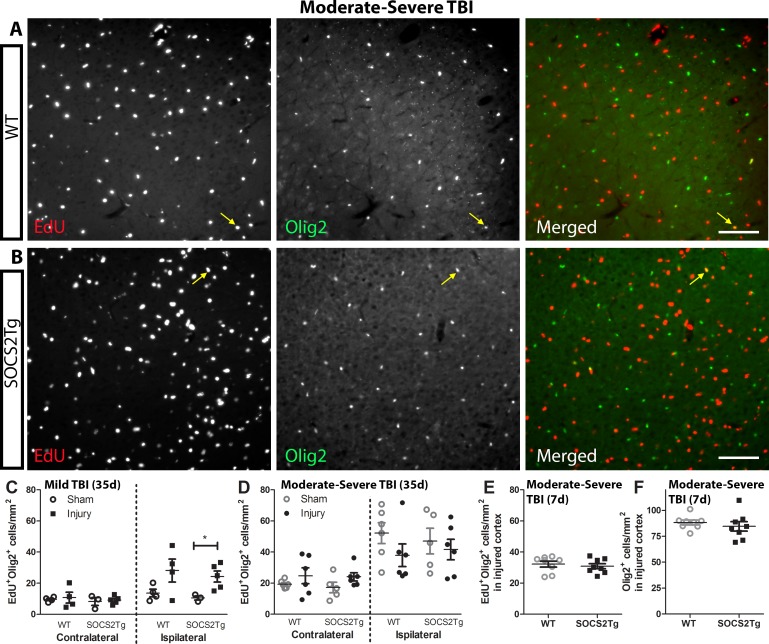
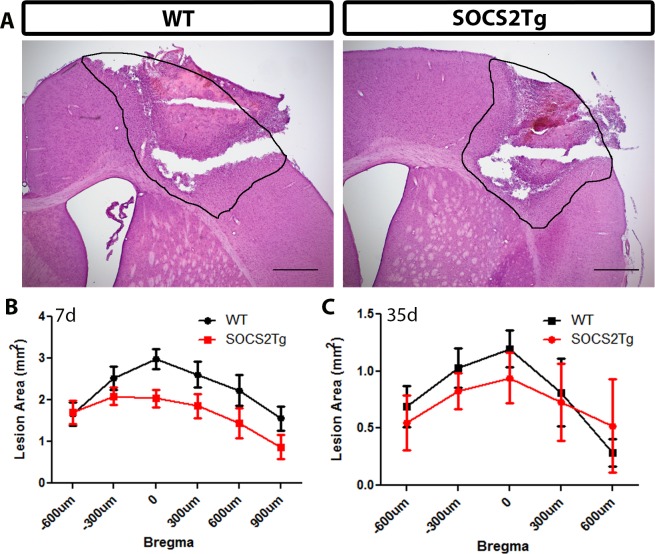
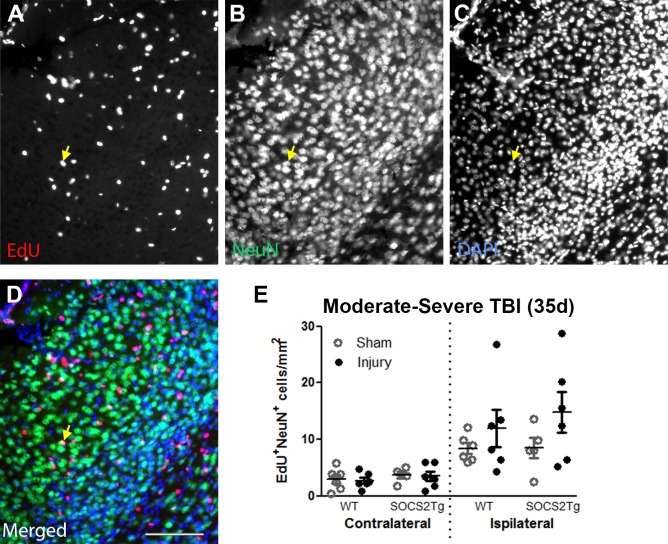
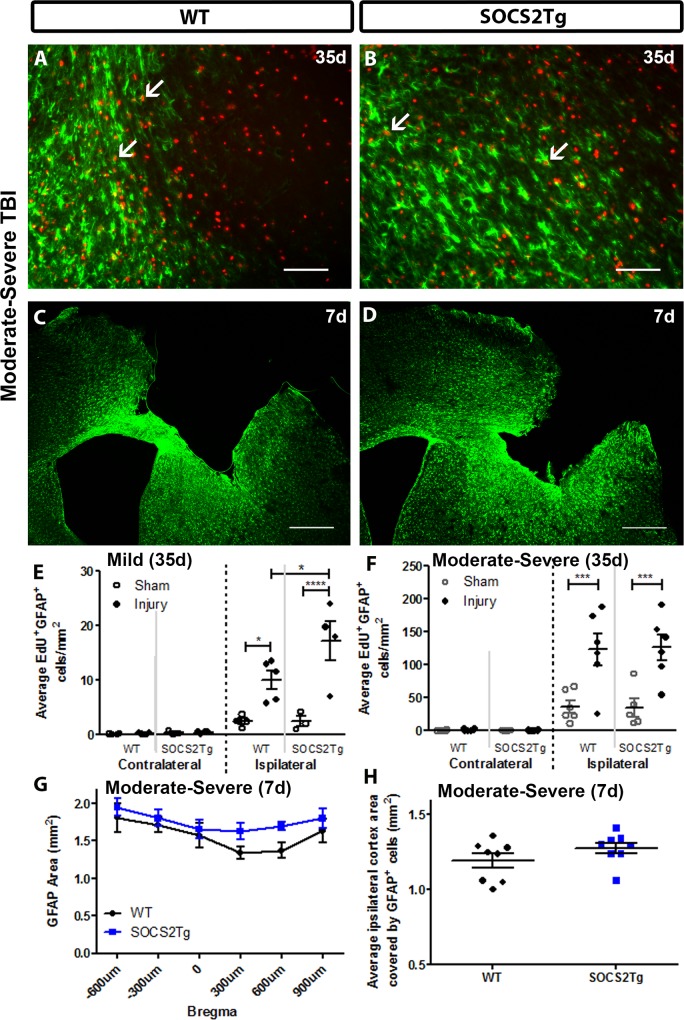
Traumatic brain injury (TBI) is frequently characterized by neuronal, axonal and myelin loss, reactive gliosis and neuroinflammation, often associated with functional deficits. Endogenous repair mechanisms include production of new neurons from precursor cells, but usually the new neurons fail to integrate and survive more than a few weeks. This is in part mediated by the toxic and inflammatory environment present in the injured brain which activates precursor cells to proliferate and differentiate but limits survival of the newborn progeny. Therefore, an understanding of mechanisms that regulate production and survival of newborn neurons and the neuroinflammatory response after brain injury may lead to therapeutic options to improve outcomes. Suppressor of Cytokine Signaling 2 (SOCS2) promotes hippocampal neurogenesis and survival of newborn neurons in the adult brain and regulates anti-inflammatory responses in the periphery, suggesting it may be a useful candidate to improve outcomes of TBI. In this study the functional and cellular responses of SOCS2 over-expressing transgenic (SOCS2Tg) mice were compared to wildtype littermates following mild or moderately severe TBI. Unlike wildtype controls, SOCS2Tg mice showed functional improvement on a ladder test, with a smaller lesion volume at 7d post injury and increased numbers of proliferative CD11b+ microglia/macrophages at 35d post-injury in the mild injury paradigm. At 7d post-moderately severe injury there was an increase in the area covered by cells expressing an anti-inflammatory M2 phenotype marker (CD206+) but no difference in cells with a pro-inflammatory M1 phenotype marker (CD16/32+). No effect of SOCS2 overexpression was observed in production or survival of newborn neurons, even in the presence of the neuroprotective agent erythropoietin (EPO). Therefore, SOCS2 may improve outcome of TBI in mice by regulating aspects of the neuroinflammatory response, promoting a more anti-inflammatory environment, although this was not sufficient to enhance survival of newborn cortical neurons.
创伤性脑损伤(TBI)的常见特征是神经元、轴突和髓鞘丢失、反应性胶质增生和神经炎症,常伴有功能缺陷。内源性修复机制包括从前体细胞产生新的神经元,但新神经元通常无法整合且存活时间不超过几周。这部分是由损伤大脑中存在的毒性和炎症环境介导的,该环境激活前体细胞增殖和分化,但限制新生后代的存活。因此,了解调节脑损伤后新生神经元的产生和存活以及神经炎症反应的机制可能会带来改善预后的治疗选择。细胞因子信号转导抑制因子2(SOCS2)促进成体脑海马神经发生和新生神经元的存活,并调节外周的抗炎反应,表明它可能是改善TBI预后的有用候选者。在本研究中,将过表达SOCS2的转基因(SOCS2Tg)小鼠与轻度或中度严重TBI后的野生型同窝小鼠的功能和细胞反应进行了比较。与野生型对照不同,SOCS2Tg小鼠在阶梯试验中显示功能改善,在轻度损伤模型中,损伤后7天损伤体积较小,损伤后35天增殖性CD11b +小胶质细胞/巨噬细胞数量增加。在中度严重损伤后7天,表达抗炎M2表型标记(CD206 +)的细胞覆盖面积增加,但具有促炎M1表型标记(CD16 / 32 +)的细胞无差异。即使存在神经保护剂促红细胞生成素(EPO),也未观察到SOCS2过表达对新生神经元的产生或存活有影响。因此,SOCS2可能通过调节神经炎症反应的各个方面来改善小鼠TBI的预后,促进更抗炎的环境,尽管这不足以提高新生皮质神经元的存活率。