Majumder Rupamanjari, Engels Marc C, de Vries Antoine A F, Panfilov Alexander V, Pijnappels Daniël A
Laboratory of Experimental Cardiology, Department of Cardiology, Heart Lung Centre Leiden, Leiden University Medical Enter, Leiden, the Netherlands.
Department of Physics and Astronomy, Ghent University, Ghent, Belgium.
Sci Rep. 2016 Apr 13;6:24334. doi: 10.1038/srep24334.
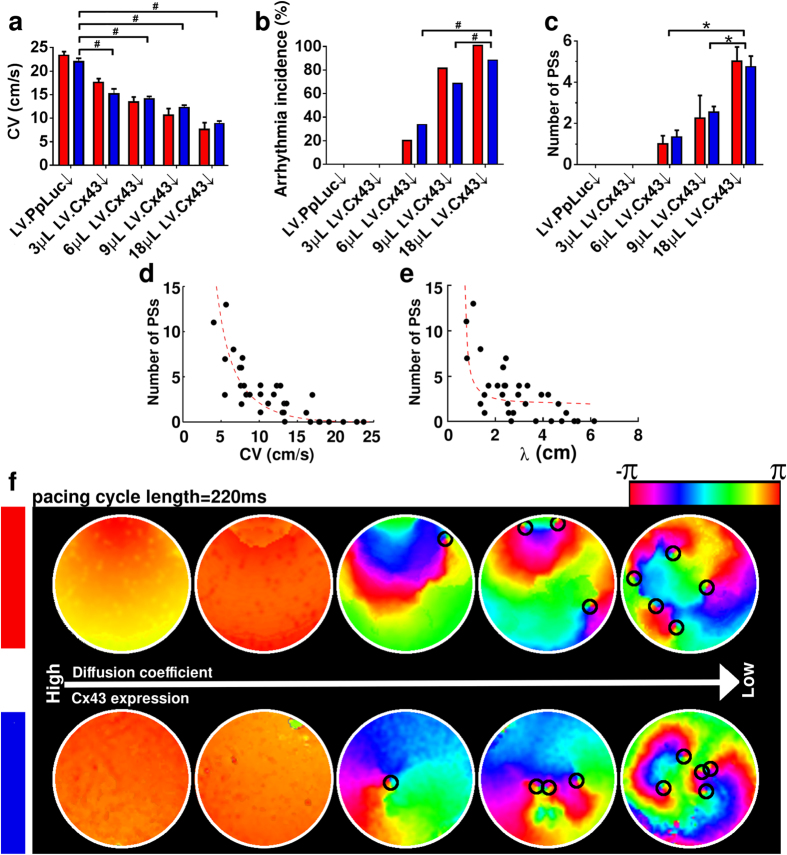
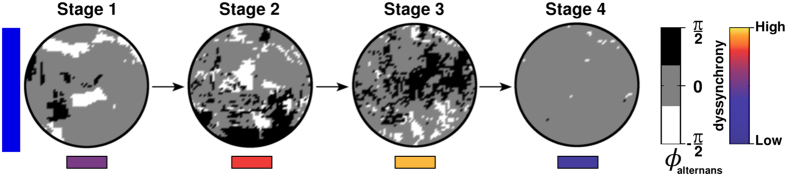
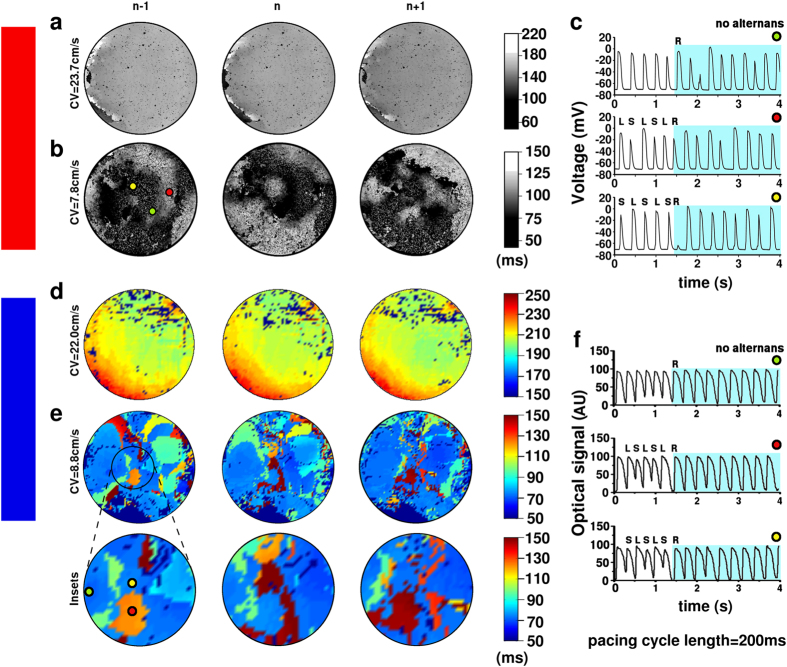
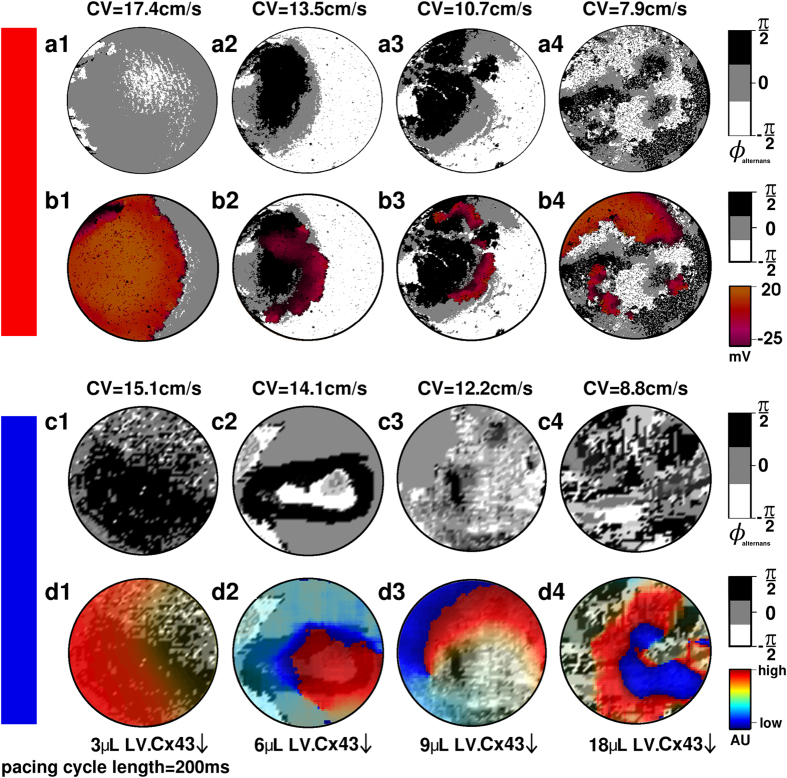
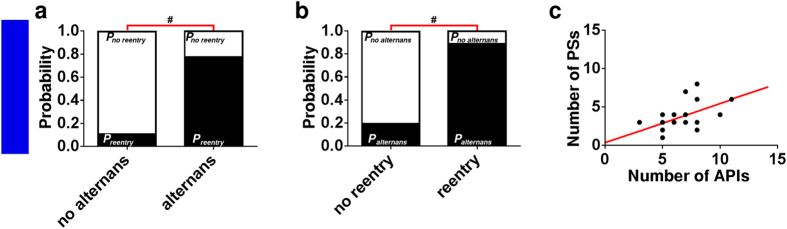
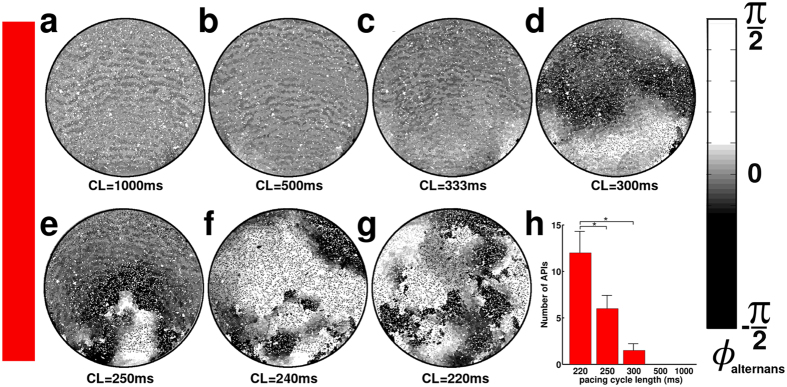
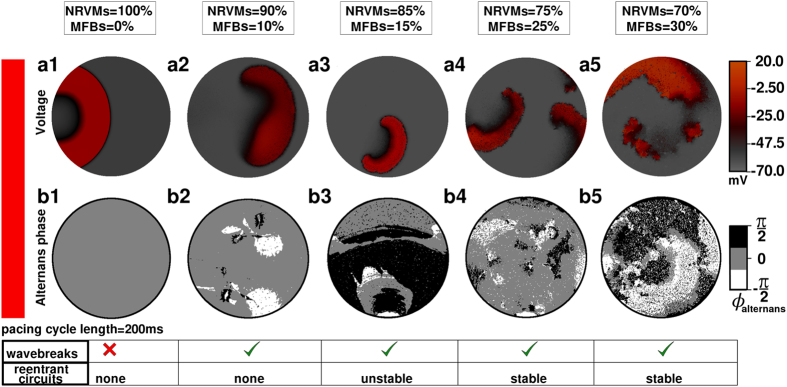
Fibrosis and altered gap junctional coupling are key features of ventricular remodelling and are associated with abnormal electrical impulse generation and propagation. Such abnormalities predispose to reentrant electrical activity in the heart. In the absence of tissue heterogeneity, high-frequency impulse generation can also induce dynamic electrical instabilities leading to reentrant arrhythmias. However, because of the complexity and stochastic nature of such arrhythmias, the combined effects of tissue heterogeneity and dynamical instabilities in these arrhythmias have not been explored in detail. Here, arrhythmogenesis was studied using in vitro and in silico monolayer models of neonatal rat ventricular tissue with 30% randomly distributed cardiac myofibroblasts and systematically lowered intercellular coupling achieved in vitro through graded knockdown of connexin43 expression. Arrhythmia incidence and complexity increased with decreasing intercellular coupling efficiency. This coincided with the onset of a specialized type of spatially discordant action potential duration alternans characterized by island-like areas of opposite alternans phase, which positively correlated with the degree of connexinx43 knockdown and arrhythmia complexity. At higher myofibroblast densities, more of these islands were formed and reentrant arrhythmias were more easily induced. This is the first study exploring the combinatorial effects of myocardial fibrosis and dynamic electrical instabilities on reentrant arrhythmia initiation and complexity.
纤维化和间隙连接耦联改变是心室重构的关键特征,与异常电冲动的产生和传导有关。这些异常易导致心脏折返性电活动。在不存在组织异质性的情况下,高频冲动产生也可诱发动态电不稳定,导致折返性心律失常。然而,由于此类心律失常的复杂性和随机性,组织异质性和动态不稳定在这些心律失常中的联合作用尚未得到详细研究。在此,利用新生大鼠心室组织的体外和计算机单层模型进行心律失常发生机制研究,模型中含有30%随机分布的心肌成纤维细胞,并通过在体外逐步降低连接蛋白43的表达来系统性降低细胞间耦联。心律失常的发生率和复杂性随细胞间耦联效率的降低而增加。这与一种特殊类型的空间不一致性动作电位时程交替的出现相吻合,其特征为交替相位相反的岛状区域,这与连接蛋白43的敲低程度和心律失常的复杂性呈正相关。在心肌成纤维细胞密度较高时,会形成更多这样的岛状区域,更容易诱发折返性心律失常。这是第一项探索心肌纤维化和动态电不稳定对折返性心律失常起始和复杂性的联合作用的研究。