Mathieson S, Rennie J, Livingstone V, Temko A, Low E, Pressler R M, Boylan G B
Academic Research Department of Neonatology, Institute for Women's Health, University College London, London, United Kingdom; Neonatal Brain Research Group, Irish Centre for Fetal and Neonatal Translational Research, Department of Paediatrics and Child Health, University College Cork, Ireland.
Academic Research Department of Neonatology, Institute for Women's Health, University College London, London, United Kingdom; Neonatal Brain Research Group, Irish Centre for Fetal and Neonatal Translational Research, Department of Paediatrics and Child Health, University College Cork, Ireland.
Clin Neurophysiol. 2016 May;127(5):2246-56. doi: 10.1016/j.clinph.2016.01.026. Epub 2016 Feb 21.
To describe a novel neurophysiology based performance analysis of automated seizure detection algorithms for neonatal EEG to characterize features of detected and non-detected seizures and causes of false detections to identify areas for algorithmic improvement.
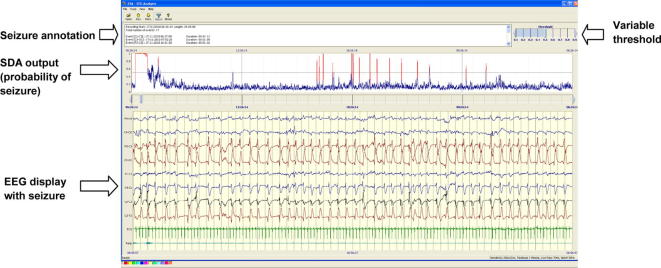
EEGs of 20 term neonates were recorded (10 seizure, 10 non-seizure). Seizures were annotated by an expert and characterized using a novel set of 10 criteria. ANSeR seizure detection algorithm (SDA) seizure annotations were compared to the expert to derive detected and non-detected seizures at three SDA sensitivity thresholds. Differences in seizure characteristics between groups were compared using univariate and multivariate analysis. False detections were characterized.
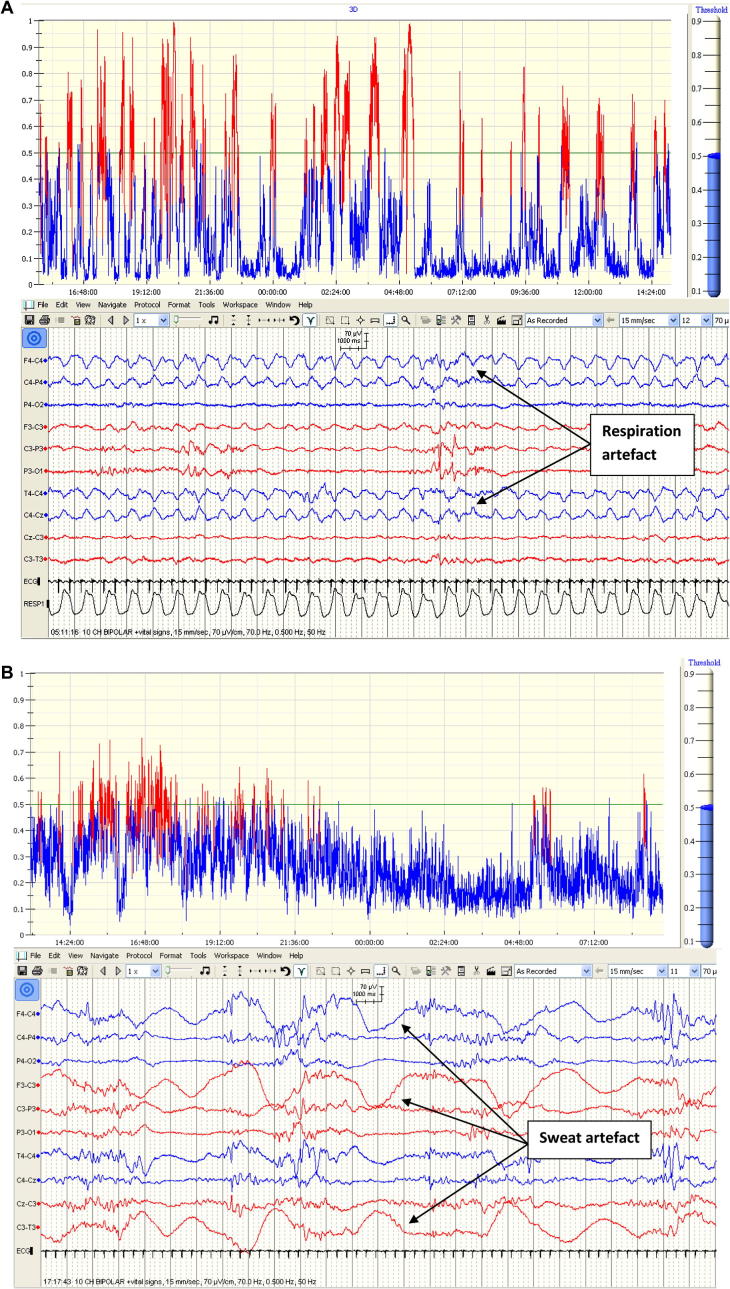
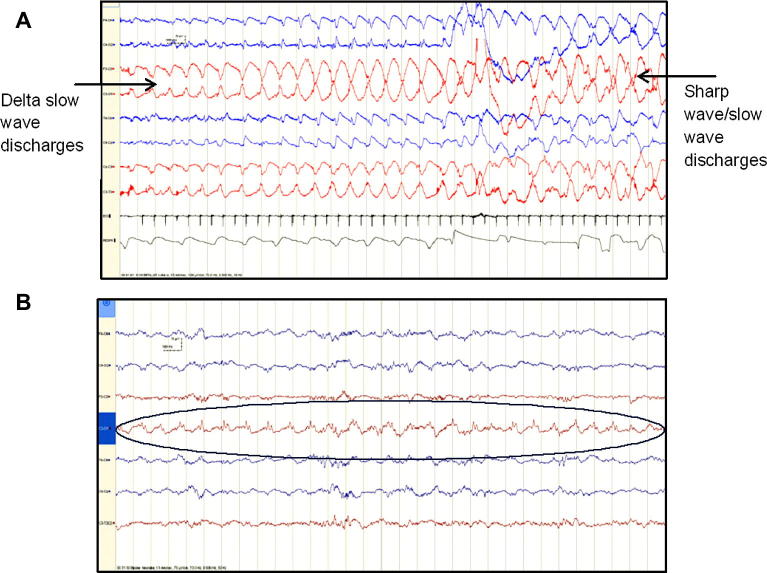
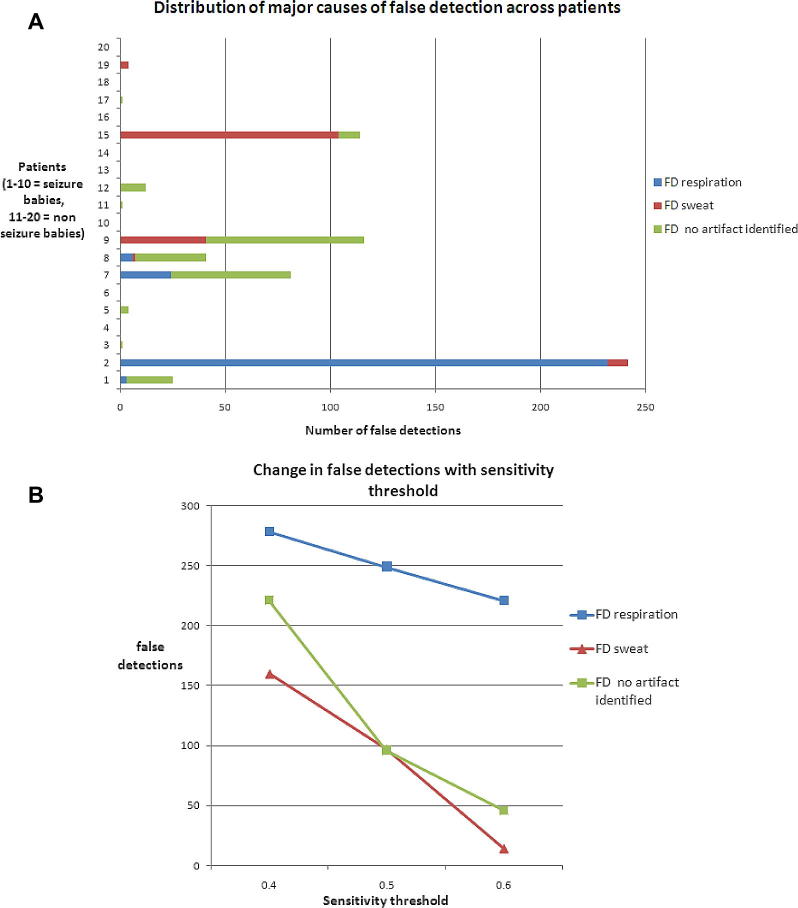
The expert detected 421 seizures. The SDA at thresholds 0.4, 0.5, 0.6 detected 60%, 54% and 45% of seizures. At all thresholds, multivariate analyses demonstrated that the odds of detecting seizure increased with 4 criteria: seizure amplitude, duration, rhythmicity and number of EEG channels involved at seizure peak. Major causes of false detections included respiration and sweat artefacts or a highly rhythmic background, often during intermediate sleep.
This rigorous analysis allows estimation of how key seizure features are exploited by SDAs.
This study resulted in a beta version of ANSeR with significantly improved performance.
描述一种基于神经生理学的新型性能分析方法,用于新生儿脑电图自动癫痫检测算法,以表征检测到和未检测到的癫痫发作特征以及误检测原因,从而确定算法改进的方向。
记录了20名足月儿的脑电图(10名有癫痫发作,10名无癫痫发作)。由专家对癫痫发作进行注释,并使用一组新的10项标准进行特征描述。将ANSeR癫痫检测算法(SDA)的癫痫发作注释与专家的注释进行比较,以得出在三个SDA灵敏度阈值下检测到和未检测到的癫痫发作情况。使用单变量和多变量分析比较各组癫痫发作特征的差异。对误检测进行特征描述。
专家检测到421次癫痫发作。SDA在阈值0.4、0.5、0.6时分别检测到60%、54%和45%的癫痫发作。在所有阈值下,多变量分析表明,检测到癫痫发作的几率随着4个标准的增加而增加:癫痫发作幅度、持续时间、节律性以及癫痫发作高峰时涉及的脑电图通道数量。误检测的主要原因包括呼吸和汗液伪迹或高度节律性背景,通常发生在中间睡眠期间。
这种严格的分析能够估计SDA如何利用关键癫痫发作特征。
本研究产生了性能显著提高的ANSeR测试版。