Hanandita Wulung, Tampubolon Gindo
Cathie Marsh Institute for Social Research (CMIST), University Manchester, Oxford Road, Manchester, M13 9PL, UK.
Int J Health Geogr. 2016 Apr 12;15:13. doi: 10.1186/s12942-016-0043-y.
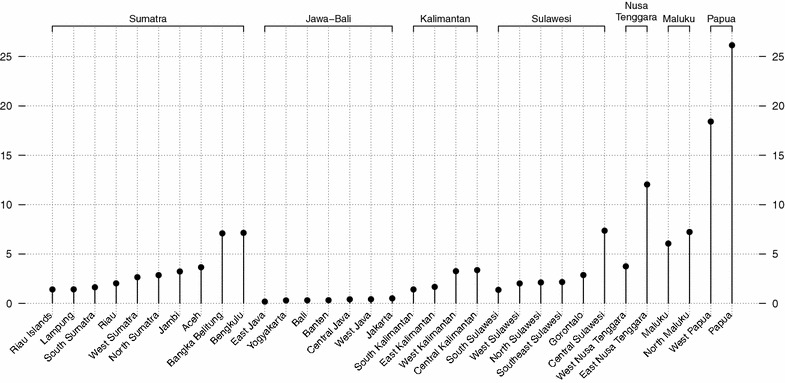
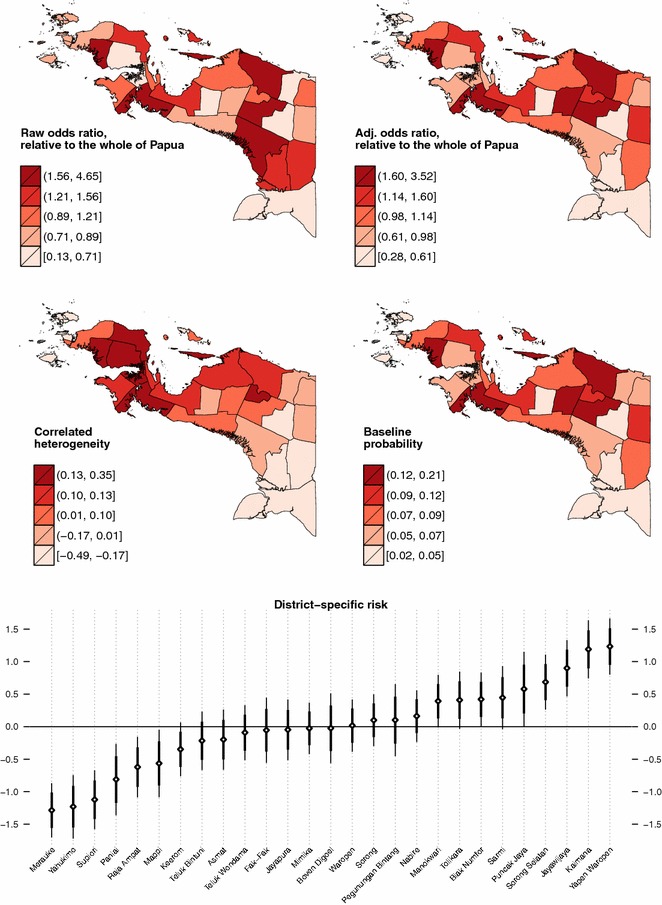
Despite being one of the world's most affected regions, only little is known about the social and spatial distributions of malaria in Indonesian Papua. Existing studies tend to be descriptive in nature; their inferences are prone to confounding and selection biases. At the same time, there remains limited malaria-cartographic activity in the region. Analysing a subset (N = 22,643) of the National Basic Health Research 2007 dataset (N = 987,205), this paper aims to quantify the district-specific risk of malaria in Papua and to understand how socio-demographic/economic factors measured at individual and district levels are associated with individual's probability of contracting the disease.
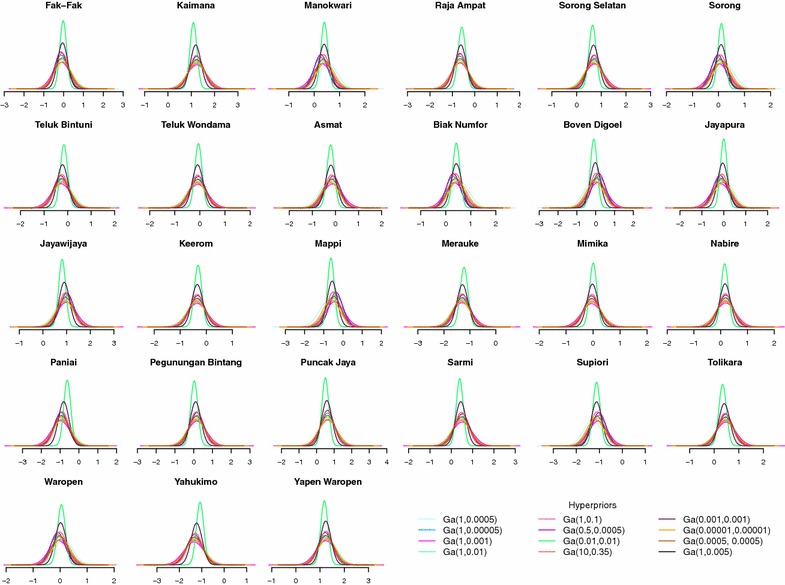
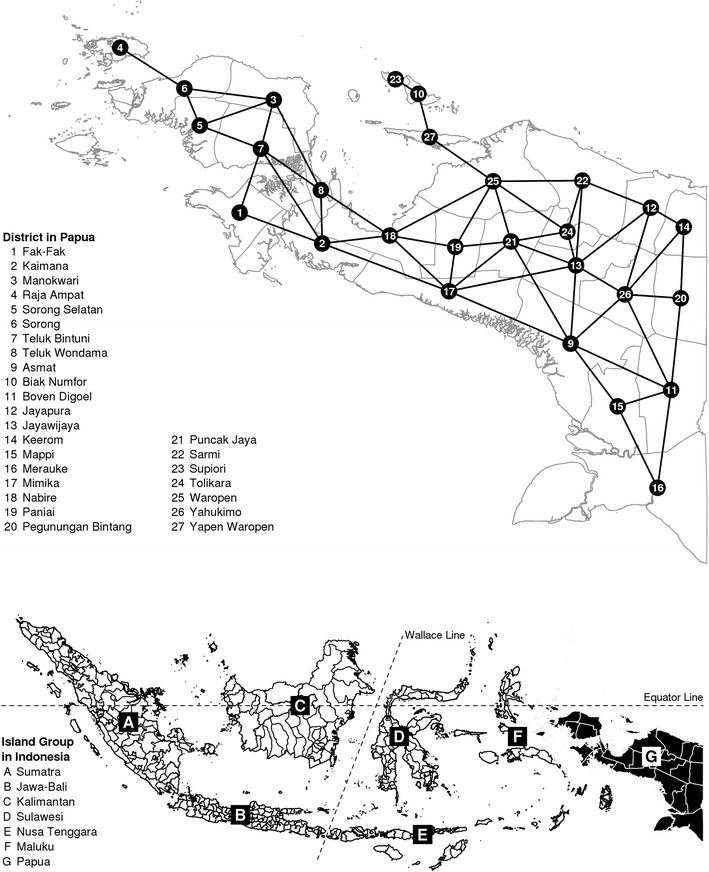
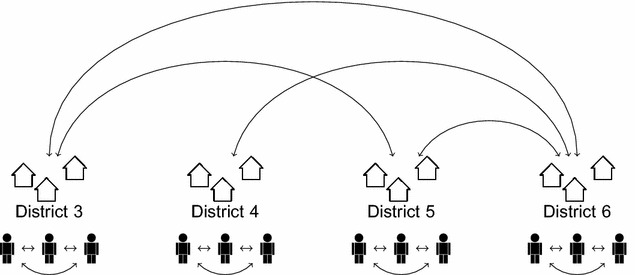
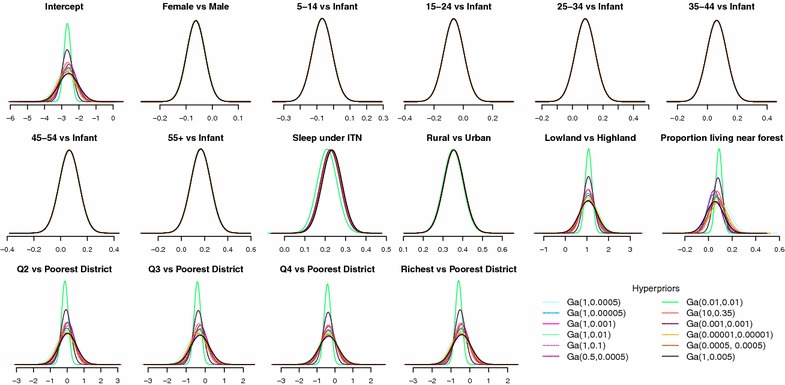
We adopt a Bayesian hierarchical logistic regression model that accommodates not only the nesting of individuals within the island's 27 administrative units but also the spatial autocorrelation among these locations. Both individual and contextual characteristics are included as predictors in the model; a normal conditional autoregressive prior and an exchangeable one are assigned to the random effects. Robustness is then assessed through sensitivity analyses using alternative hyperpriors.
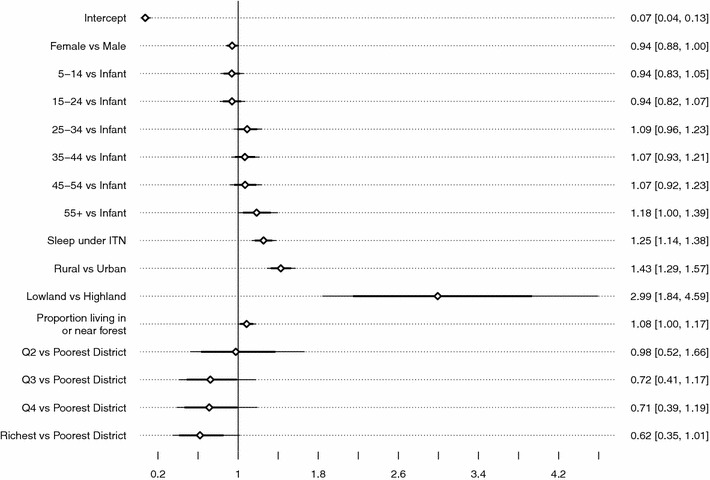
We find that rural Papuans as well as those who live in poor, densely forested, lowland districts are at a higher risk of infection than their counterparts. We also find age and gender differentials in malaria prevalence, if only to a small degree. Nine districts are estimated to have higher-than-expected malaria risks; the extent of spatial variation on the island remains notable even after accounting for socio-demographic/economic risk factors.
Although we show that malaria is geography-dependent in Indonesian Papua, it is also a disease of poverty. This means that malaria eradication requires not only biological (proximal) interventions but also social (distal) ones.
尽管印度尼西亚巴布亚省是世界上受疟疾影响最严重的地区之一,但人们对该地区疟疾的社会和空间分布知之甚少。现有研究往往只是描述性的;其推断容易受到混杂因素和选择偏差的影响。与此同时,该地区的疟疾制图活动仍然有限。本文通过分析2007年全国基本卫生研究数据集(N = 987,205)的一个子集(N = 22,643),旨在量化巴布亚省各地区特定的疟疾风险,并了解在个体和地区层面测量的社会人口/经济因素如何与个体感染该疾病的概率相关。
我们采用贝叶斯分层逻辑回归模型,该模型不仅考虑了个体在该岛27个行政单位内的嵌套情况,还考虑了这些地点之间的空间自相关性。个体特征和背景特征均作为模型中的预测变量;对随机效应分别赋予正态条件自回归先验和可交换先验。然后通过使用替代超先验的敏感性分析来评估稳健性。
我们发现,巴布亚农村居民以及生活在贫穷、森林茂密的低地地区的居民比其他人感染风险更高。我们还发现疟疾患病率存在年龄和性别差异,尽管程度较小。估计有9个地区的疟疾风险高于预期;即使在考虑了社会人口/经济风险因素之后,该岛上的空间变异程度仍然显著。
尽管我们表明在印度尼西亚巴布亚省疟疾与地理位置有关,但它也是一种贫困疾病。这意味着根除疟疾不仅需要生物(近端)干预措施,还需要社会(远端)干预措施。