Dytfeld Joanna, Michalak Michał
Department of Family Medicine, Poznan University of Medical Sciences, ul. Przybyszewskiego 49, 60-355, Poznań, Poland.
Department of Computer Science and Statistics, Poznan University of Medical Sciences, ul. Dąbrowskiego 79, 60-529, Poznań, Poland.
Aging Clin Exp Res. 2017 Apr;29(2):301-309. doi: 10.1007/s40520-016-0562-1. Epub 2016 Apr 12.
Observational studies on osteoporotic fractures in patients with type 2 diabetes indicate their increased incidence compared to those without diabetes, but results are inconsistent. Currently, type 2 diabetes is not considered as an independent risk factor for low-energy fractures in elder subjects. The aim of the study was to assess the association between type 2 diabetes and risk for hip and vertebral fractures in postmenopausal women.
We searched Medline, Web of Science and Cochrane databases for articles published before September 2013. Studies assessing fractures in women aged >50 diagnosed with type 2 diabetes, regardless of the diabetes treatment, were deemed eligible. To estimate fracture risk meta-analysis in a random effect model was performed. The results were shown by the odds ratio (OR) and 95 % confidence interval (CI). Heterogeneity was tested using a Q-Cochrane test (significance was analyzed with p < 0.10) and I measure.
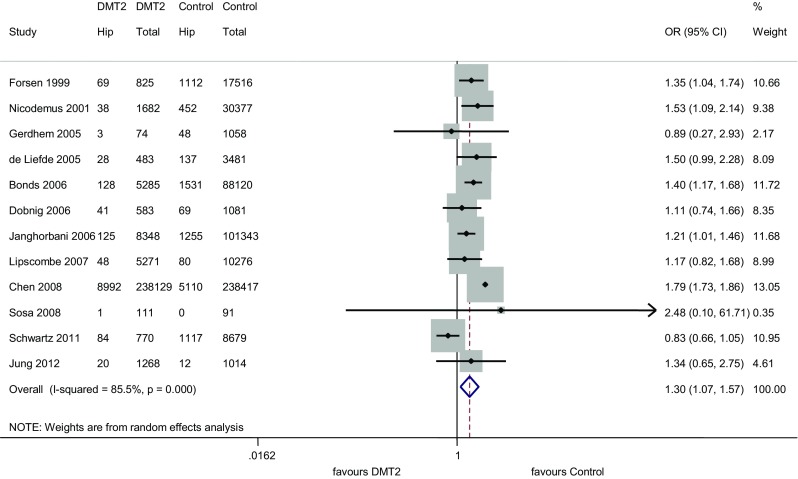
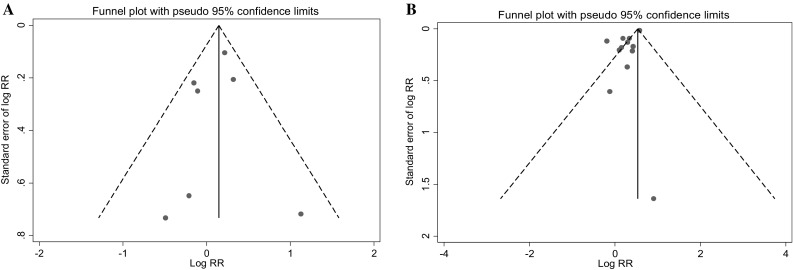
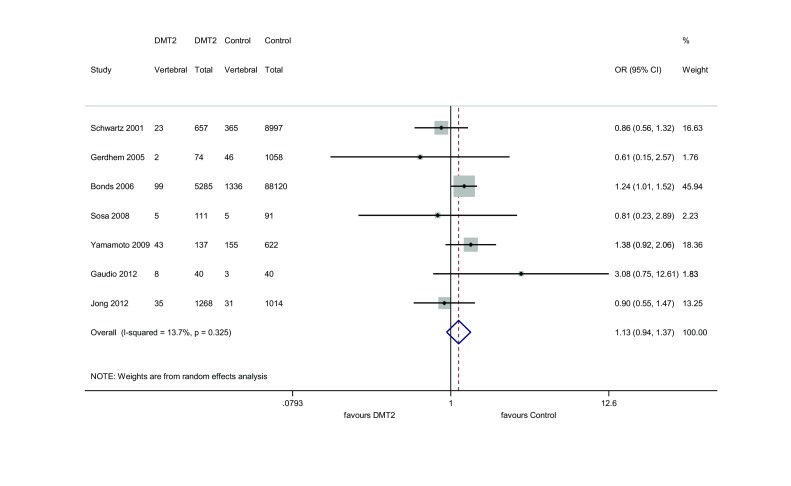
A total of 15 observational studies (11 cohort and 4 cross-sectional, 263.006 diabetics and 502.115 controls) were included. Thirteen papers provided information on the incidence of hip fractures, and seven on vertebral ones. The meta-analysis revealed type 2 diabetes was associated with higher risk for hip fracture (OR 1.296, 95 % CI (1.069-1.571), but not vertebral fracture (OR = 1.134, 95 % CI (0.936-1.374). There was significant heterogeneity between hip fracture studies. American origin was identified as a potential source of such heterogeneity.
The results of our meta-analysis indicate there is an increased risk for hip fracture in postmenopausal women with type 2 diabetes.
关于2型糖尿病患者骨质疏松性骨折的观察性研究表明,与非糖尿病患者相比,其骨折发生率有所增加,但结果并不一致。目前,2型糖尿病在老年人群中不被视为低能量骨折的独立危险因素。本研究的目的是评估2型糖尿病与绝经后女性髋部和椎体骨折风险之间的关联。
我们检索了Medline、科学网和Cochrane数据库中2013年9月之前发表的文章。评估年龄>50岁的2型糖尿病女性骨折情况的研究,无论其糖尿病治疗方式如何,均被视为合格。采用随机效应模型进行骨折风险的荟萃分析。结果以比值比(OR)和95%置信区间(CI)表示。使用Q - Cochrane检验(p < 0.10时分析其显著性)和I²测量法检验异质性。
共纳入15项观察性研究(11项队列研究和4项横断面研究,263,006名糖尿病患者和502,115名对照)。13篇论文提供了髋部骨折发生率的信息,7篇提供了椎体骨折发生率的信息。荟萃分析显示,2型糖尿病与髋部骨折风险较高相关(OR 1.296,95% CI(1.069 - 1.571)),但与椎体骨折无关(OR = 1.134,95% CI(0.936 - 1.374))。髋部骨折研究之间存在显著异质性。美国的研究被确定为这种异质性的潜在来源。
我们的荟萃分析结果表明,2型糖尿病绝经后女性髋部骨折风险增加。