Cedikova Miroslava, Kripnerová Michaela, Dvorakova Jana, Pitule Pavel, Grundmanova Martina, Babuska Vaclav, Mullerova Dana, Kuncova Jitka
Department of Physiology, Faculty of Medicine in Pilsen, Charles University in Prague, 301 00 Pilsen, Czech Republic; Biomedical Centre, Faculty of Medicine in Pilsen, Charles University in Prague, 301 00 Pilsen, Czech Republic.
Department of Biology, Faculty of Medicine in Pilsen, Charles University in Prague, 301 00 Pilsen, Czech Republic.
Stem Cells Int. 2016;2016:6067349. doi: 10.1155/2016/6067349. Epub 2016 Mar 17.
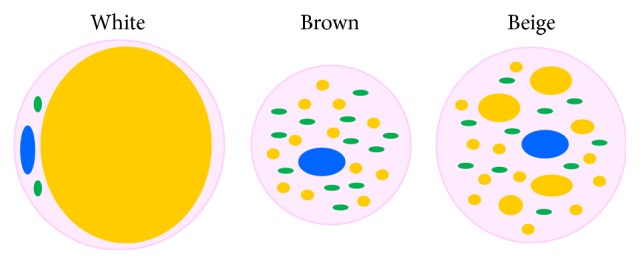
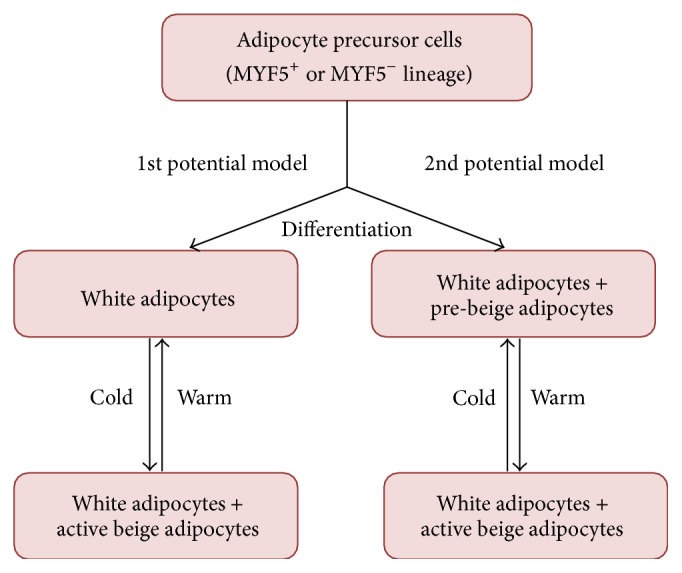
Mitochondria play a key role in energy metabolism in many tissues, including cardiac and skeletal muscle, brain, liver, and adipose tissue. Three types of adipose depots can be identified in mammals, commonly classified according to their colour appearance: the white (WAT), the brown (BAT), and the beige/brite/brown-like (bAT) adipose tissues. WAT is mainly involved in the storage and mobilization of energy and BAT is predominantly responsible for nonshivering thermogenesis. Recent data suggest that adipocyte mitochondria might play an important role in the development of obesity through defects in mitochondrial lipogenesis and lipolysis, regulation of adipocyte differentiation, apoptosis, production of oxygen radicals, efficiency of oxidative phosphorylation, and regulation of conversion of white adipocytes into brown-like adipocytes. This review summarizes the main characteristics of each adipose tissue subtype and describes morphological and functional modifications focusing on mitochondria and their activity in healthy and unhealthy adipocytes.
线粒体在包括心肌、骨骼肌、脑、肝脏和脂肪组织在内的许多组织的能量代谢中起着关键作用。在哺乳动物中可识别出三种类型的脂肪库,通常根据其颜色外观进行分类:白色(白色脂肪组织)、棕色(棕色脂肪组织)和米色/亮/类棕色(米色脂肪组织)脂肪组织。白色脂肪组织主要参与能量的储存和动员,而棕色脂肪组织主要负责非寒战产热。最近的数据表明,脂肪细胞线粒体可能通过线粒体脂肪生成和脂肪分解缺陷、脂肪细胞分化调节、细胞凋亡、氧自由基产生、氧化磷酸化效率以及白色脂肪细胞向类棕色脂肪细胞转化的调节,在肥胖的发生发展中发挥重要作用。本综述总结了每种脂肪组织亚型的主要特征,并描述了聚焦于线粒体及其在健康和不健康脂肪细胞中的活性的形态学和功能改变。