Santos Marília Harumi Higuchi, Higuchi Maria de Lourdes, Tucci Paulo J F, Garavelo Shérrira M, Reis Márcia M, Antonio Ednei L, Serra Andrey J, Maranhão Raul Cavalcante
Laboratório de Patologia Cardíaca, Instituto do Coração (InCor), Hospital das Clínicas da Faculdade de Medicina da Universidade de São Paulo, São Paulo/, SP, Brazil.
Universidade Federal de São Paulo (UNIFESP), Cardiologia, São Paulo/, Brazil.
Clinics (Sao Paulo). 2016 Mar;71(3):163-8. doi: 10.6061/clinics/2016(03)08.
Exercise is a protective factor for cardiovascular morbidity and mortality, with unclear mechanisms. Changing the myocardial metabolism causes harmful consequences for heart function and exercise contributes to metabolic adjustment modulation. Peroxisome proliferator-activated receptors (PPARs) are also myocardium metabolism regulators capable of decreasing the inflammatory response. We hypothesized that PPAR-α is involved in the beneficial effects of previous exercise on myocardial infarction (MI) and cardiac function, changing the expression of metabolic and inflammatory response regulators and reducing myocardial apoptosis, which partially explains the better outcome.
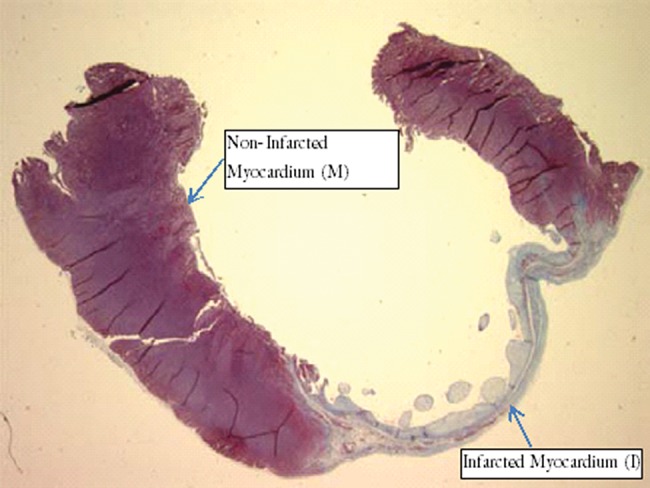
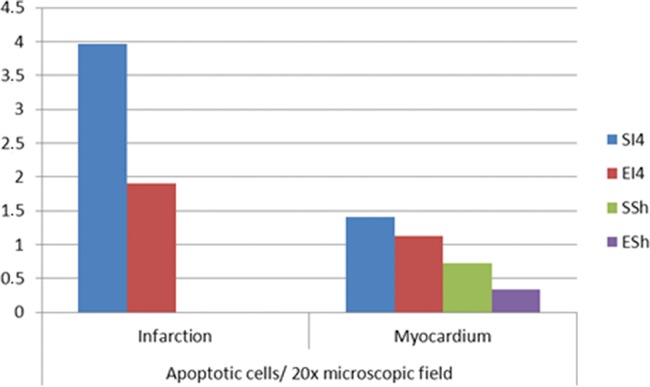
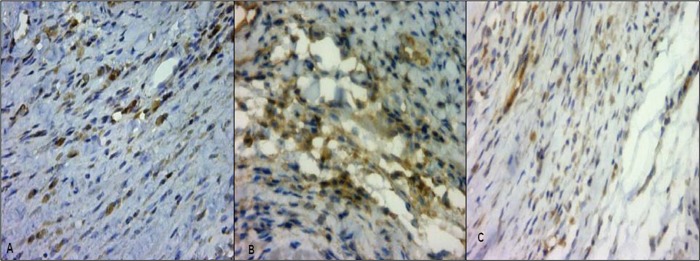
Exercised rats engaged in swimming sessions for 60 min/day, 5 days/week, for 8 weeks. Both the exercised rats and sedentary rats were randomized to MI surgery and followed for 1 week (EI1 or SI1) or 4 weeks (EI4 or SI4) of healing or to sham groups. Echocardiography was employed to detect left ventricular function and the infarct size. Additionally, the TUNEL technique was used to assess apoptosis and immunohistochemistry was used to quantitatively analyze the PPAR-α, TNF-α and NF-κB antigens in the infarcted and non-infarcted myocardium. MI-related mortality was higher in SI4 than in EI4 (25% vs 12%), without a difference in MI size. SI4 exhibited a lower shortening fraction than EI4 did (24% vs 35%) and a higher apoptosis/area rate (3.97±0.61 vs 1.90±1.82) in infarcted areas (both p=0.001). Immunohistochemistry also revealed higher TNF-α levels in SI1 than in EI1 (9.59 vs 4.09, p<0.001) in infarcted areas. In non-infarcted areas, EI4 showed higher levels of TNF-α and positive correlations between PPAR-α and NF-κB (r=0.75, p=0.02), in contrast to SI4 (r=0.05, p=0.87).
Previously exercised animals had better long-term ventricular function post-MI, in addition to lower levels of local inflammatory markers and less myocardial apoptosis, which seemed to be related to the presence of PPAR-α.
运动是心血管疾病发病率和死亡率的保护因素,但其机制尚不清楚。改变心肌代谢会对心脏功能产生有害影响,而运动有助于调节代谢适应。过氧化物酶体增殖物激活受体(PPARs)也是心肌代谢调节剂,能够降低炎症反应。我们假设PPAR-α参与了先前运动对心肌梗死(MI)和心脏功能的有益作用,改变了代谢和炎症反应调节因子的表达,并减少了心肌细胞凋亡,这部分解释了更好的结果。
运动大鼠每天进行60分钟的游泳训练,每周5天,共8周。将运动大鼠和久坐大鼠随机分为MI手术组,并分别随访1周(EI1或SI1)或4周(EI4或SI4)的愈合情况,或分为假手术组。采用超声心动图检测左心室功能和梗死面积。此外,采用TUNEL技术评估细胞凋亡,采用免疫组织化学法定量分析梗死心肌和非梗死心肌中的PPAR-α、TNF-α和NF-κB抗原。SI4组的MI相关死亡率高于EI4组(25%对12%),梗死面积无差异。SI4组梗死区域的缩短分数低于EI4组(24%对35%),凋亡/面积率更高(3.97±0.61对1.90±1.82)(均p=0.001)。免疫组织化学还显示,梗死区域SI1组的TNF-α水平高于EI1组(9.59对4.09,p<0.001)。在非梗死区域,EI4组的TNF-α水平较高,且PPAR-α与NF-κB之间呈正相关(r=0.75,p=0.02),而SI4组则相反(r=0.05,p=0.87)。
先前运动的动物在MI后具有更好的长期心室功能,此外局部炎症标志物水平较低,心肌细胞凋亡较少,这似乎与PPAR-α的存在有关。