Bakirtzi Kyriaki, Law Ivy Ka Man, Xue Xiang, Iliopoulos Dimitrios, Shah Yatrik M, Pothoulakis Charalabos
Inflammatory Bowel Disease Center, David Geffen School of Medicine, University of California, Los Angeles, Los Angeles, CA 90095;
Division of Gastroenterology, Department of Molecular and Integrative Physiology, University of Michigan Medical School, Ann Arbor, MI 48109;
J Immunol. 2016 May 15;196(10):4311-21. doi: 10.4049/jimmunol.1501443. Epub 2016 Apr 13.
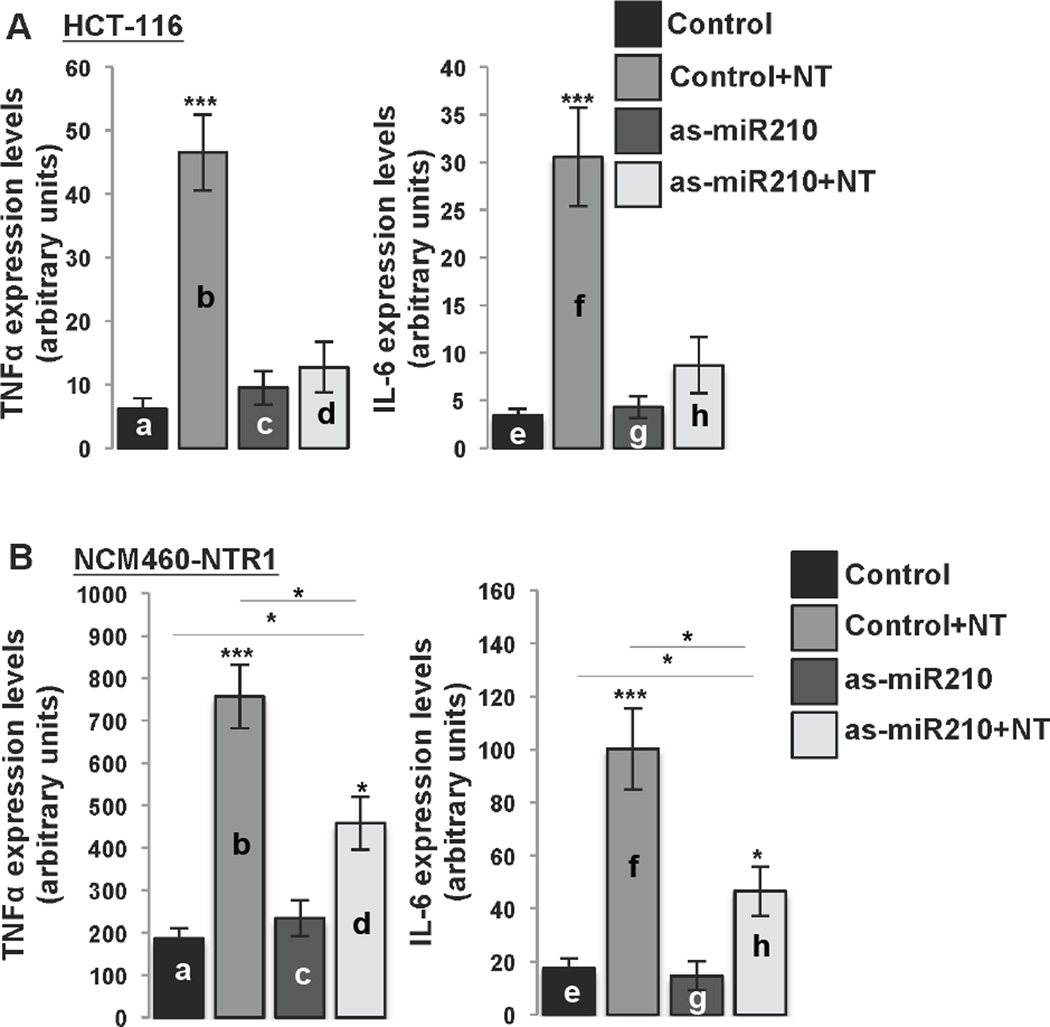
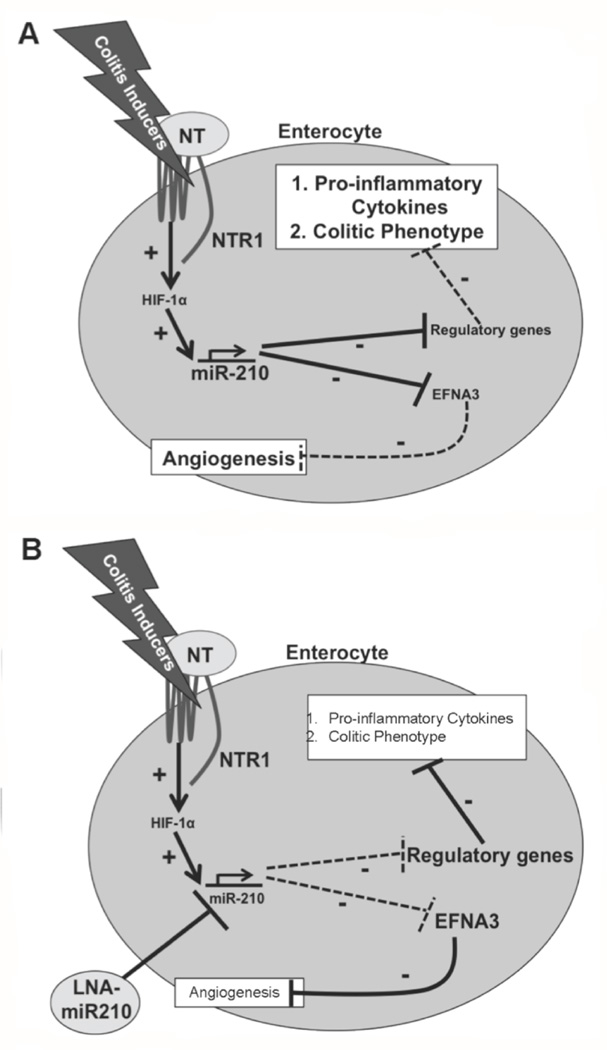
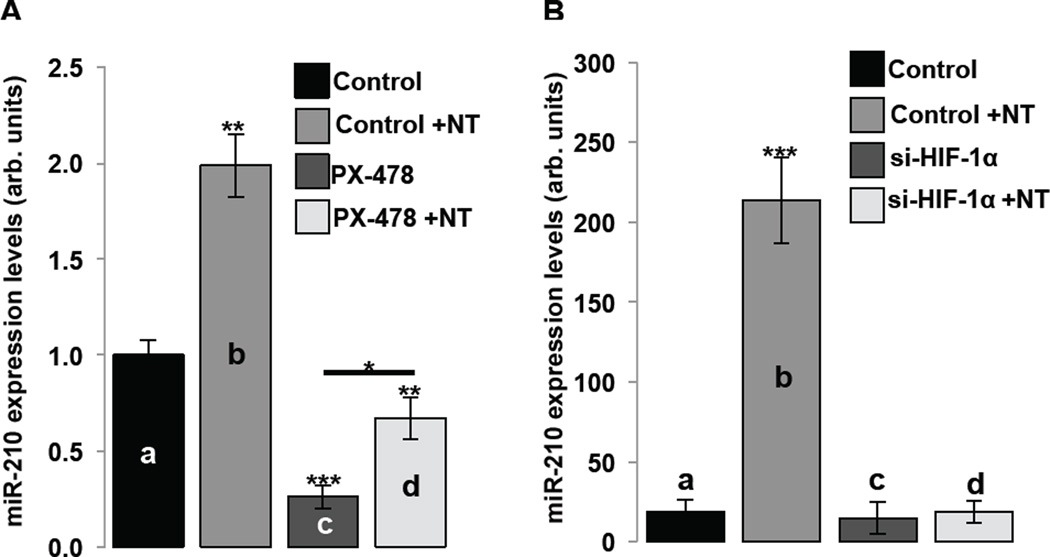
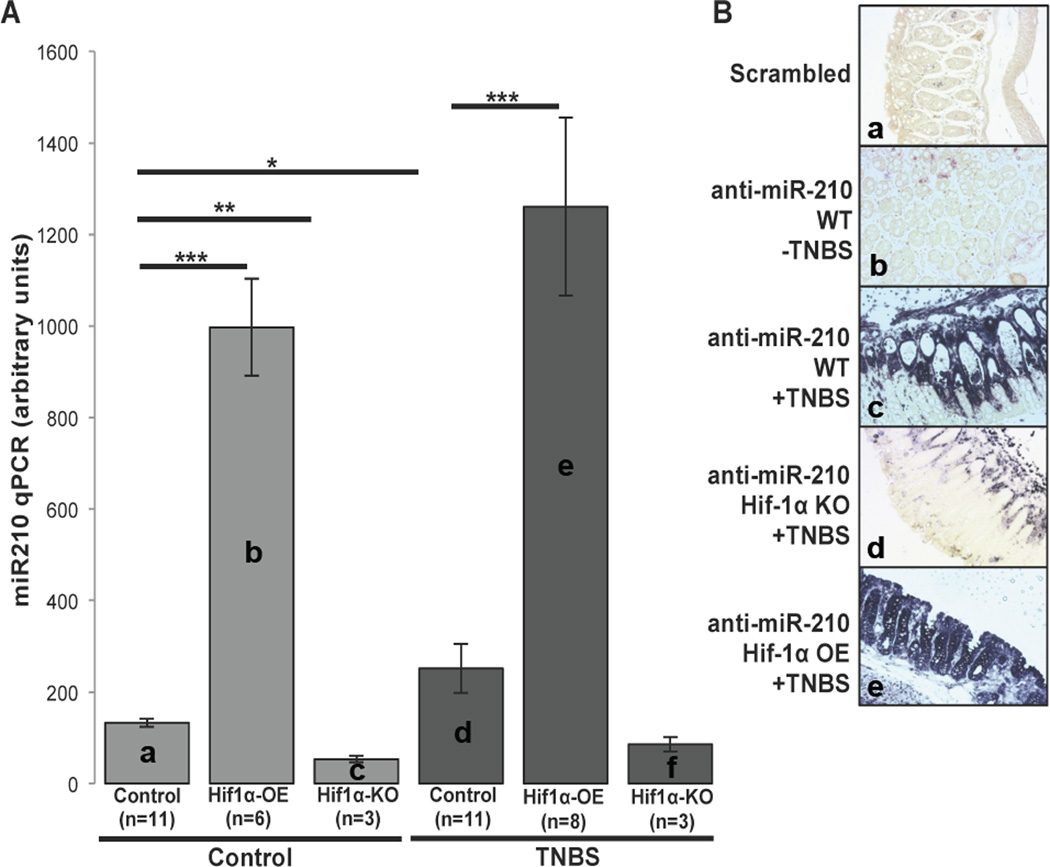
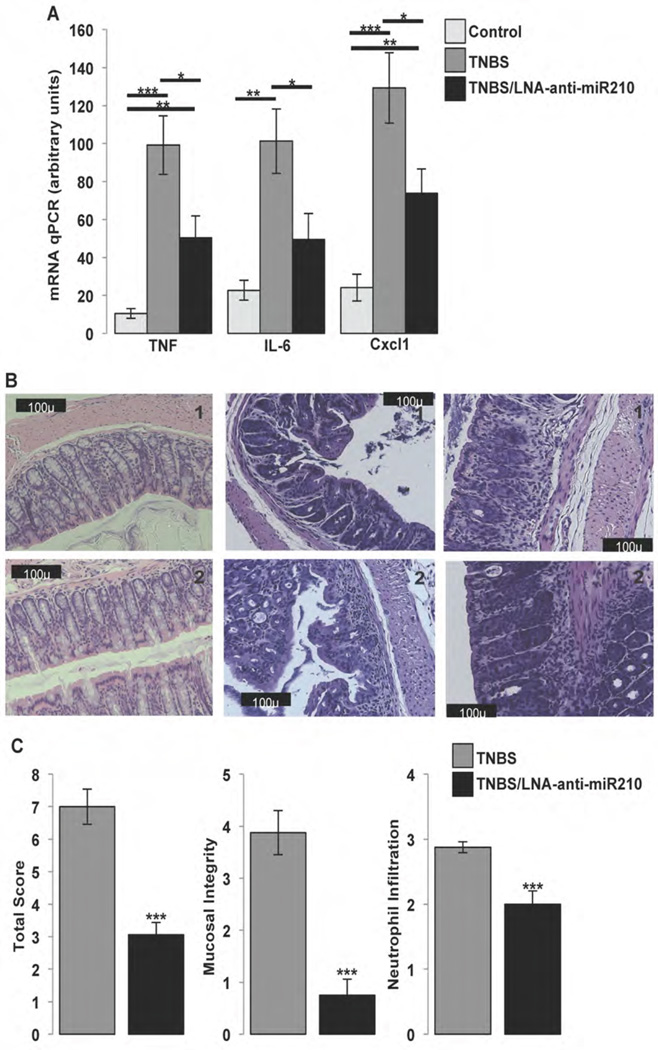
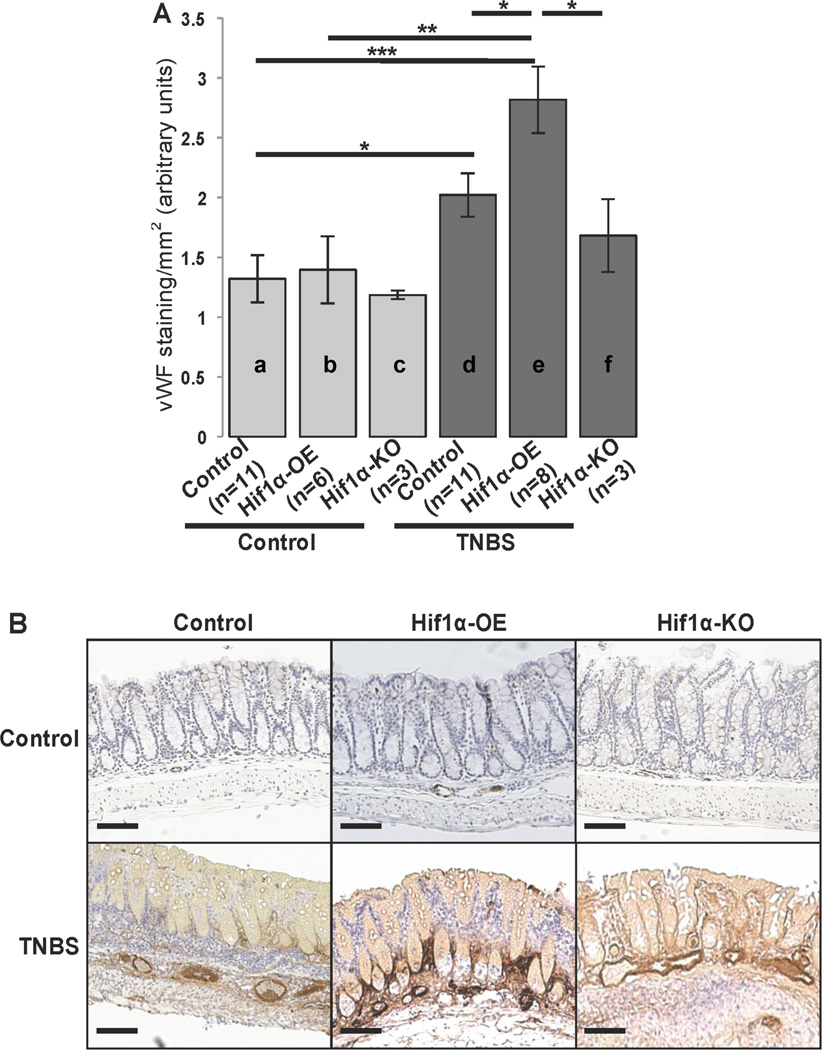
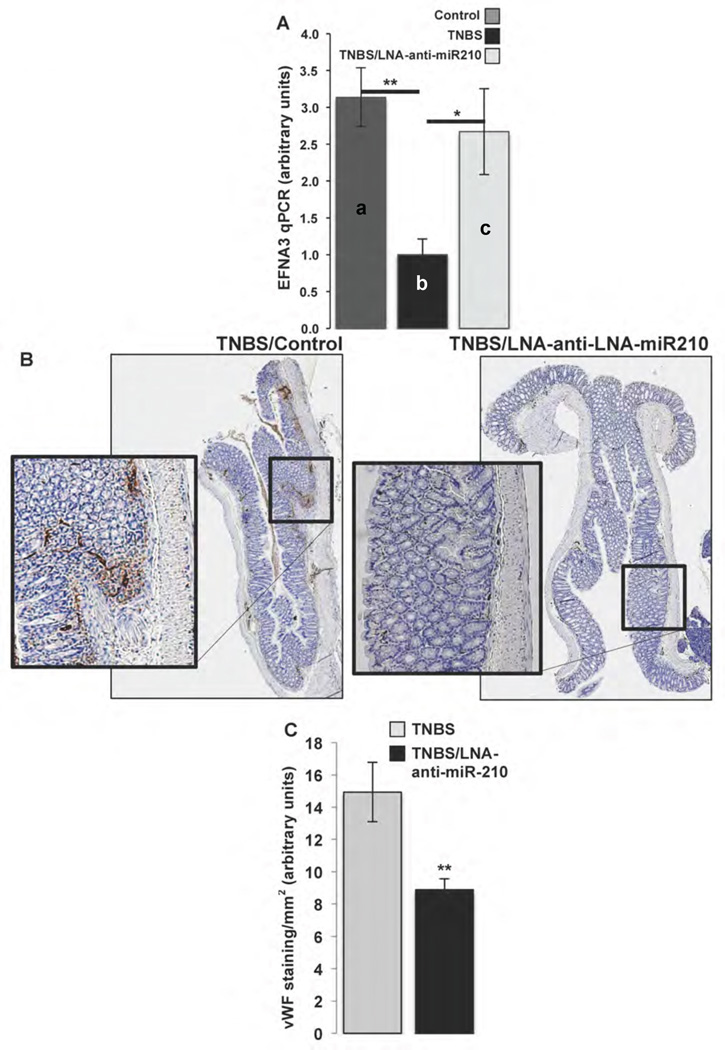
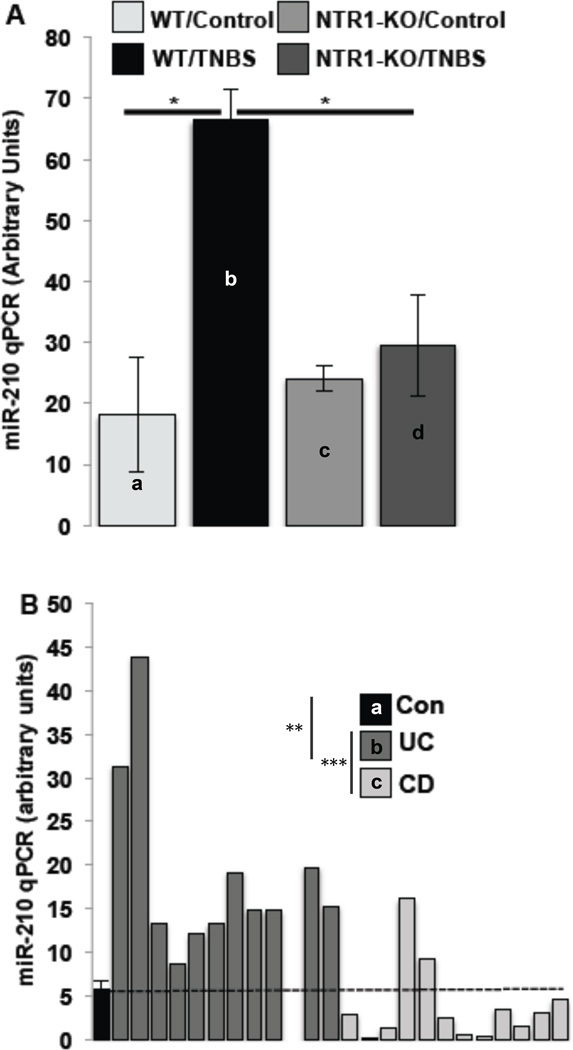
Neurotensin (NT) via its receptor 1 (NTR1) modulates the development of colitis, decreases HIF-1α/PHD2 interaction, stabilizes and increases HIF-1α transcriptional activity, and promotes intestinal angiogenesis. HIF-1α induces miR-210 expression, whereas miR-210 is strongly upregulated in response to NT in NCM460 human colonic epithelial cells overexpressing NTR1 (NCM460-NTR1). In this study, we examined whether NT activates a NTR1-HIF-1α-miR-210 cascade using in vitro (NCM460-NTR1 cells) and in vivo (transgenic mice overexpressing [HIF-1α-OE] or lacking HIF-1α [HIF-1α-knockout (KO)] in intestinal epithelial cells and mice lacking NTR1 [NTR1-KO]) models. Pretreatment of NCM460-NTR1 cells with the HIF-1α inhibitor PX-478 or silencing of HIF-1α (small interfering HIF-1α) attenuated miR-210 expression in response to NT. Intracolonic 2,4,6-trinitrobenzenesulfonic acid (TNBS) administration (2-d model) increased colonic miR-210 expression that was significantly reduced in NTR1-KO, HIF-1α-KO mice, and wild-type mice pretreated intracolonically with locked nucleic acid anti-miR-210. In contrast, HIF-1α-OE mice showed increased miR-210 expression at baseline that was further increased following TNBS administration. HIF-1α-OE mice had also exacerbated TNBS-induced neovascularization compared with TNBS-exposed wild-type mice. TNBS-induced neovascularization was attenuated in HIF-1α-KO mice, or mice pretreated intracolonically with anti-miR-210. Intracolonic anti-miR-210 also reduced colitis in response to TNBS (2 d). Importantly, miR-210 expression was increased in tissue samples from ulcerative colitis patients. We conclude that NT exerts its proinflammatory and proangiogenic effects during acute colitis via a NTR1-prolyl hydroxylase 2/HIF-1α-miR-210 signaling pathway. Our results also demonstrate that miR-210 plays a proinflammatory role in the development of colitis.
神经降压素(NT)通过其受体1(NTR1)调节结肠炎的发展,减少低氧诱导因子-1α(HIF-1α)/脯氨酰羟化酶2(PHD2)的相互作用,稳定并增加HIF-1α的转录活性,促进肠道血管生成。HIF-1α诱导微小RNA-210(miR-210)的表达,而在过表达NTR1的NCM460人结肠上皮细胞(NCM460-NTR1)中,miR-210在NT作用下强烈上调。在本研究中,我们使用体外(NCM460-NTR1细胞)和体内(肠道上皮细胞中过表达[HIF-1α过表达(HIF-1α-OE)]或缺乏HIF-1α[HIF-1α基因敲除(KO)]的转基因小鼠以及缺乏NTR1的小鼠[NTR1-KO])模型,研究NT是否激活NTR1-HIF-1α-miR-210信号级联反应。用HIF-1α抑制剂PX-478预处理NCM460-NTR1细胞或使HIF-1α沉默(小干扰HIF-1α)可减弱NT诱导的miR-210表达。结肠内注射2,4,6-三硝基苯磺酸(TNBS)(2天模型)可增加结肠miR-210表达,而在NTR1-KO、HIF-1α-KO小鼠以及结肠内预先注射锁核酸抗miR-210的野生型小鼠中,该表达显著降低。相反,HIF-1α-OE小鼠在基线时miR-210表达增加,TNBS注射后进一步升高。与TNBS处理的野生型小鼠相比,HIF-1α-OE小鼠的TNBS诱导的新生血管生成也更严重。在HIF-1α-KO小鼠或结肠内预先注射抗miR-210的小鼠中,TNBS诱导的新生血管生成减弱。结肠内注射抗miR-210也可减轻TNBS诱导的结肠炎(2天)。重要的是,溃疡性结肠炎患者的组织样本中miR-210表达增加。我们得出结论,NT在急性结肠炎期间通过NTR1-脯氨酰羟化酶2/HIF-1α-miR-210信号通路发挥其促炎和促血管生成作用。我们的结果还表明,miR-210在结肠炎发展中起促炎作用。