Raman Sivakumar Thasma, Ganeshan Ajay Krishna Palani Gounder, Chen Cheng, Jin Chao, Li Shao-Hui, Chen Hui-Juan, Gui Zhongzheng
School of Biotechnology, Jiangsu University of Science and Technology, Zhenjiang 212018, Jiangsu Province, P.R. China.
Pharmacogn Mag. 2016 Apr-Jun;12(46):128-33. doi: 10.4103/0973-1296.177910.
Many plants possess antioxidants that exhibit additive or synergistic activities.
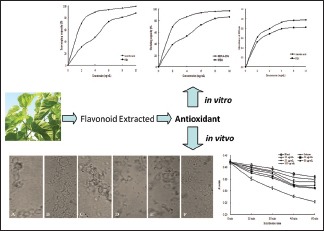
In this study, an ethanol-extracted flavonoid extracted from mulberry fruit (FEM) was evaluated for the antioxidant activity in vitro and the hemolysis in red blood cell (RBC) and lipid peroxidation in liver in vivo.
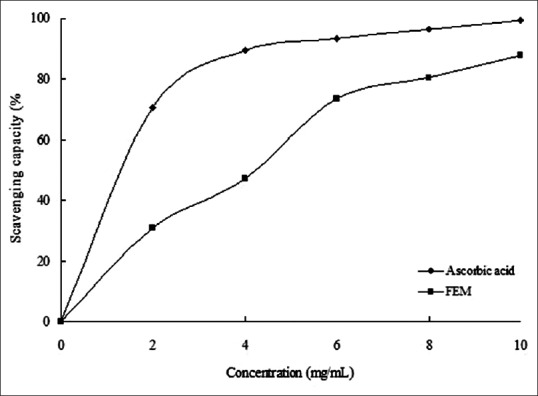
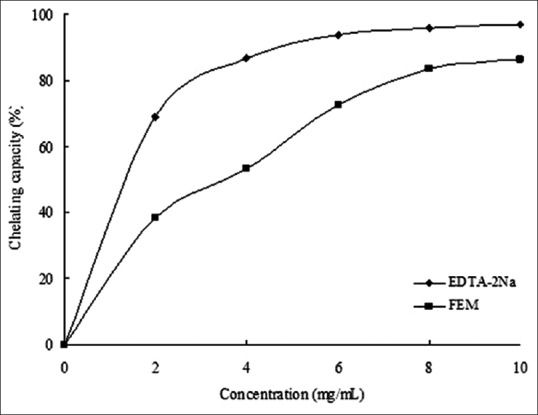
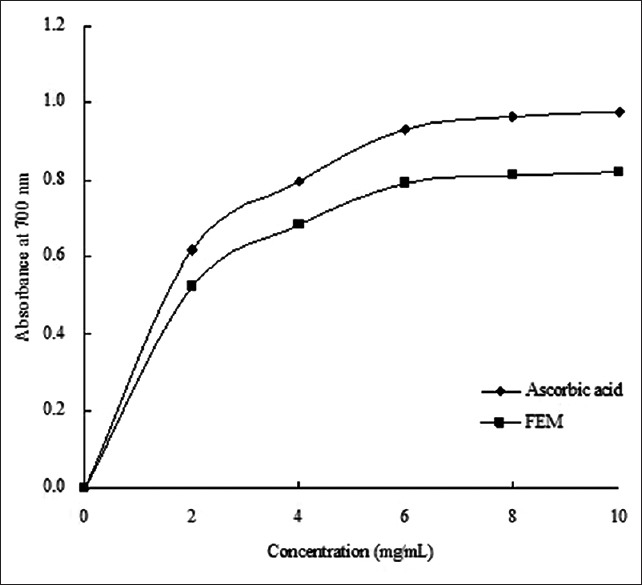
Antioxidant activities in vitro were measured by quantifying its 2,2-diphenyl-1-picrylhydrazyl (DPPH) scavenging activity, reducing power, and Fe(2+)-chelating ability. FEM inhibits hemolysis in RBCs and effects of lipid peroxidation in the liver were estimated.
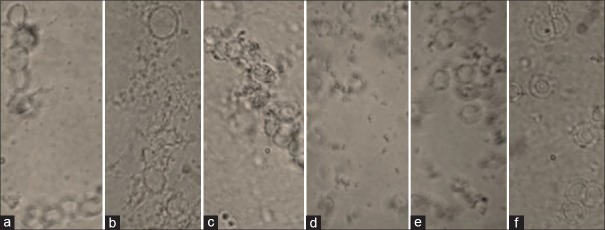
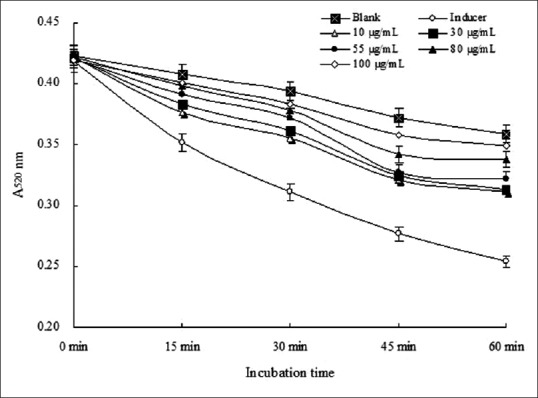
The total content of flavonoid compounds was 187.23 mg of quercetin equivalents per grams dried material. In the in vitro assays, FEM demonstrated a strong antioxidant effect, especially in DPPH scavenging activity and reducing power. Mouse RBC hemolysis induced by H2O2 was significantly inhibited by FEM in a dose- and time-dependent manner. The effects of FEM on lipid peroxidation in liver, mitochondria, and microsome were investigated. The percentage of inhibition at high concentration (100 μg/mL) of FEM was 45.51%, 39.36%, and 42.78% for liver, mitochondria, and microsomes, respectively. These results suggest that the FEM possesses a strong antioxidant activity both in vivo and in vitro.
The total content of flavonoid compounds in mulberry fruit was 187.23 mg/g dried materialFEM showed a strong antioxidant effect, especially in 2,2-diphenyl-1-picrylhydrazyl scavenging activity and reducing powerMouse red blood cell hemolysis induced by H2O2 was significantly inhibited by FEM in a dose- and time-dependent mannerThe inhibition percentage at high concentration of FEM was 45.51%, 39.36%, and 42.78% for mouse's liver, mitochondrial, and microsomes, respectively. Abbreviations used: FEM: Flavonoid Extracted from Mulberry fruit, H2O2: Hydrogen peroxide, DPPH: 2,2-diphenyl-1-picrylhydrazyl, EDTA: Ethylene diamine tetraacetic acid, MDA: malondialdehyde, TBA: 2-thiobarbituric acid, RBC: Red blood cells, DNJ: 1-deoxynojirimycin, LDL: low density lipoprotein, ROS: reactive oxygen species, EDTA2Na: Ethylenediaminetetraacetic acid disodium salt.
许多植物含有具有相加或协同活性的抗氧化剂。
本研究对从桑椹果实中提取的乙醇黄酮(FEM)进行体外抗氧化活性、体内红细胞溶血及肝脏脂质过氧化作用的评价。
通过测定其对2,2-二苯基-1-苦基肼(DPPH)的清除活性、还原力及Fe(2+)螯合能力来检测体外抗氧化活性。评估FEM对红细胞溶血的抑制作用及对肝脏脂质过氧化的影响。
黄酮类化合物的总含量为每克干物质187.23毫克槲皮素当量。在体外试验中,FEM表现出较强的抗氧化作用,尤其是在DPPH清除活性和还原力方面。FEM以剂量和时间依赖性方式显著抑制H2O2诱导的小鼠红细胞溶血。研究了FEM对肝脏、线粒体和微粒体脂质过氧化的影响。FEM高浓度(100μg/mL)时对肝脏、线粒体和微粒体的抑制率分别为45.51%、39.36%和42.78%。这些结果表明FEM在体内和体外均具有较强的抗氧化活性。
桑椹果实中黄酮类化合物的总含量为187.23mg/g干物质。FEM表现出较强的抗氧化作用,尤其是在2,2-二苯基-1-苦基肼清除活性和还原力方面。FEM以剂量和时间依赖性方式显著抑制H2O2诱导的小鼠红细胞溶血。FEM高浓度时对小鼠肝脏、线粒体和微粒体的抑制率分别为45.51%、39.36%和42.78%。使用的缩写:FEM:从桑椹果实中提取的黄酮,H2O2:过氧化氢,DPPH:2,2-二苯基-1-苦基肼,EDTA:乙二胺四乙酸,MDA:丙二醛,TBA:2-硫代巴比妥酸,RBC:红细胞,DNJ:1-脱氧野尻霉素,LDL:低密度脂蛋白,ROS:活性氧,EDTA2Na:乙二胺四乙酸二钠盐。