Benowitz Neal L, Burbank Andrea D
Division of Clinical Pharmacology and Experimental Therapeutics, Medical Service, Department of Medicine, University of California, San Francisco, San Francisco, CA; Department of Bioengineering and Therapeutic Sciences, University of California, San Francisco, San Francisco, CA; Center for Tobacco Control Research and Education, University of California, San Francisco, CA.
Center for Tobacco Control Research and Education, University of California, San Francisco, CA.
Trends Cardiovasc Med. 2016 Aug;26(6):515-23. doi: 10.1016/j.tcm.2016.03.001. Epub 2016 Mar 10.
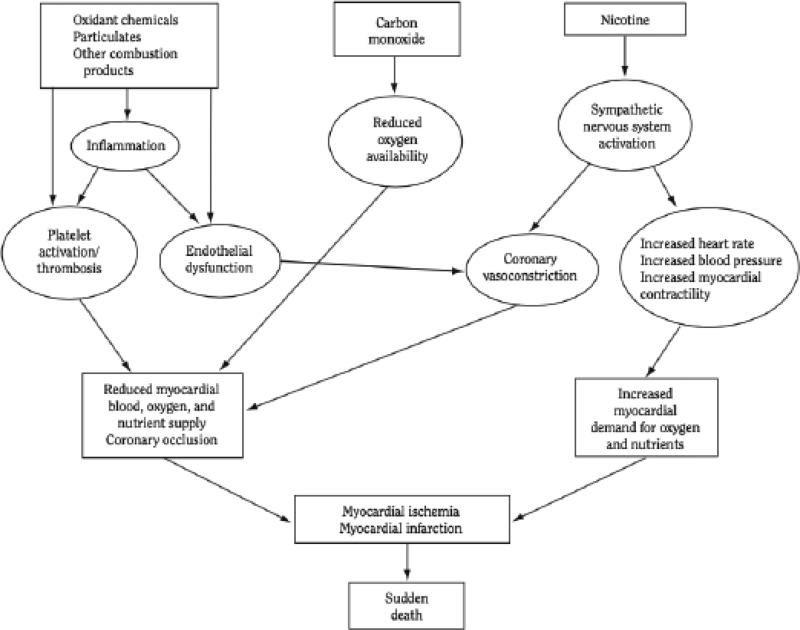
The cardiovascular safety of nicotine is an important question in the current debate on the benefits vs. risks of electronic cigarettes and related public health policy. Nicotine exerts pharmacologic effects that could contribute to acute cardiovascular events and accelerated atherogenesis experienced by cigarette smokers. Studies of nicotine medications and smokeless tobacco indicate that the risks of nicotine without tobacco combustion products (cigarette smoke) are low compared to cigarette smoking, but are still of concern in people with cardiovascular disease. Electronic cigarettes deliver nicotine without combustion of tobacco and appear to pose low-cardiovascular risk, at least with short-term use, in healthy users.
在当前关于电子烟的利弊及相关公共卫生政策的辩论中,尼古丁对心血管的安全性是一个重要问题。尼古丁具有药理作用,可能导致急性心血管事件,并加速吸烟者的动脉粥样硬化进程。对尼古丁药物和无烟烟草的研究表明,与吸烟相比,没有烟草燃烧产物(香烟烟雾)的尼古丁风险较低,但心血管疾病患者仍需关注。电子烟在不燃烧烟草的情况下输送尼古丁,至少在短期使用时,对健康使用者似乎造成较低的心血管风险。