Sun Na, Sun Panpan, Lv Haipeng, Sun Yaogui, Guo Jianhua, Wang Zhirui, Luo Tiantian, Wang Shaoyu, Li Hongquan
College of Animal Science and Veterinary Medicine, Shanxi Agricultural University, Taigu 030801 Shanxi, P. R. China.
Department of Pathobiology, College of Veterinary Medicine, Texas A&M University, College Station, Texas, USA.
Sci Rep. 2016 Apr 15;6:24401. doi: 10.1038/srep24401.
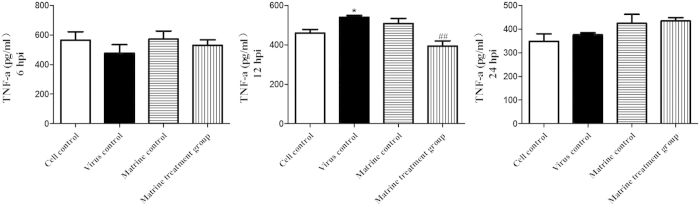
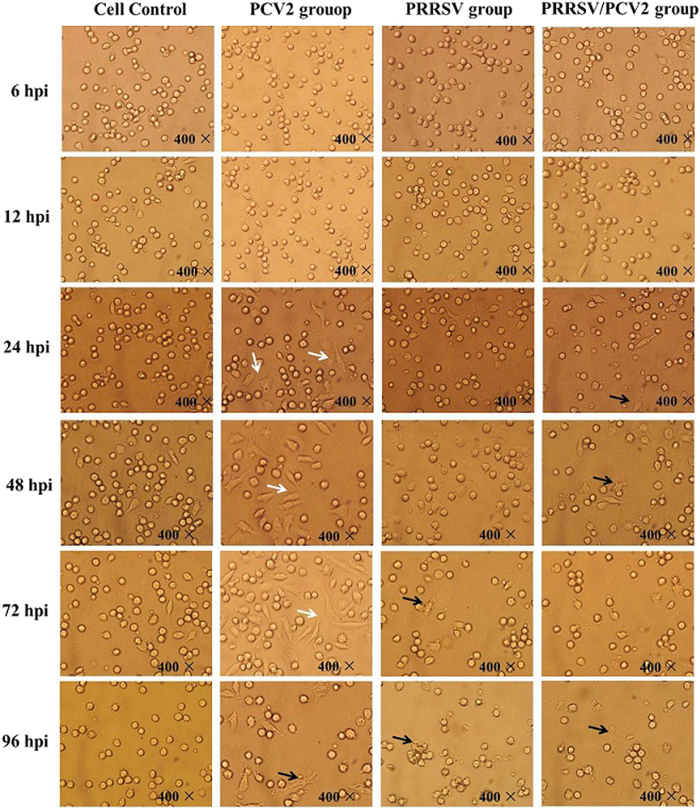
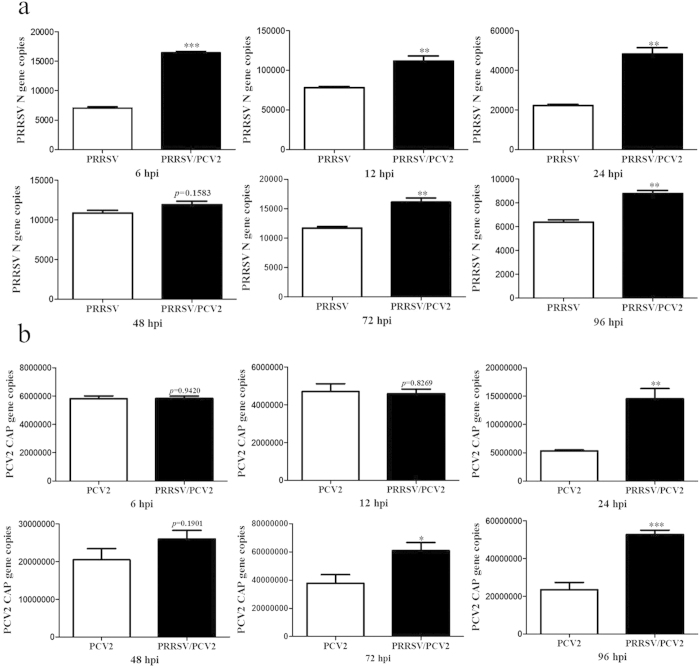
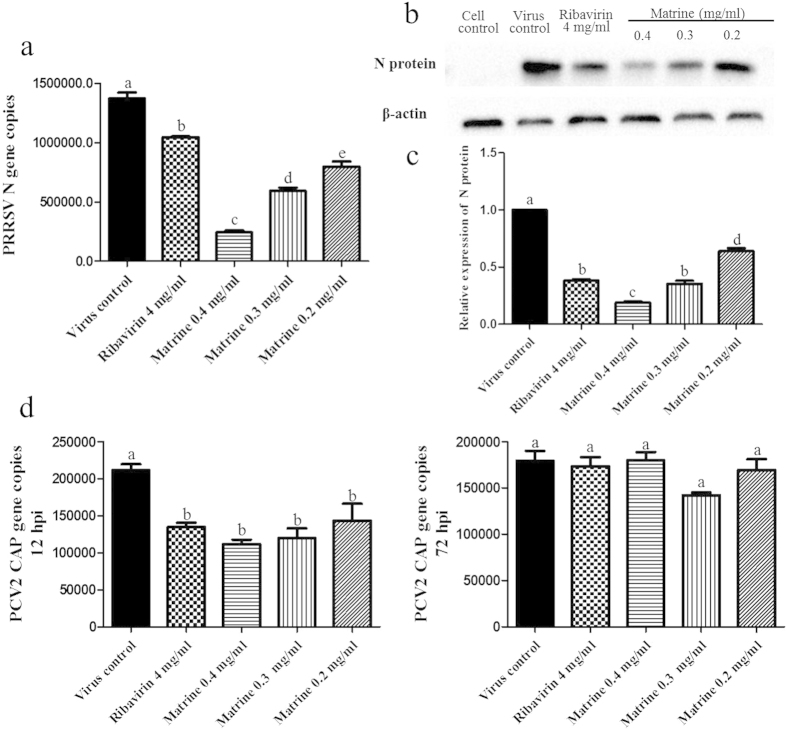
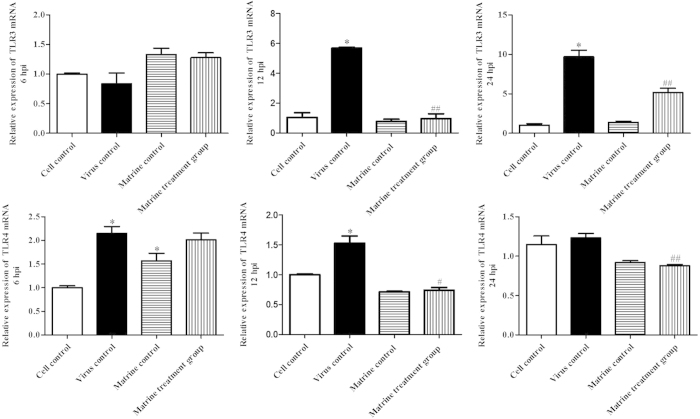
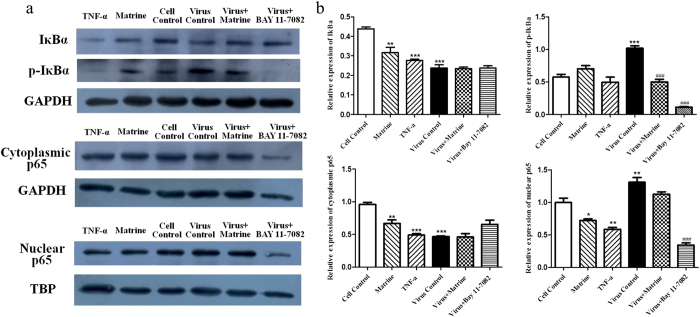
The co-infection of porcine reproductive respiratory syndrome virus (PRRSV) and porcine circovirus type 2 (PCV2) is quite common in clinical settings and no effective treatment to the co-infection is available. In this study, we established the porcine alveolar macrophages (PAM) cells model co-infected with PRRSV/PCV2 with modification in vitro, and investigated the antiviral activity of Matrine on this cell model and further evaluated the effect of Matrine on virus-induced TLR3,4/NF-κB/TNF-α pathway. The results demonstrated PAM cells inoculated with PRRSV followed by PCV2 2 h later enhanced PRRSV and PCV2 replications. Matrine treatment suppressed both PRRSV and PCV2 infection at 12 h post infection. Furthermore, PRRSV/PCV2 co- infection induced IκBα degradation and phosphorylation as well as the translocation of NF-κB from the cytoplasm to the nucleus indicating that PRRSV/PCV2 co-infection induced NF-κB activation. Matrine treatment significantly down-regulated the expression of TLR3, TLR4 and TNF-α although it, to some extent, suppressed p-IκBα expression, suggesting that TLR3,4/NF-κB/TNF-α pathway play an important role of Matrine in combating PRRSV/PCV2 co-infection. It is concluded that Matrine possesses activity against PRRSV/PCV2 co-infection in vitro and suppression of the TLR3,4/NF-κB/TNF-α pathway as an important underlying molecular mechanism. These findings warrant Matrine to be further explored for its antiviral activity in clinical settings.
猪繁殖与呼吸综合征病毒(PRRSV)和猪圆环病毒2型(PCV2)的混合感染在临床中相当常见,且目前尚无针对这种混合感染的有效治疗方法。在本研究中,我们在体外对猪肺泡巨噬细胞(PAM)进行改良,建立了PRRSV/PCV2混合感染的细胞模型,并研究了苦参碱对该细胞模型的抗病毒活性,进一步评估了苦参碱对病毒诱导的TLR3、4/NF-κB/TNF-α信号通路的影响。结果表明,先接种PRRSV,2小时后再接种PCV2的PAM细胞,PRRSV和PCV2的复制均增强。苦参碱处理在感染后12小时抑制了PRRSV和PCV2的感染。此外,PRRSV/PCV2混合感染诱导IκBα降解和磷酸化,以及NF-κB从细胞质向细胞核的转位,表明PRRSV/PCV2混合感染诱导了NF-κB激活。苦参碱处理显著下调了TLR3、TLR4和TNF-α的表达,尽管它在一定程度上抑制了p-IκBα的表达,这表明TLR3、4/NF-κB/TNF-α信号通路在苦参碱对抗PRRSV/PCV2混合感染中起重要作用。结论是,苦参碱在体外具有抗PRRSV/PCV2混合感染的活性,抑制TLR3、4/NF-κB/TNF-α信号通路是其重要的潜在分子机制。这些发现值得在临床环境中进一步探索苦参碱的抗病毒活性。