Liu Tao, Zhao Dong-xu, Cui Hua, Chen Lei, Bao Ying-hui, Wang Yong, Jiang Ji-yao
Department of Neurosurgery, Ren Ji Hospital, School of Medicine, Shanghai Jiao Tong University, Shanghai, China.
Department of Neurological Srgery, The People' s Hospital of Pu Dong New Area, Shanghai, China.
Sci Rep. 2016 Apr 15;6:24547. doi: 10.1038/srep24547.
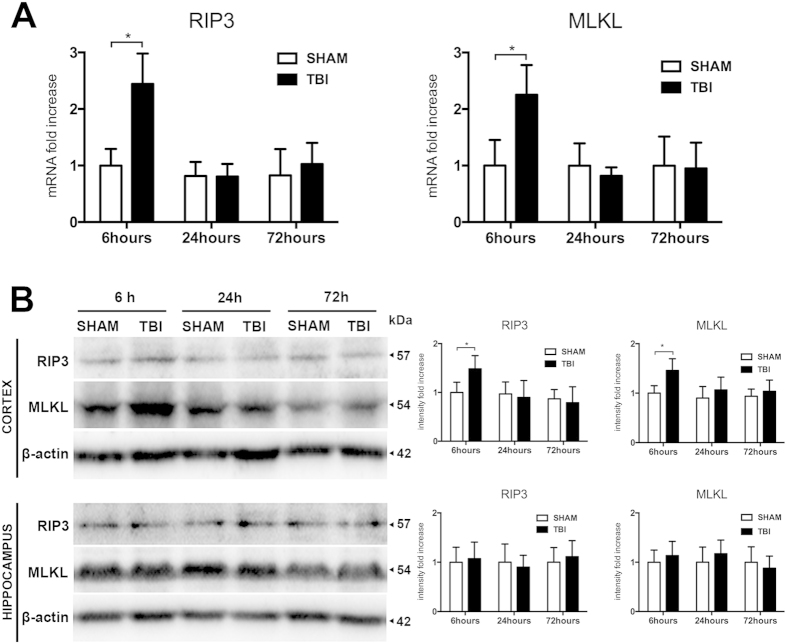
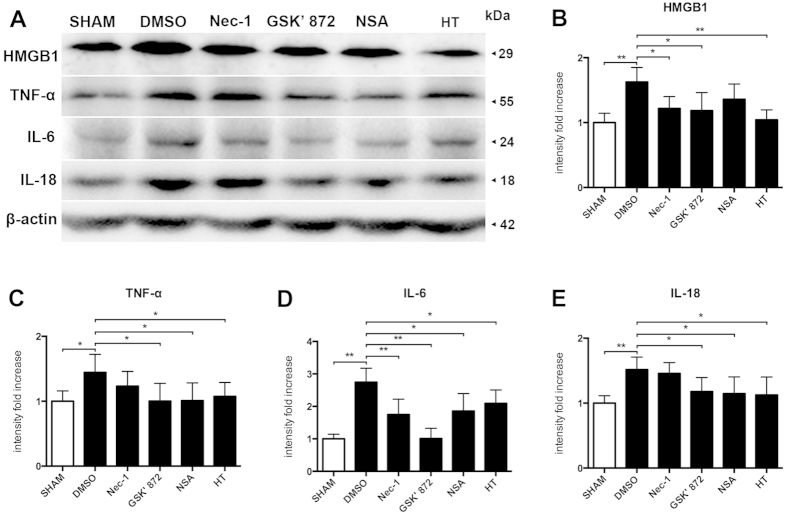
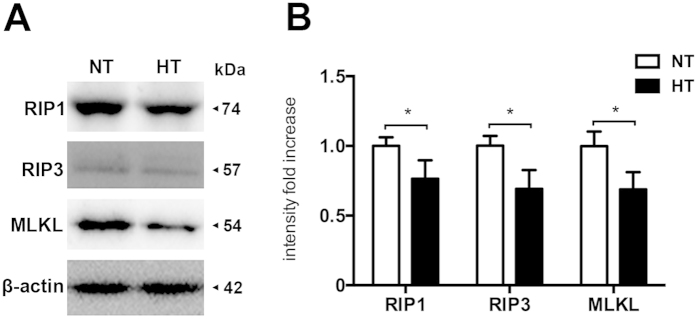
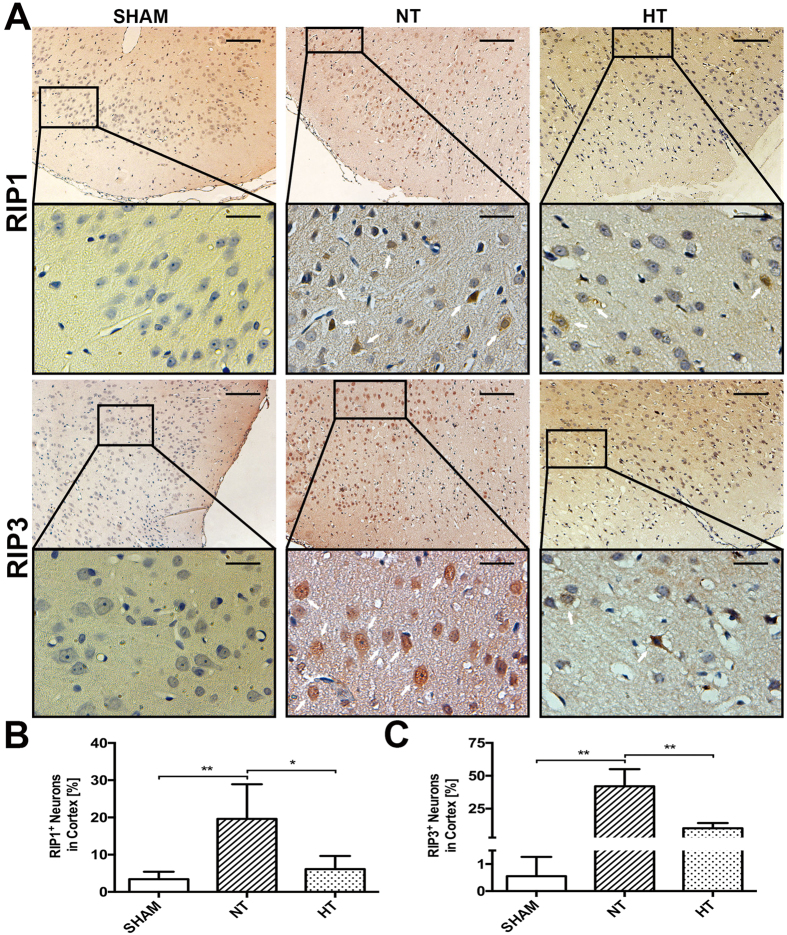
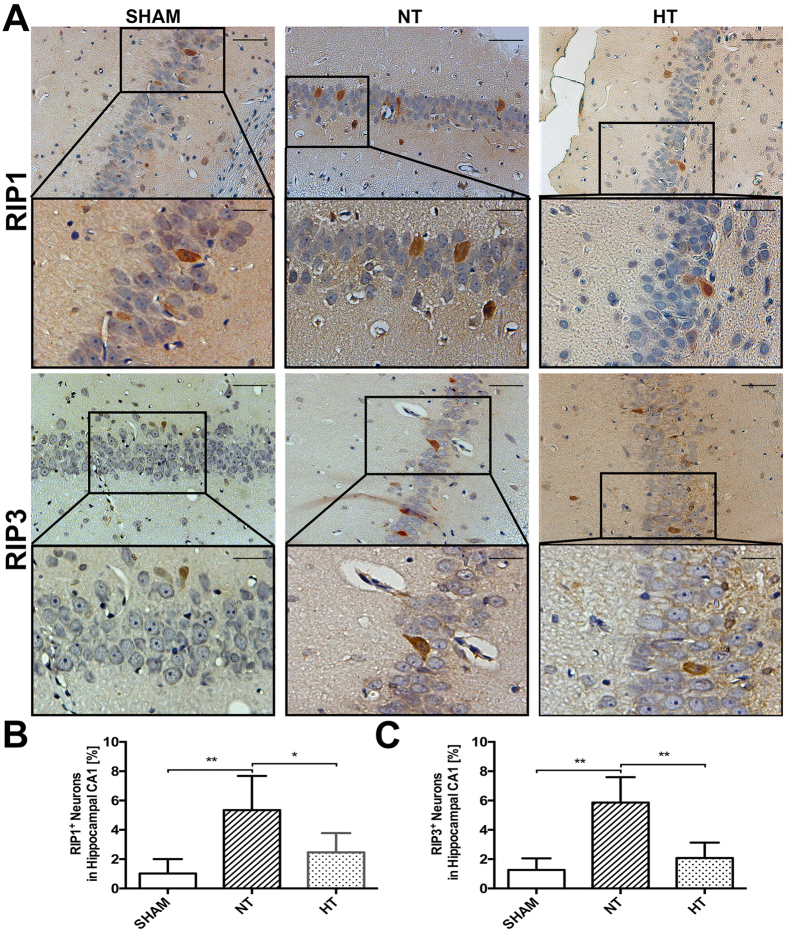
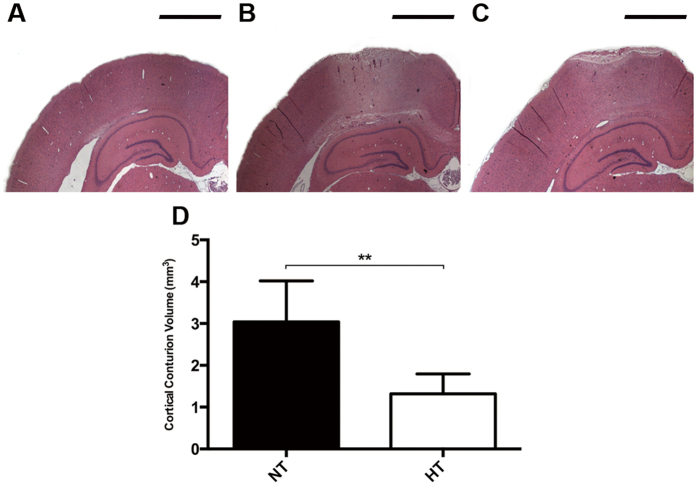
Necroptosis has been shown as an alternative form of cell death in many diseases, but the detailed mechanisms of the neuron loss after traumatic brain injury (TBI) in rodents remain unclear. To investigate whether necroptosis is induced after TBI and gets involved in the neuroprotecton of therapeutic hypothermia on the TBI, we observed the pathological and biochemical change of the necroptosis in the fluid percussion brain injury (FPI) model of the rats. We found that receptor-interacting protein (RIP) 1 and 3, and mixed lineage kinase domain-like protein (MLKL), the critical downstream mediators of necroptosis recently identified in vivo, as well as HMGB1 and the pro-inflammation cytokines TNF-α, IL-6 and IL-18, were increased at an early phase (6 h) in cortex after TBI. Posttraumatic hypothermia (33 °C) led to the decreases in the necroptosis regulators, inflammatory factors and brain tissue damage in rats compared with normothermia-treated TBI animals. Immunohistochemistry studies showed that posttraumatic hypothermia also decreased the necroptosis-associated proteins staining in injured cortex and hippocampal CA1. Therefore, we conclude that the RIP1/RIP3-MLKL-mediated necroptosis occurs after experimental TBI and therapeutic hypothermia may protect the injured central nervous system from tissue damage and the inflammatory responses by targeting the necroptosis signaling after TBI.
坏死性凋亡已被证明是许多疾病中细胞死亡的一种替代形式,但啮齿动物创伤性脑损伤(TBI)后神经元损失的详细机制仍不清楚。为了研究TBI后是否会诱导坏死性凋亡以及其是否参与治疗性低温对TBI的神经保护作用,我们观察了大鼠液压冲击脑损伤(FPI)模型中坏死性凋亡的病理和生化变化。我们发现,受体相互作用蛋白(RIP)1和3、混合谱系激酶结构域样蛋白(MLKL)(最近在体内确定的坏死性凋亡关键下游介质)以及高迁移率族蛋白B1(HMGB1)和促炎细胞因子肿瘤坏死因子-α(TNF-α)、白细胞介素-6(IL-6)和白细胞介素-18(IL-18)在TBI后早期(6小时)在皮质中增加。与常温治疗的TBI动物相比,创伤后低温(33°C)导致大鼠坏死性凋亡调节因子、炎症因子和脑组织损伤减少。免疫组织化学研究表明,创伤后低温还减少了损伤皮质和海马CA1中与坏死性凋亡相关蛋白的染色。因此,我们得出结论,RIP1/RIP3-MLKL介导的坏死性凋亡在实验性TBI后发生,治疗性低温可能通过靶向TBI后的坏死性凋亡信号来保护受损的中枢神经系统免受组织损伤和炎症反应。