Ma Yuxiao, He Zhenghui, Wang Jiangchang, Zheng Ping, Ma Zixuan, Liang Qian, Zhang Qiao, Zhao Xiongfei, Huang Jialin, Weng Weiji, Jiang Jiyao, Feng Junfeng
Brain Injury Center, Ren Ji Hospital, Shanghai Jiao Tong University School of Medicine, Shanghai 200127, China.
Shanghai Institute of Head Trauma, Shanghai 200127, China.
iScience. 2024 Mar 6;27(4):109435. doi: 10.1016/j.isci.2024.109435. eCollection 2024 Apr 19.
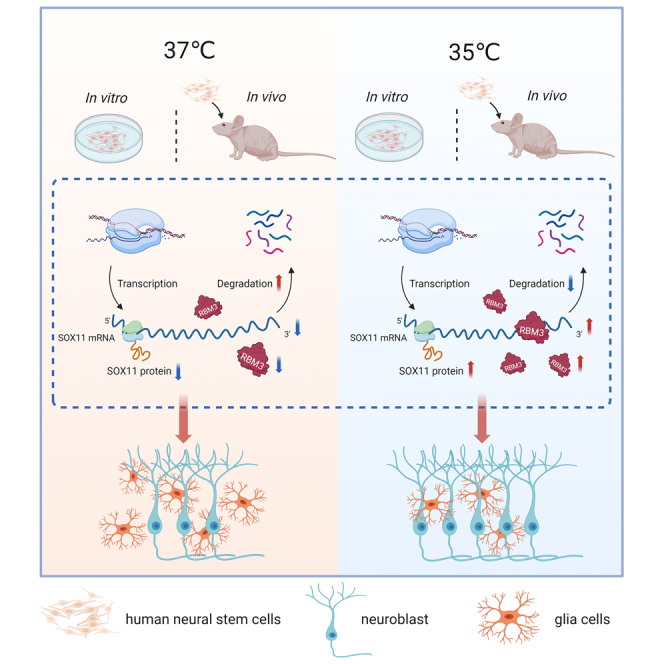
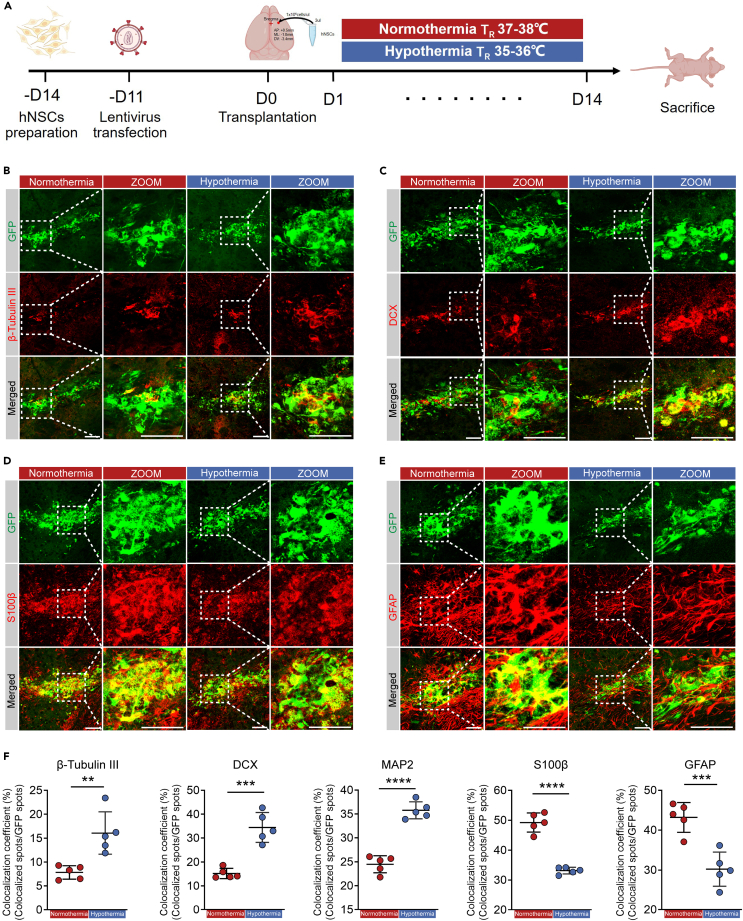
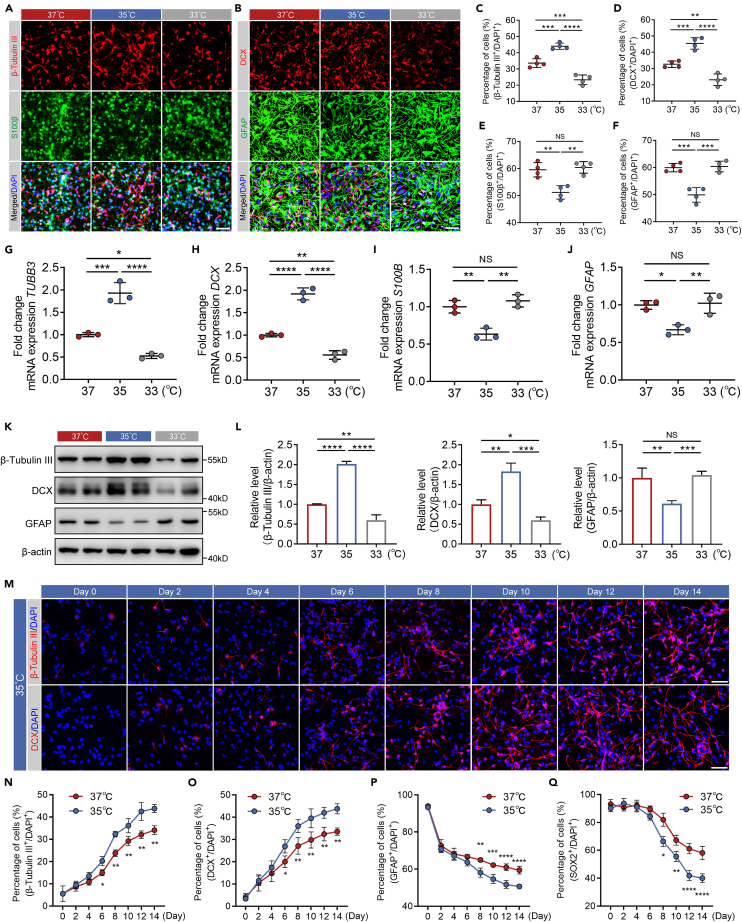
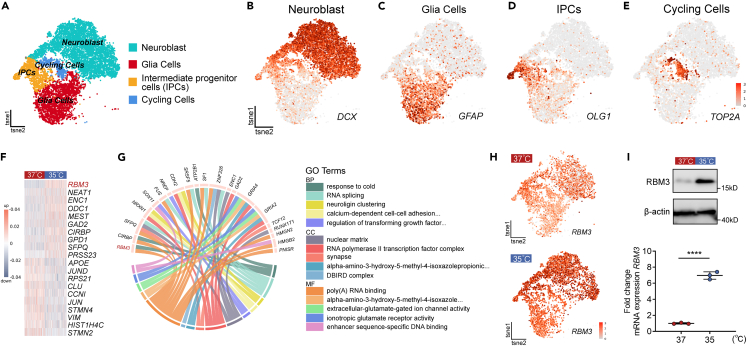
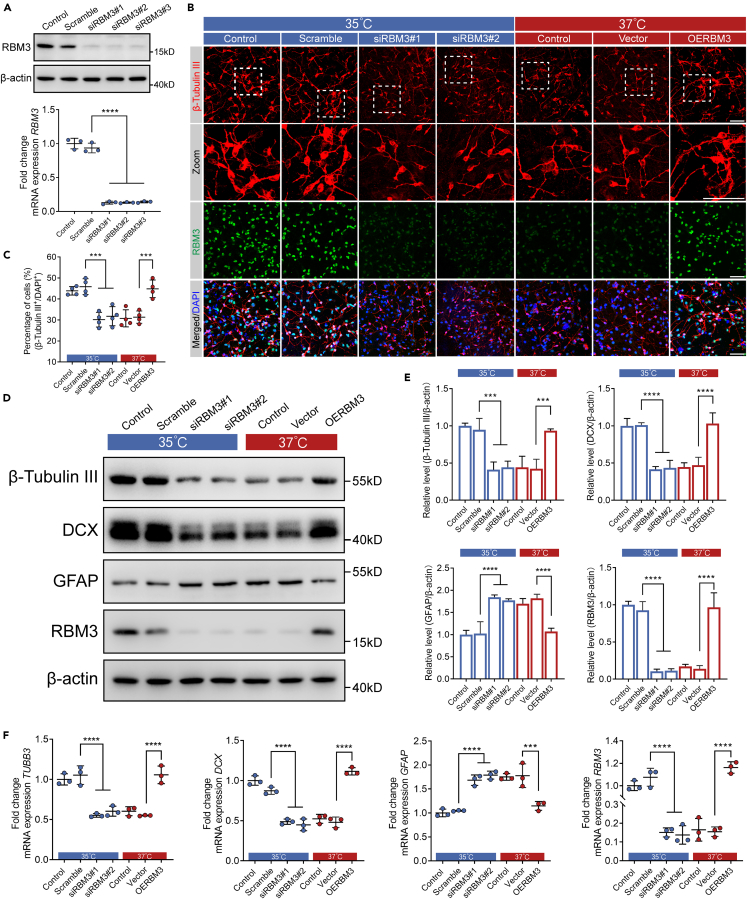
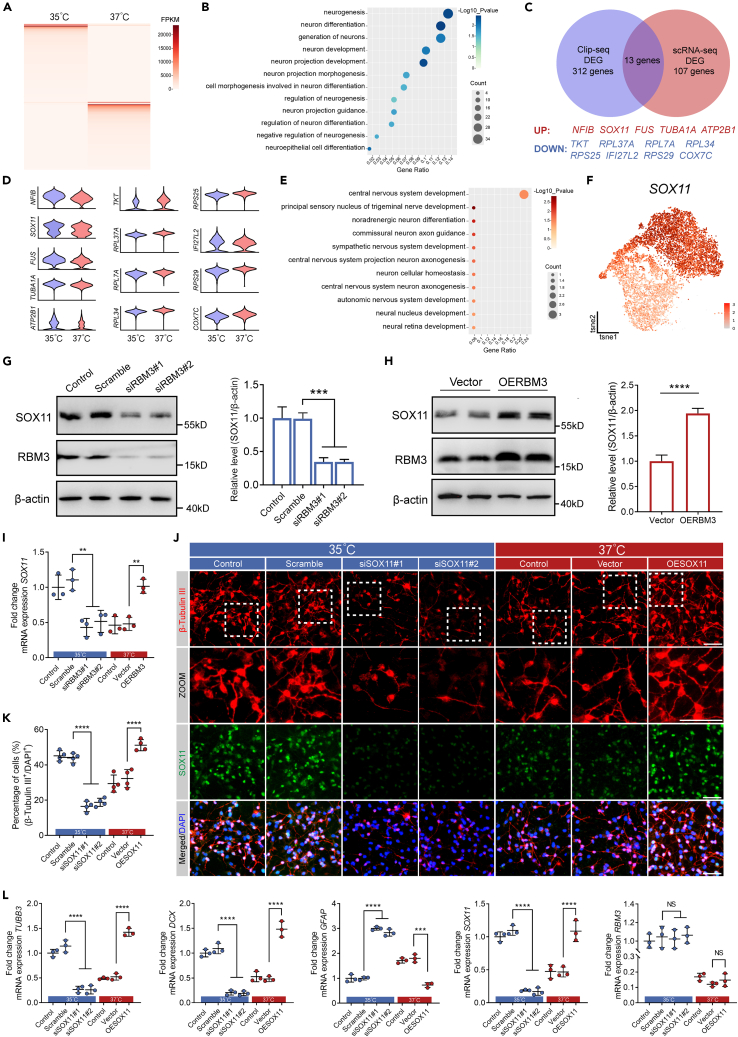
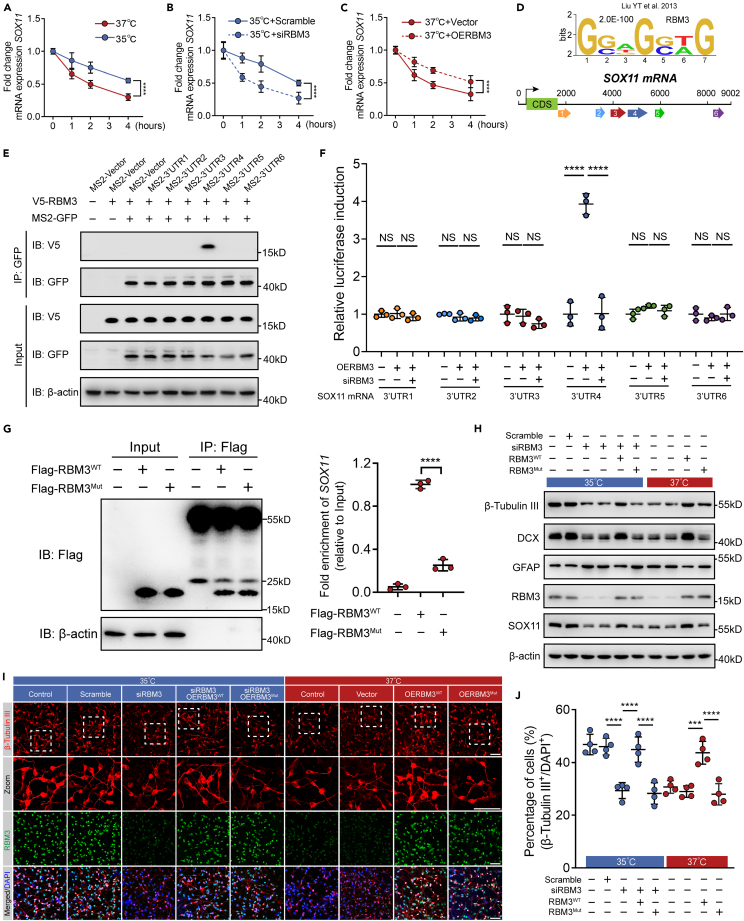
Both therapeutic hypothermia and neural stem cells (NSCs) transplantation have shown promise in neuroprotection and neural repair after brain injury. However, the effects of therapeutic hypothermia on neuronal differentiation of NSCs are not elucidated. In this study, we aimed to investigate whether mild hypothermia promoted neuronal differentiation in cultured and transplanted human NSCs (hNSCs). A significant increase in neuronal differentiation rate of hNSCs was found when exposed to 35°C, from 33% to 45% and from 7% to 15% . Additionally, single-cell RNA sequencing identified upregulation of RNA-binding motif protein 3 (RBM3) in neuroblast at 35°C, which stabilized the SRY-box transcription factor 11 (SOX11) mRNA and increased its protein expression, leading to an increase in neuronal differentiation of hNSCs. In conclusion, our study highlights that mild hypothermia at 35°C enhances hNSCs-induced neurogenesis through the novel RBM3-SOX11 signaling pathway, and provides a potential treatment strategy in brain disorders.
治疗性低温和神经干细胞(NSCs)移植在脑损伤后的神经保护和神经修复方面均显示出前景。然而,治疗性低温对NSCs神经元分化的影响尚未阐明。在本研究中,我们旨在探究轻度低温是否能促进培养的和移植的人神经干细胞(hNSCs)的神经元分化。当暴露于35°C时,hNSCs的神经元分化率显著增加,分别从33%增至45%以及从7%增至15%。此外,单细胞RNA测序确定了在35°C时神经母细胞中RNA结合基序蛋白3(RBM3)的上调,其稳定了SRY盒转录因子11(SOX11)的mRNA并增加了其蛋白表达,导致hNSCs的神经元分化增加。总之,我们的研究强调35°C的轻度低温通过新的RBM3-SOX11信号通路增强hNSCs诱导的神经发生,并为脑部疾病提供了一种潜在的治疗策略。