Henderson Raymond, O'Kane Maurice, McGilligan Victoria, Watterson Steven
Northern Ireland Centre for Stratified Medicine, Ulster University, C-TRIC, Altnagelvin Hospital Campus, Derry, Co Londonderry, Northern Ireland, BT47 6SB, UK.
Department of Clinical Chemistry, Altnagelvin Hospital, Western Health and Social Care Trust, Londonderry, Northern Ireland, BT47 6SB, UK.
J Biomed Sci. 2016 Apr 16;23:39. doi: 10.1186/s12929-016-0256-1.
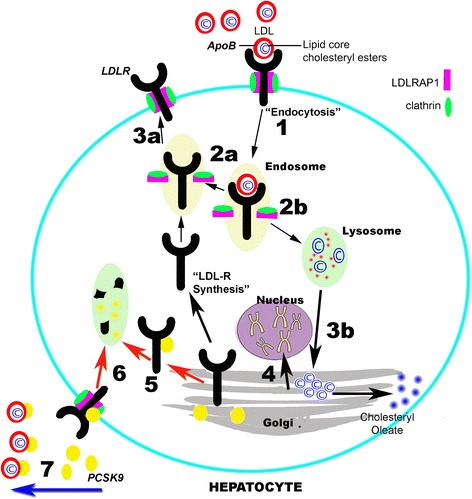
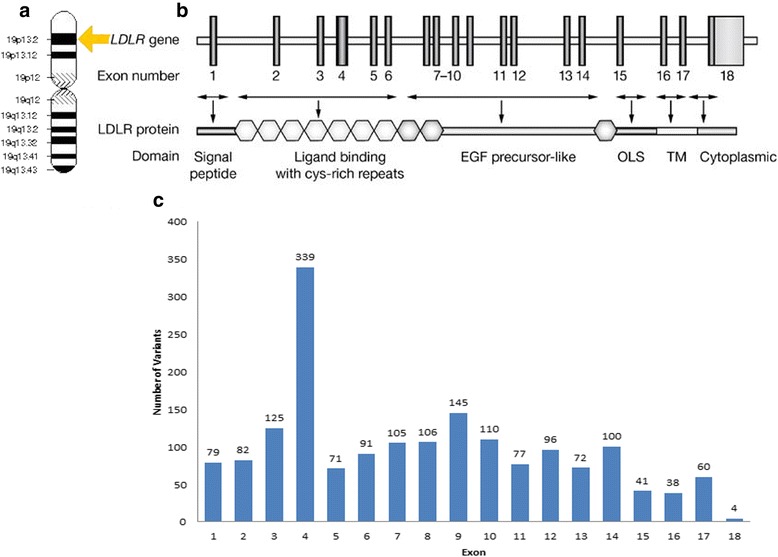
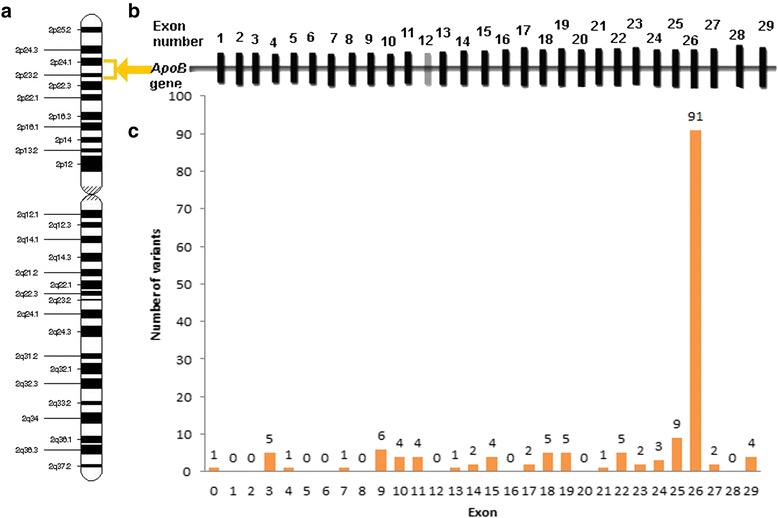
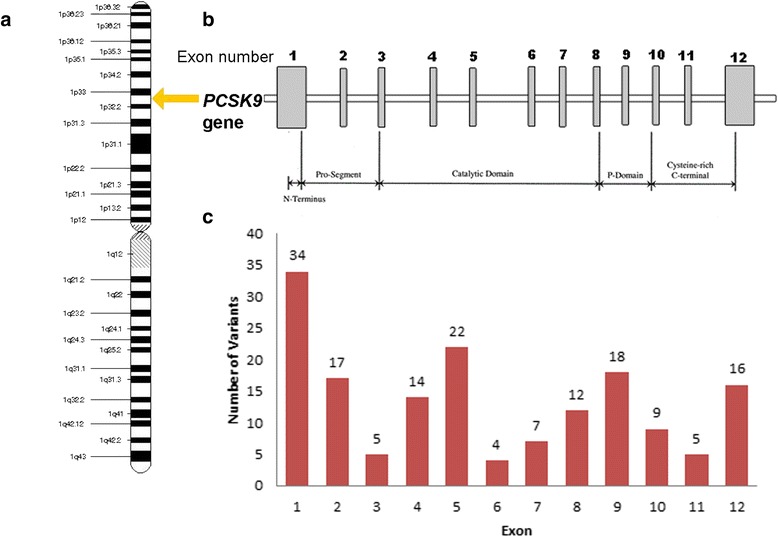
Familial Hypercholesterolaemia is an autosomal, dominant genetic disorder that leads to elevated blood cholesterol and a dramatically increased risk of atherosclerosis. It is perceived as a rare condition. However it affects 1 in 250 of the population globally, making it an important public health concern. In communities with founder effects, higher disease prevalences are observed.We discuss the genetic basis of familial hypercholesterolaemia, examining the distribution of variants known to be associated with the condition across the exons of the genes LDLR, ApoB, PCSK9 and LDLRAP1. We also discuss screening programmes for familial hypercholesterolaemia and their cost-effectiveness. Diagnosis typically occurs using one of the Dutch Lipid Clinic Network (DCLN), Simon Broome Register (SBR) or Make Early Diagnosis to Prevent Early Death (MEDPED) criteria, each of which requires a different set of patient data. New cases can be identified by screening the family members of an index case that has been identified as a result of referral to a lipid clinic in a process called cascade screening. Alternatively, universal screening may be used whereby a population is systematically screened.It is currently significantly more cost effective to identify familial hypercholesterolaemia cases through cascade screening than universal screening. However, the cost of sequencing patient DNA has fallen dramatically in recent years and if the rate of progress continues, this may change.
家族性高胆固醇血症是一种常染色体显性遗传病,会导致血液胆固醇升高,动脉粥样硬化风险显著增加。它被认为是一种罕见疾病。然而,全球每250人中就有1人受其影响,这使其成为一个重要的公共卫生问题。在有奠基者效应的社区中,该病的患病率更高。我们讨论家族性高胆固醇血症的遗传基础,研究已知与该病症相关的变异在低密度脂蛋白受体(LDLR)、载脂蛋白B(ApoB)、前蛋白转化酶枯草杆菌蛋白酶/kexin 9型(PCSK9)和低密度脂蛋白受体衔接蛋白1(LDLRAP1)基因外显子中的分布情况。我们还讨论家族性高胆固醇血症的筛查项目及其成本效益。诊断通常采用荷兰脂质诊所网络(DCLN)、西蒙·布鲁姆登记册(SBR)或早诊断防早死(MEDPED)标准中的一种,每种标准都需要不同的患者数据集。新病例可通过在一个称为级联筛查的过程中,对因转诊至脂质诊所而被确诊的索引病例的家庭成员进行筛查来识别。或者,也可采用全民筛查,即对人群进行系统筛查。目前,通过级联筛查识别家族性高胆固醇血症病例比全民筛查更具成本效益。然而,近年来患者DNA测序成本大幅下降,如果这种进展速度持续下去,情况可能会改变。