Banerjee Malabika, Chattopadhyay Subrata, Choudhuri Tathagata, Bera Rammohan, Kumar Sanjay, Chakraborty Biswajit, Mukherjee Samir Kumar
Department of Microbiology, University of Kalyani, Kalyani, 741235, WB, India.
TCG Life Science Ltd., Bengal Intelligent Park, Tower-B, Block-EP & GP, Sector-5, Salt Lake, Kolkata, 700091, India.
J Biomed Sci. 2016 Apr 16;23:40. doi: 10.1186/s12929-016-0257-0.
Breast cancer is considered as an increasing major life-threatening concern among the malignancies encountered globally in females. Traditional therapy is far from satisfactory due to drug resistance and various side effects, thus a search for complementary/alternative medicines from natural sources with lesser side effects is being emphasized. Andrographis paniculata, an oriental, traditional medicinal herb commonly available in Asian countries, has a long history of treating a variety of diseases, such as respiratory infection, fever, bacterial dysentery, diarrhea, inflammation etc. Extracts of this plant showed a wide spectrum of therapeutic effects, such as anti-bacterial, anti-malarial, anti-viral and anti-carcinogenic properties. Andrographolide, a diterpenoid lactone, is the major active component of this plant. This study reports on andrographolide induced apoptosis and its possible mechanism in highly proliferative, invasive breast cancer cells, MDA-MB-231 lacking a functional p53 and estrogen receptor (ER). Furthermore, the pharmacokinetic properties of andrographolide have also been studied in mice following intravenous and oral administration.
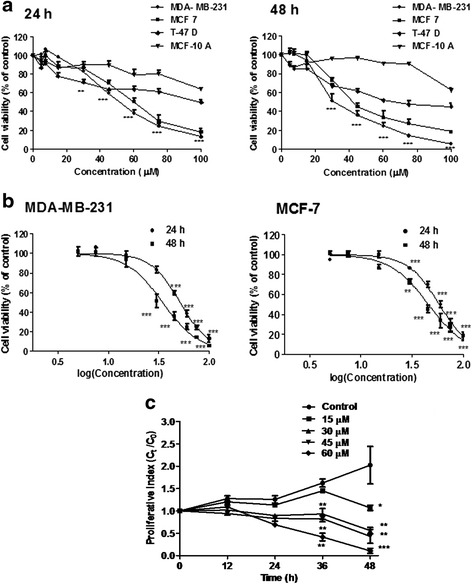
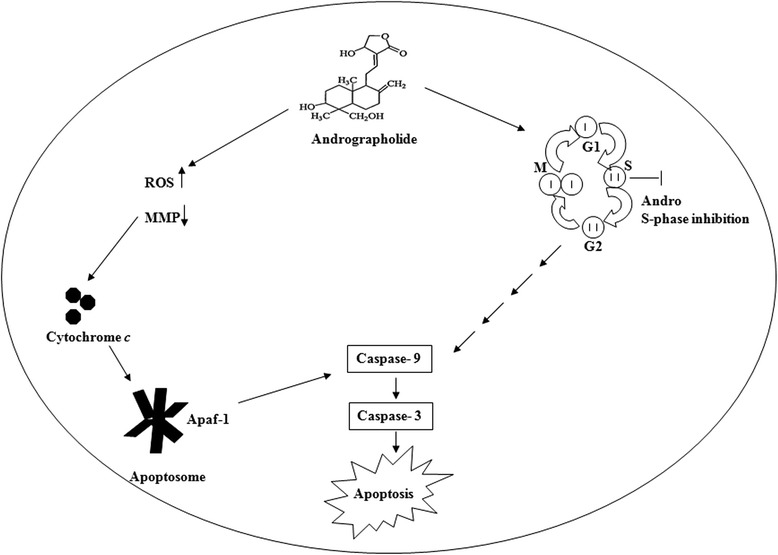
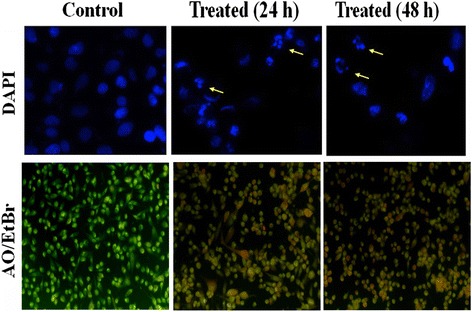
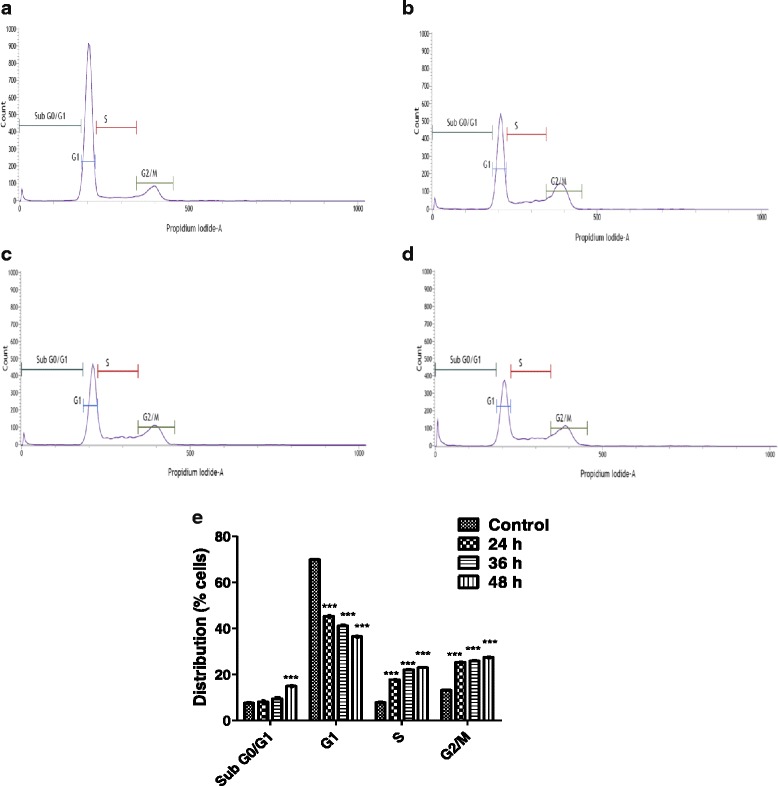
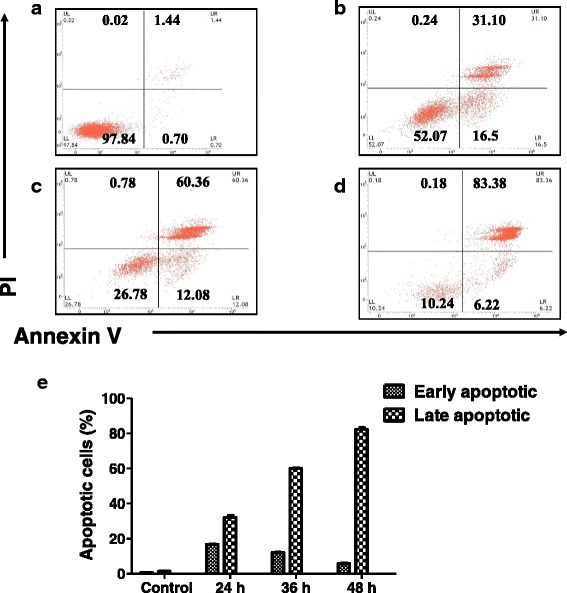
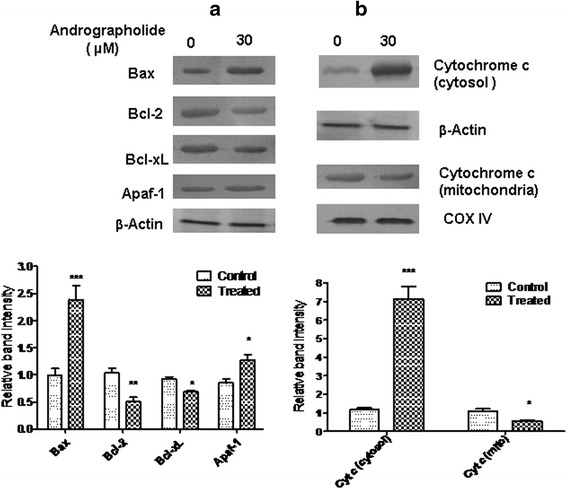
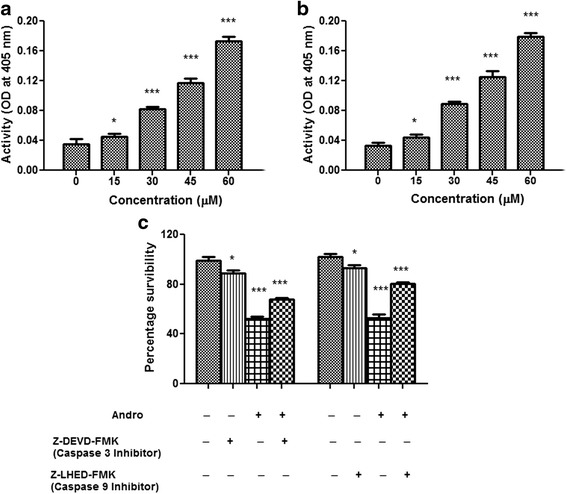
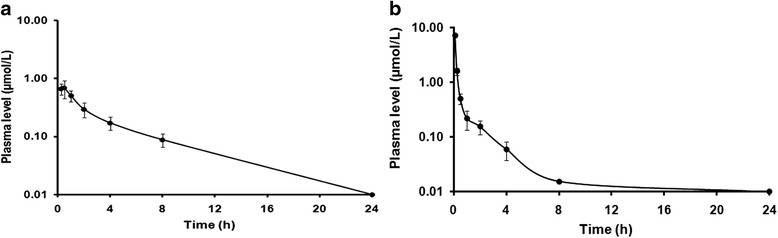
Andrographolide showed a time- and concentration- dependent inhibitory effect on MDA-MB-231 breast cancer cell proliferation, but the treatment did not affect normal breast epithelial cells, MCF-10A (>80 %). The number of cells in S as well as G2/M phase was increased after 36 h of treatment. Elevated reactive oxygen species (ROS) production with concomitant decrease in Mitochondrial Membrane Potential (MMP) and externalization of phosphatidyl serine were observed. Flow cytometry with Annexin V revealed that the population of apoptotic cells increased with prolonged exposure to andrographolide. Activation of caspase-3 and caspase-9 were also noted. Bax and Apaf-1 expression were notably increased with decreased Bcl-2 and Bcl-xL expression in andrographolide-treated cells. Pharmacokinetic study with andrographolide showed the bioavailability of 9.27 ± 1.69 % with a Cmax, of 0.73 ± 0.17 μmol/L and Tmax of 0.42 ± 0.14 h following oral administration. AG showed rapid clearance and moderate terminal half lives (T1/2) of 1.86 ± 0.21 and 3.30 ± 0.35 h following IV and oral administration respectively.
This investigation indicates that andrographolide might be useful as a possible chemopreventive/chemotherapeutic agent for human breast cancers.
乳腺癌被认为是全球女性所患恶性肿瘤中日益严重的主要生命威胁。由于耐药性和各种副作用,传统疗法远不能令人满意,因此人们越来越强调从天然来源寻找副作用较小的补充/替代药物。穿心莲是一种在亚洲国家常见的东方传统草药,有着治疗多种疾病的悠久历史,如呼吸道感染、发热、细菌性痢疾、腹泻、炎症等。这种植物的提取物显示出广泛的治疗作用,如抗菌、抗疟疾、抗病毒和抗癌特性。穿心莲内酯,一种二萜内酯,是这种植物的主要活性成分。本研究报告了穿心莲内酯在缺乏功能性p53和雌激素受体(ER)的高增殖、侵袭性乳腺癌细胞MDA-MB-231中诱导凋亡及其可能机制。此外,还研究了穿心莲内酯在小鼠静脉注射和口服后的药代动力学特性。
穿心莲内酯对MDA-MB-231乳腺癌细胞增殖表现出时间和浓度依赖性抑制作用,但该处理对正常乳腺上皮细胞MCF-10A没有影响(>80%)。处理36小时后,S期和G2/M期的细胞数量增加。观察到活性氧(ROS)生成增加,同时线粒体膜电位(MMP)降低和磷脂酰丝氨酸外化。用膜联蛋白V进行的流式细胞术显示,随着暴露于穿心莲内酯时间的延长,凋亡细胞群体增加。还注意到caspase-3和caspase-9的激活。在穿心莲内酯处理的细胞中,Bax和Apaf-1表达显著增加,而Bcl-2和Bcl-xL表达降低。穿心莲内酯的药代动力学研究表明,口服给药后的生物利用度为9.27±1.69%,Cmax为0.73±0.17μmol/L,Tmax为0.42±0.14小时。穿心莲内酯静脉注射和口服后的清除迅速,终末半衰期(T1/2)适中,分别为1.86±0.21和3.30±0.