Cassoni Andrea, Romeo Umberto, Terenzi Valentina, Della Monaca Marco, Rajabtork Zadeh Oriana, Raponi Ingrid, Fadda Maria Teresa, Polimeni Antonella, Valentini Valentino
Odontostomatological Science and Maxillo facial Surgery Department, "Sapienza" University of Rome, 00161 Rome, Italy.
Case Rep Dent. 2016;2016:2856926. doi: 10.1155/2016/2856926. Epub 2016 Mar 21.
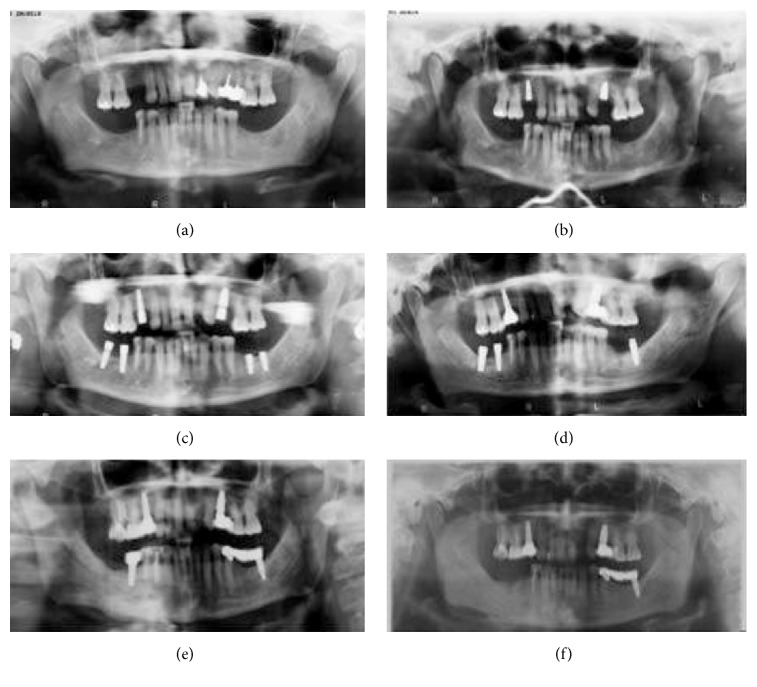
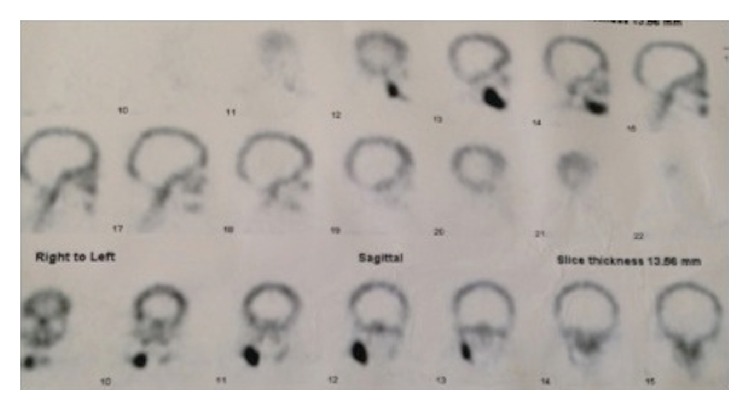
Objective. The acronym MRONJ has been created in order to identify "Medication-Related Osteonecrosis of the Jaw," observed after the use of Bisphosphonates, RANK ligand inhibitor, and antiangiogenic medications. Only a case of osteonecrosis of the jaw in a Chron's disease patient following a course of Bisphosphonate and Adalimumab therapy has been recently described, so that it has been supposed that also this medication could promote manifestation of osteonecrosis. Clinical Case. On August, 2014, a 63-year-old female with a history of idiopathic arthritis treated with medical treatment with Adalimumab from 2010 to 2013 presented referring pain in the right mandible. Results. This patient presented with nonexposed osteonecrosis of the jaw after placement, on September, 2010, of four titanium fixtures in the mandible. Conclusions. The authors suggest that the biologic therapy with an anti-TNF-α antibody might promote the manifestation of osteonecrosis and compromise oral healing capacity of the bone.
目的。首字母缩略词MRONJ已被创建,用于识别在使用双膦酸盐、RANK配体抑制剂和抗血管生成药物后观察到的“药物相关性颌骨坏死”。最近仅描述了1例克罗恩病患者在接受双膦酸盐和阿达木单抗治疗后发生颌骨坏死的病例,因此推测这种药物也可能促使骨坏死表现出来。临床病例。2014年8月,一名63岁女性,有特发性关节炎病史,在2010年至2013年期间接受阿达木单抗药物治疗,出现右下颌骨疼痛。结果。该患者在2010年9月下颌骨植入4枚钛固定装置后出现颌骨未暴露性坏死。结论。作者认为,使用抗TNF-α抗体的生物治疗可能促使骨坏死表现出来,并损害骨的口腔愈合能力。