Wang Jian, Fang Yixuan, Yan Lili, Yuan Na, Zhang Suping, Xu Li, Nie Meilan, Zhang Xiaoying, Wang Jianrong
Hematology Center of Cyrus Tang Medical Institute, Jiangsu Institute of Hematology, Collaborative Innovation Center of Hematology, Jiangsu Key Laboratory for Stem Cell Research, Soochow University School of Medicine, Suzhou 215123, China.
Sci Rep. 2016 Apr 19;6:24641. doi: 10.1038/srep24641.
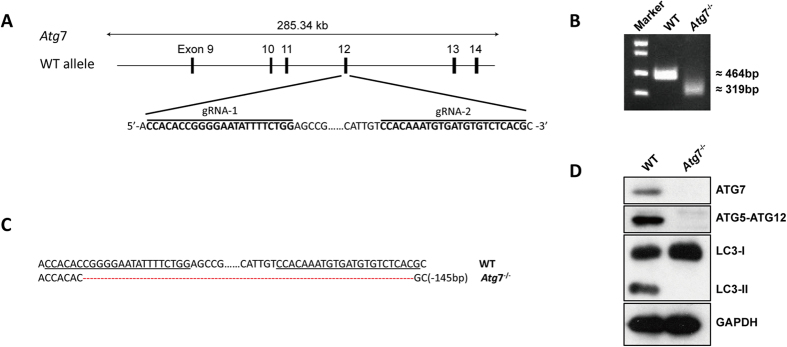
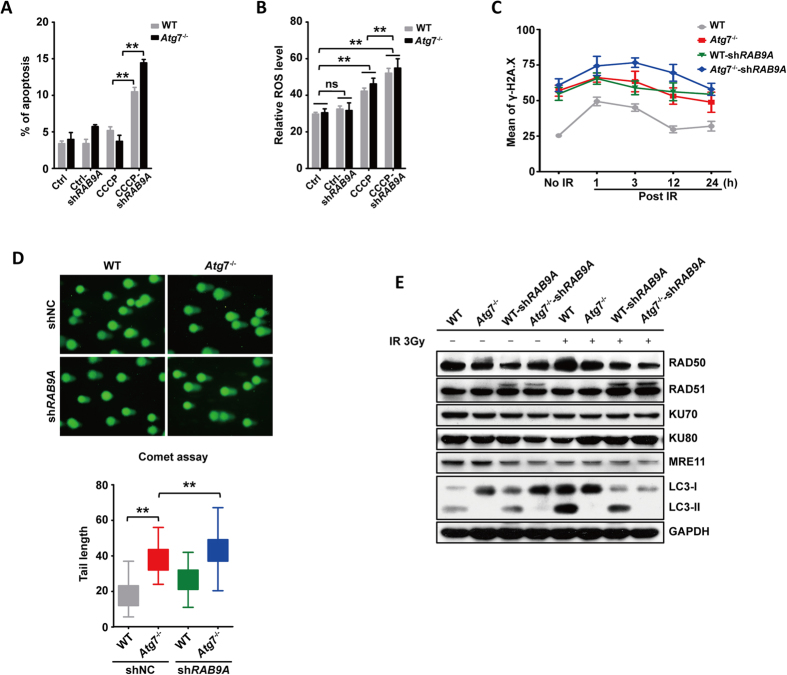
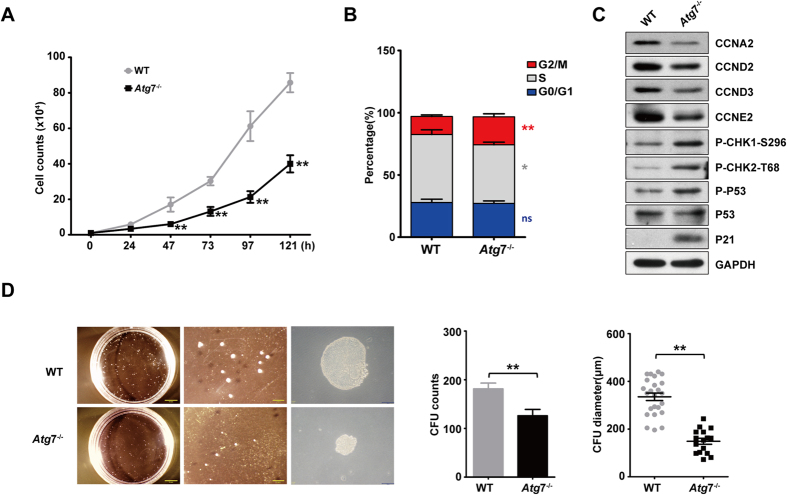
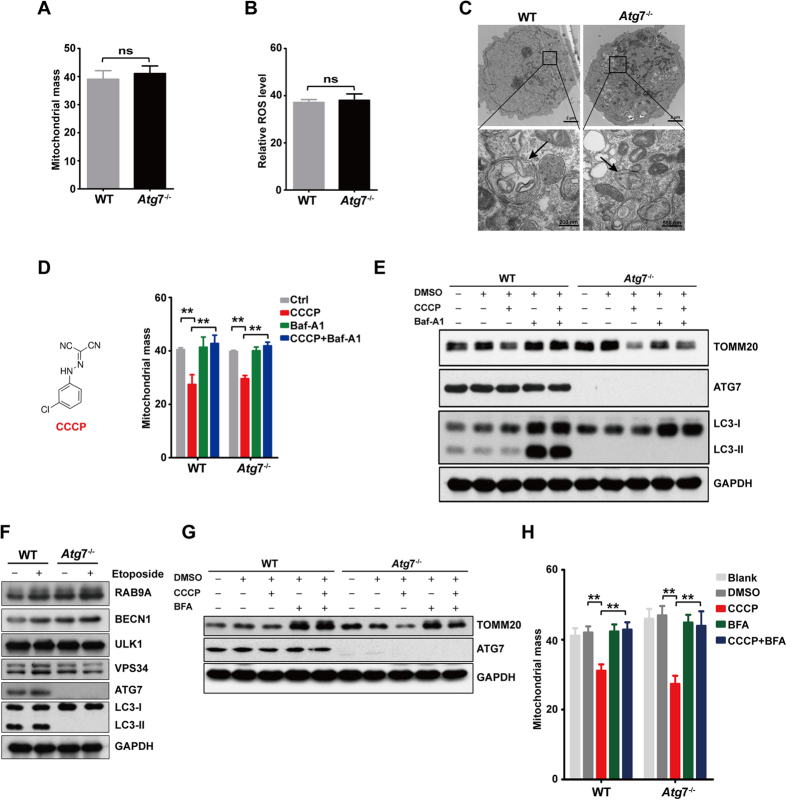
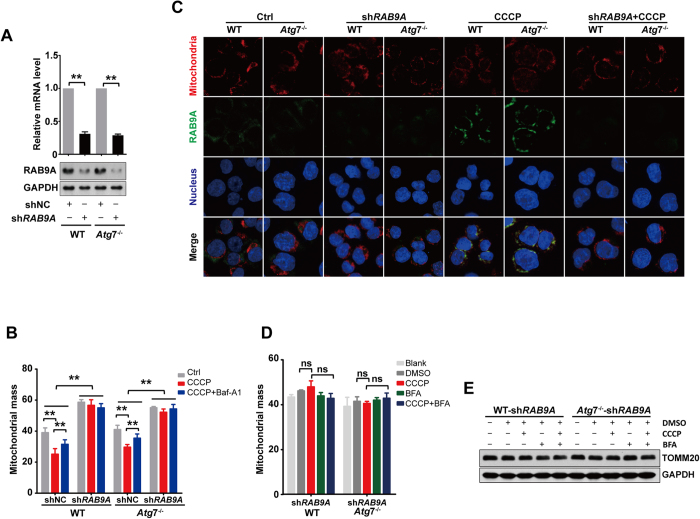
Leukemia cells are superior to hematopoietic cells with a normal differentiation potential in buffering cellular stresses, but the underlying mechanisms for this leukemic advantage are not fully understood. Using CRISPR/Cas9 deletion of the canonical autophagy-essential gene Atg7, we found that erythroleukemia K562 cells are armed with two sets of autophagic machinery. Alternative mitophagy is functional regardless of whether the canonical autophagic mechanism is intact or disrupted. Although canonical autophagy defects attenuated cell cycling, proliferation and differentiation potential, the leukemia cells retained their abilities for mitochondrial clearance and for maintaining low levels of reactive oxygen species (ROS) and apoptosis. Treatment with a specific inducer of mitophagy revealed that the canonical autophagy-defective erythroleukemia cells preserved a mitophagic response. Selective induction of mitophagy was associated with the upregulation and localization of RAB9A on the mitochondrial membrane in both wild-type and Atg7(-/-) leukemia cells. When the leukemia cells were treated with the alternative autophagy inhibitor brefeldin A or when the RAB9A was knocked down, this mitophagy was prohibited. This was accompanied by elevated ROS levels and apoptosis as well as reduced DNA damage repair. Therefore, the results suggest that erythroleukemia K562 cells possess an ATG7-independent alternative mitophagic mechanism that functions even when the canonical autophagic process is impaired, thereby maintaining the ability to respond to stresses such as excessive ROS and DNA damage.
白血病细胞在缓冲细胞应激方面优于具有正常分化潜能的造血细胞,但这种白血病优势的潜在机制尚未完全了解。通过CRISPR/Cas9缺失典型的自噬必需基因Atg7,我们发现红白血病K562细胞配备了两套自噬机制。无论典型自噬机制是否完整或被破坏,替代性线粒体自噬都是有功能的。虽然典型自噬缺陷减弱了细胞周期、增殖和分化潜能,但白血病细胞仍保留其线粒体清除能力以及维持低水平活性氧(ROS)和凋亡的能力。用线粒体自噬的特异性诱导剂处理后发现,典型自噬缺陷的红白血病细胞保留了线粒体自噬反应。在野生型和Atg7(-/-)白血病细胞中,选择性诱导线粒体自噬与线粒体膜上RAB9A的上调和定位有关。当白血病细胞用替代性自噬抑制剂布雷菲德菌素A处理或RAB9A被敲低时,这种线粒体自噬被抑制。这伴随着ROS水平升高和凋亡以及DNA损伤修复减少。因此,结果表明红白血病K562细胞具有一种不依赖ATG7的替代性线粒体自噬机制,即使在典型自噬过程受损时也能发挥作用,从而维持对过量ROS和DNA损伤等应激的反应能力。