Saenchai Chorpet, Bouain Nadia, Kisko Mushtak, Prom-U-Thai Chanakan, Doumas Patrick, Rouached Hatem
Biochimie et Physiologie Moléculaire des Plantes Research Unit, Institut National de la Recherche Agronomique - Centre National de la Recherche Scientifique - Montpellier UniversityMontpellier, France; Agronomy Division, Department of Plant and Soil Sciences, Faculty of Agriculture, Chiang Mai UniversityChiang Mai, Thailand.
Biochimie et Physiologie Moléculaire des Plantes Research Unit, Institut National de la Recherche Agronomique - Centre National de la Recherche Scientifique - Montpellier University Montpellier, France.
Front Plant Sci. 2016 Apr 6;7:396. doi: 10.3389/fpls.2016.00396. eCollection 2016.
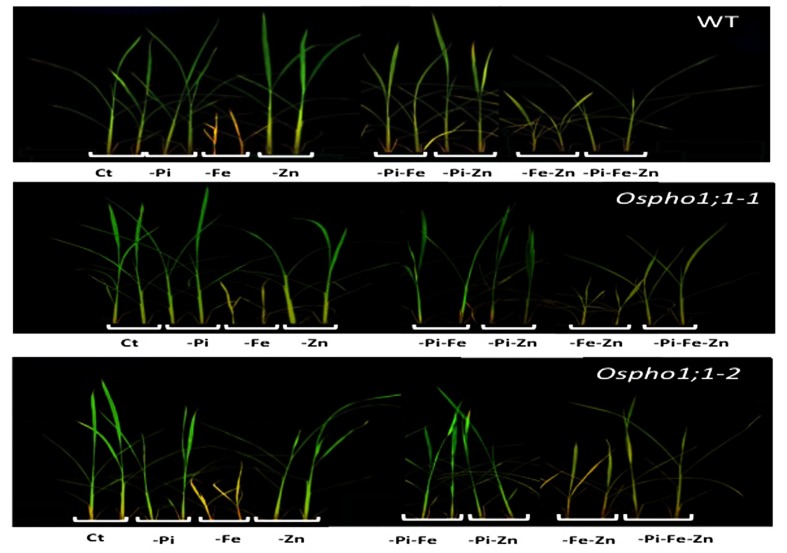
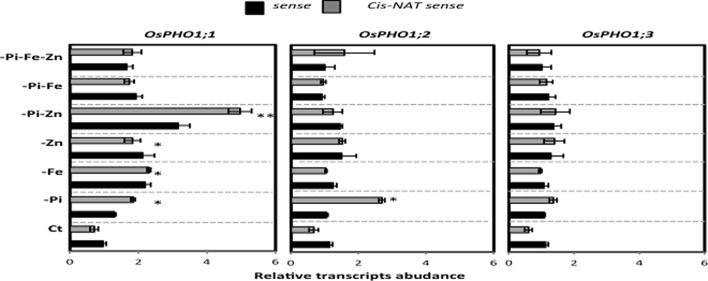
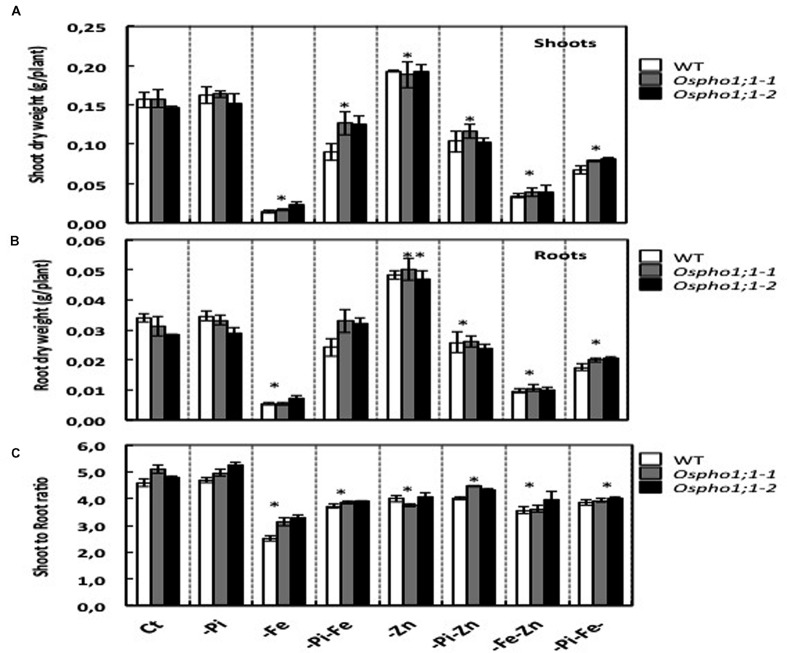
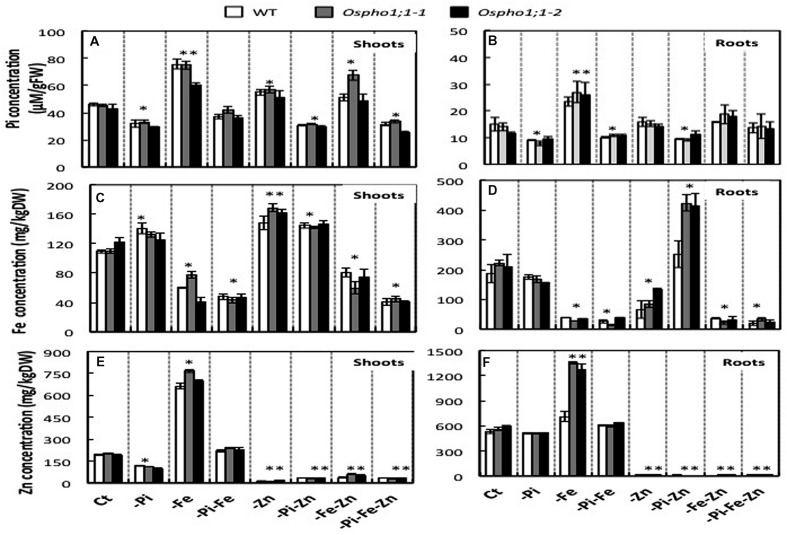
Plants survival depends on their ability to cope with multiple nutrient stresses that often occur simultaneously, such as the limited availability of essential elements inorganic phosphate (Pi), zinc (Zn), and iron (Fe). Previous research has provided information on the genes involved in efforts by plants to maintain homeostasis when a single nutrient (Pi, Zn, or Fe) is depleted. Recent findings on nutritional stress suggest that plant growth capacity is influenced by a complex tripartite interaction between Pi, Zn, and Fe homeostasis. However, despite its importance, how plants integrate multiple nutritional stimuli into complex developmental programs, and which genes are involved in this tripartite (Pi ZnFe) interaction is still not clear. The aim of this study was to examine the physiological and molecular responses of rice (Oriza sativa L.) to a combination of Pi, Zn, and/or Fe deficiency stress conditions. Results showed that Fe deficiency had the most drastic single-nutrient effect on biomass, while the Zn deficiency-effect depended on the presence of Pi in the medium. Interestingly, the observed negative effect of Fe starvation was alleviated by concomitant Pi or PiZn depletion. Members of the OsPHO1 family showed a differential transcriptional regulation in response PiZnFe combinatory stress conditions. Particularly, the transcripts of the OsPHO1;1 sense and its natural antisense cis-NatPHO1;1 showed the highest accumulation under PiZn deficiency. In this condition, the Ospho1;1 mutants showed over-accumulation of Fe in roots compared to wild type plants. These data reveal coordination between pathways involved in Fe transport and PiZn signaling in rice which involves the OsPHO1; 1, and support the hypothesis of a genetic basis for Pi, Zn, and Fe signaling interactions in plants.
植物的存活取决于它们应对多种常常同时出现的营养胁迫的能力,例如必需元素无机磷酸盐(Pi)、锌(Zn)和铁(Fe)的可利用量有限。先前的研究已经提供了关于植物在单一营养元素(Pi、Zn或Fe)耗尽时维持体内平衡所涉及基因的信息。最近关于营养胁迫的研究结果表明,植物的生长能力受到Pi、Zn和Fe体内平衡之间复杂三方相互作用的影响。然而,尽管其很重要,但植物如何将多种营养刺激整合到复杂的发育程序中,以及哪些基因参与这种三方(Pi-Zn-Fe)相互作用仍不清楚。本研究的目的是研究水稻(Oriza sativa L.)对Pi、Zn和/或Fe缺乏胁迫条件组合的生理和分子反应。结果表明,缺铁对生物量的单一营养元素影响最为显著,而缺锌的影响则取决于培养基中Pi的存在。有趣的是,同时缺乏Pi或Pi-Zn可缓解缺铁所观察到的负面影响。OsPHO1家族成员在响应Pi-Zn-Fe组合胁迫条件时表现出不同的转录调控。特别是,OsPHO1;1正义链及其天然反义链cis-NatPHO1;1的转录本在Pi-Zn缺乏时积累最高。在这种情况下,与野生型植株相比,Ospho1;1突变体在根中表现出铁的过度积累。这些数据揭示了水稻中参与铁运输和Pi-Zn信号传导途径之间的协调,其中涉及OsPHO1;1,并支持了植物中Pi、Zn和Fe信号相互作用存在遗传基础的假设。