Heusschen Roy, Muller Joséphine, Binsfeld Marilène, Marty Caroline, Plougonven Erwan, Dubois Sophie, Mahli Nadia, Moermans Karen, Carmeliet Geert, Léonard Angélique, Baron Frédéric, Beguin Yves, Menu Eline, Cohen-Solal Martine, Caers Jo
Laboratory of Hematology, GIGA-Research, University of Liège, Liège, Belgium.
INSERM-UMR-1132, Hôpital Lariboisière and Université Paris Diderot, Paris, France.
Oncotarget. 2016 May 24;7(21):30712-29. doi: 10.18632/oncotarget.8750.
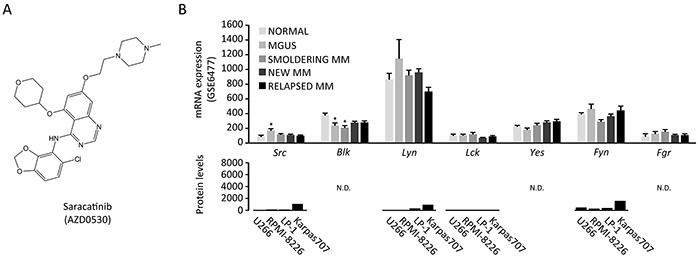
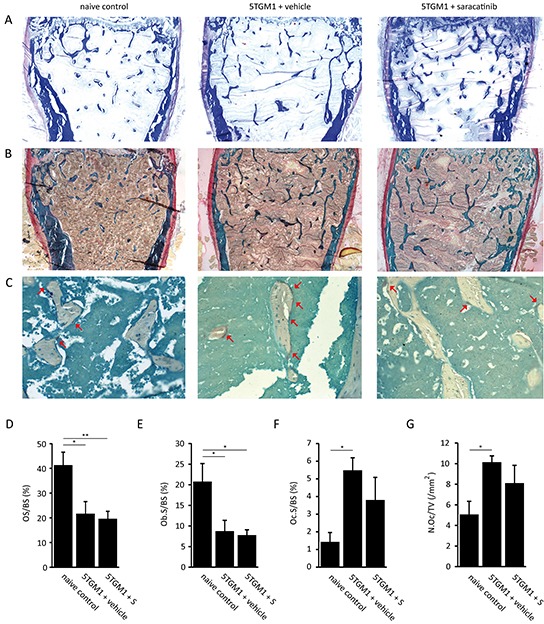
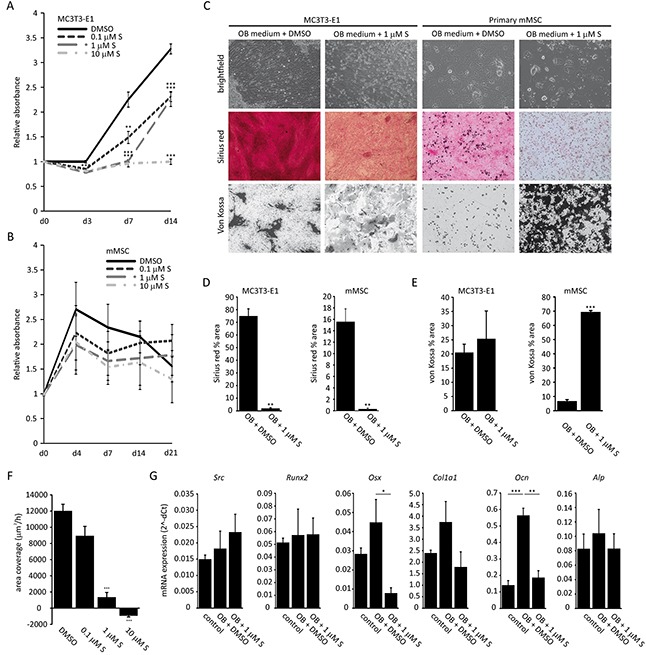
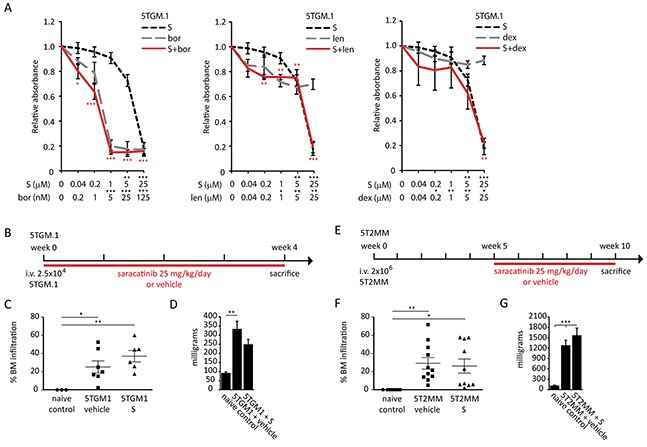
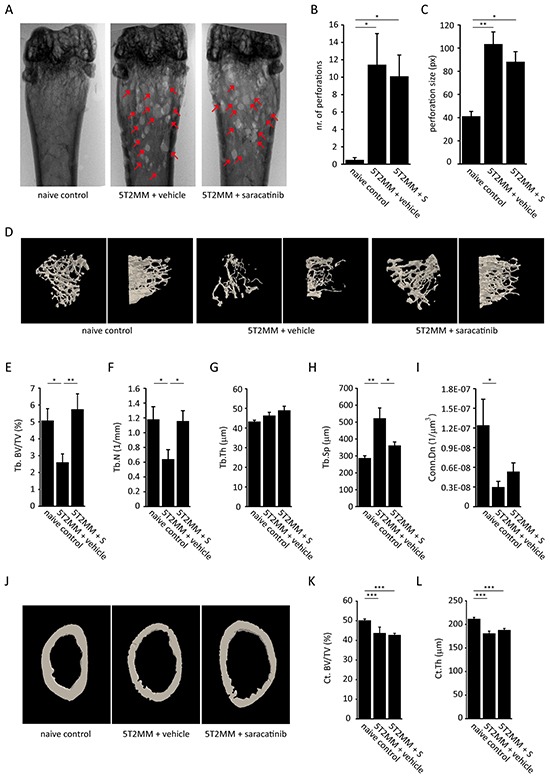
Multiple myeloma (MM)-associated osteolytic bone disease is a major cause of morbidity and mortality in MM patients and the development of new therapeutic strategies is of great interest. The proto-oncogene SRC is an attractive target for such a strategy. In the current study, we investigated the effect of treatment with the SRC inhibitor saracatinib (AZD0530) on osteoclast and osteoblast differentiation and function, and on the development of MM and its associated bone disease in the 5TGM.1 and 5T2MM murine MM models. In vitro data showed an inhibitory effect of saracatinib on osteoclast differentiation, polarization and resorptive function. In osteoblasts, collagen deposition and matrix mineralization were affected by saracatinib. MM cell proliferation and tumor burden remained unaltered following saracatinib treatment and we could not detect any synergistic effects with drugs that are part of standard care in MM. We observed a marked reduction of bone loss after treatment of MM-bearing mice with saracatinib as reflected by a restoration of trabecular bone parameters to levels observed in naive control mice. Histomorphometric analyses support that this occurs through an inhibition of bone resorption. In conclusion, these data further establish SRC inhibition as a promising therapeutic approach for the treatment of MM-associated osteolytic bone disease.
多发性骨髓瘤(MM)相关的溶骨性骨病是MM患者发病和死亡的主要原因,因此开发新的治疗策略备受关注。原癌基因SRC是这种策略的一个有吸引力的靶点。在本研究中,我们研究了SRC抑制剂萨拉卡替尼(AZD0530)对破骨细胞和成骨细胞分化及功能的影响,以及对5TGM.1和5T2MM小鼠MM模型中MM及其相关骨病发展的影响。体外数据显示萨拉卡替尼对破骨细胞分化、极化和吸收功能有抑制作用。在成骨细胞中,胶原沉积和基质矿化受到萨拉卡替尼的影响。萨拉卡替尼治疗后,MM细胞增殖和肿瘤负荷未发生改变,并且我们未检测到其与MM标准治疗药物之间有任何协同作用。我们观察到,用萨拉卡替尼治疗荷瘤小鼠后,骨量丢失显著减少,这表现为小梁骨参数恢复到未处理对照小鼠的水平。组织形态计量学分析表明,这是通过抑制骨吸收实现的。总之,这些数据进一步证实,抑制SRC是治疗MM相关溶骨性骨病的一种有前景的治疗方法。