Department of Hematology and Immunology, Myeloma Center Brussels, Vrije Universiteit Brussel, Brussels, Belgium.
Laboratory of Hematology, GIGA-Research, University of Liège, Liège, Belgium.
Blood Cancer J. 2018 Nov 8;8(11):105. doi: 10.1038/s41408-018-0139-7.
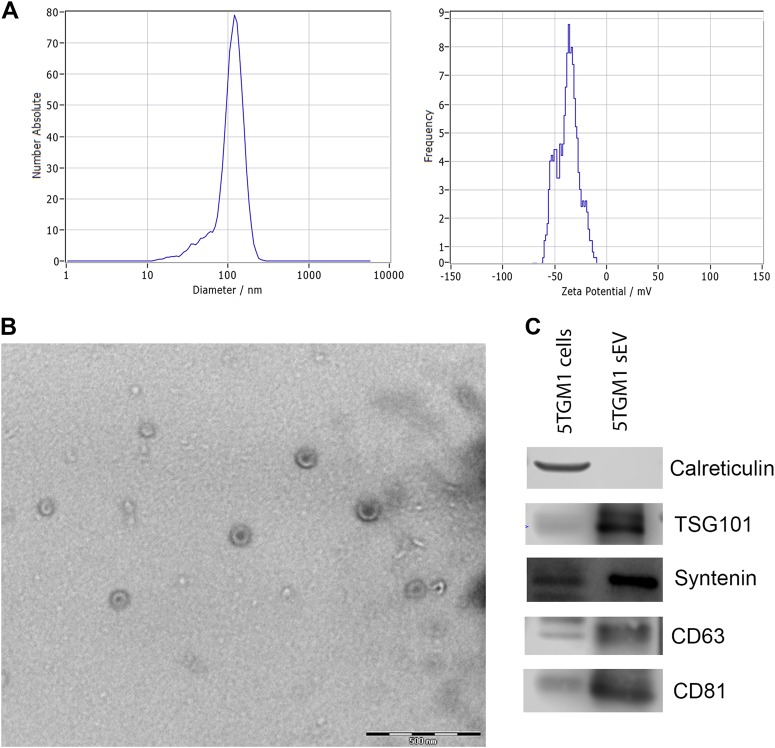
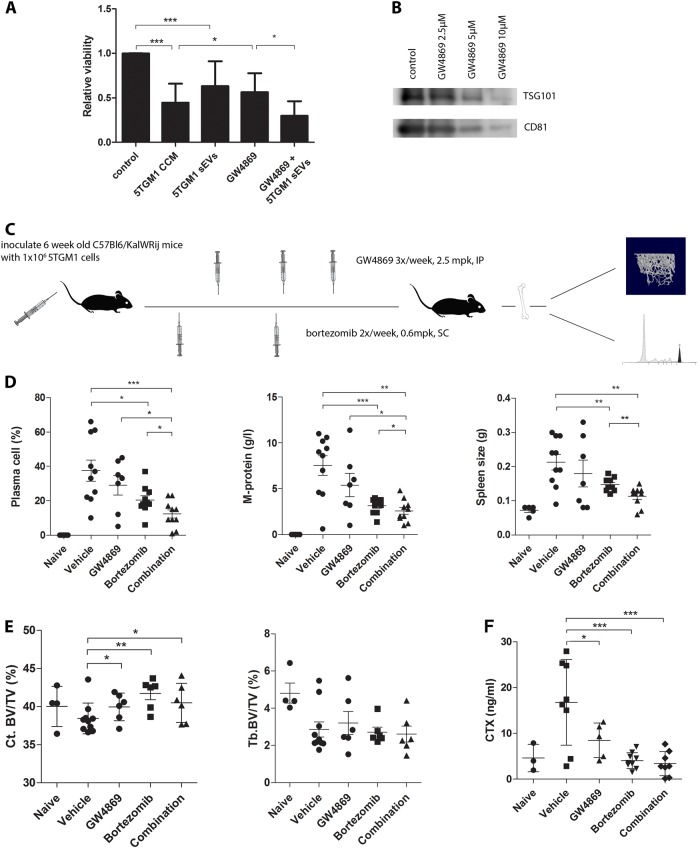
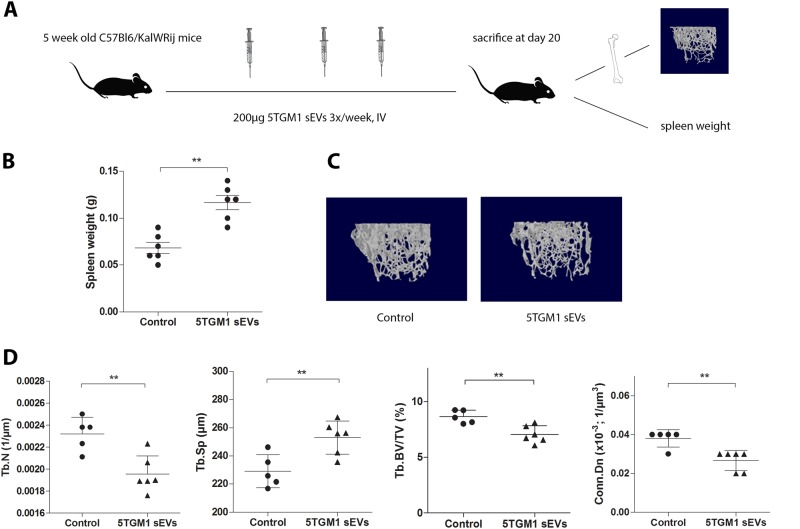
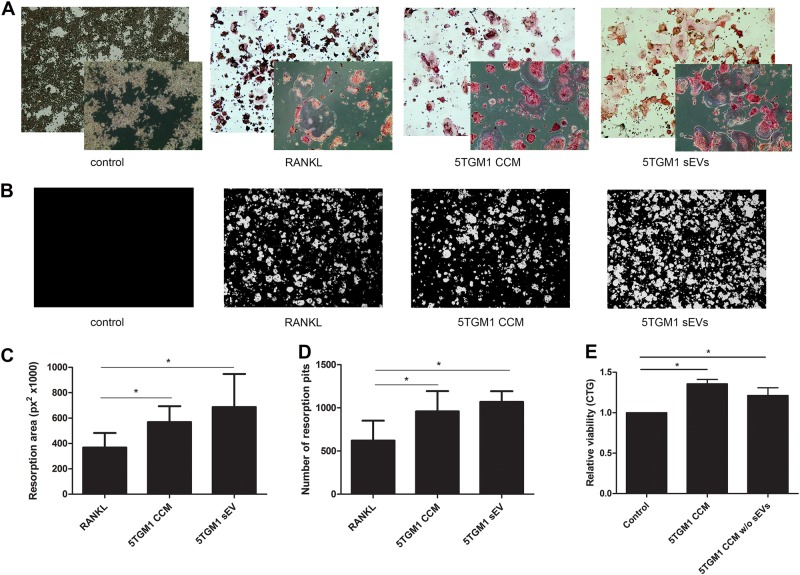
Progression of multiple myeloma (MM) is largely dependent on the bone marrow (BM) microenvironment wherein communication through different factors including extracellular vesicles takes place. This cross-talk not only leads to drug resistance but also to the development of osteolysis. Targeting vesicle secretion could therefore simultaneously ameliorate drug response and bone disease. In this paper, we examined the effects of MM exosomes on different aspects of osteolysis using the 5TGM1 murine model. We found that 5TGM1 sEVs, or 'exosomes', not only enhanced osteoclast activity, they also blocked osteoblast differentiation and functionality in vitro. Mechanistically, we could demonstrate that transfer of DKK-1 led to a reduction in Runx2, Osterix, and Collagen 1A1 in osteoblasts. In vivo, we uncovered that 5TGM1 exosomes could induce osteolysis in a similar pattern as the MM cells themselves. Blocking exosome secretion using the sphingomyelinase inhibitor GW4869 not only increased cortical bone volume, but also it sensitized the myeloma cells to bortezomib, leading to a strong anti-tumor response when GW4869 and bortezomib were combined. Altogether, our results indicate an important role for exosomes in the BM microenvironment and suggest a novel therapeutic target for anti-myeloma therapy.
多发性骨髓瘤(MM)的进展在很大程度上取决于骨髓(BM)微环境,其中通过包括细胞外囊泡在内的不同因子进行交流。这种串扰不仅导致药物耐药性,而且还导致溶骨性疾病的发展。因此,靶向囊泡分泌可以同时改善药物反应和骨骼疾病。在本文中,我们使用 5TGM1 鼠模型研究了 MM 外泌体对溶骨性疾病不同方面的影响。我们发现,5TGM1 sEVs(或“外泌体”)不仅增强了破骨细胞的活性,而且还在体外阻断了成骨细胞的分化和功能。从机制上讲,我们可以证明 DKK-1 的转移导致成骨细胞中 Runx2、Osterix 和 Collagen 1A1 的减少。在体内,我们发现 5TGM1 外泌体可以诱导类似于 MM 细胞本身的溶骨性疾病。使用鞘磷脂酶抑制剂 GW4869 阻断外泌体分泌不仅增加了皮质骨体积,而且还使骨髓瘤细胞对硼替佐米敏感,当 GW4869 和硼替佐米联合使用时,导致强烈的抗肿瘤反应。总之,我们的结果表明外泌体在 BM 微环境中起着重要作用,并为抗骨髓瘤治疗提供了新的治疗靶点。