Nady Norhan
Polymeric Research Department, Advanced Technology and New Materials Research Institute, City of Scientific Research and Technological Applications (SRTA-City), New Boarg El-Arab City 21934, Alexandria, Egypt.
Membranes (Basel). 2016 Apr 18;6(2):23. doi: 10.3390/membranes6020023.
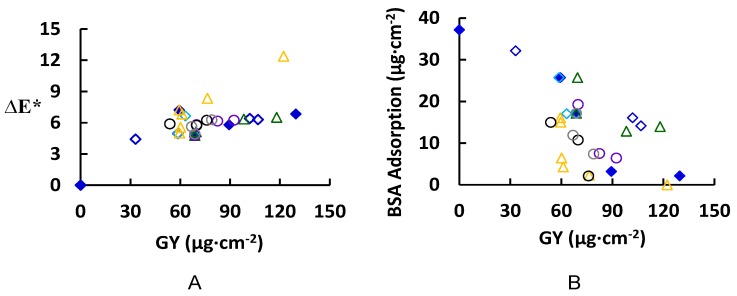
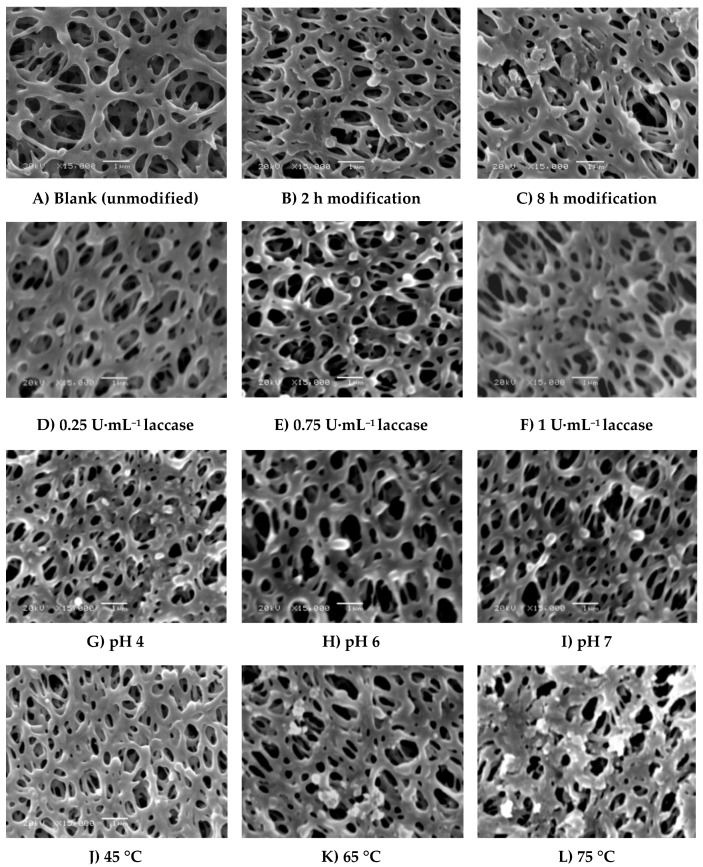
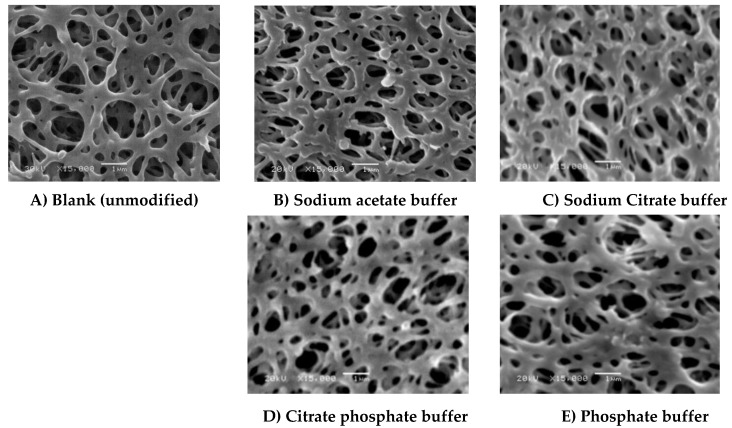
A major limitation in using membrane-based separation processes is the loss of performance due to membrane fouling. This drawback can be addressed thanks to surface modification treatments. A new and promising surface modification using green chemistry has been recently investigated. This modification is carried out at room temperature and in aqueous medium using green catalyst (enzyme) and nontoxic modifier, which can be safely labelled "green surface modification". This modification can be considered as a nucleus of new generation of antifouling membranes and surfaces. In the current research, ferulic acid modifier and laccase bio-catalyst were used to make poly(ethersulfone) (PES) membrane less vulnerable to protein adsorption. The blank and modified PES membranes are evaluated based on e.g., their flux and protein repellence. Both the blank and the modified PES membranes (or laminated PES on silicon dioxide surface) are characterized using many techniques e.g., SEM, EDX, XPS and SPM, etc. The pure water flux of the most modified membranes was reduced by 10% on average relative to the blank membrane, and around a 94% reduction in protein adsorption was determined. In the conclusions section, a comparison between three modifiers-ferulic acid, and two other previously used modifiers (4-hydroxybenzoic acid and gallic acid)-is presented.
基于膜的分离过程的一个主要限制是由于膜污染导致的性能损失。借助表面改性处理可以解决这一缺点。最近研究了一种使用绿色化学的新型且有前景的表面改性方法。这种改性在室温下于水性介质中使用绿色催化剂(酶)和无毒改性剂进行,可被安全地标记为“绿色表面改性”。这种改性可被视为新一代抗污染膜和表面的核心。在当前研究中,使用阿魏酸改性剂和漆酶生物催化剂使聚醚砜(PES)膜不易受到蛋白质吸附的影响。基于例如通量和蛋白质排斥性对空白PES膜和改性PES膜进行评估。使用多种技术(例如扫描电子显微镜(SEM)、能量色散X射线光谱(EDX)、X射线光电子能谱(XPS)和扫描探针显微镜(SPM)等)对空白PES膜和改性PES膜(或二氧化硅表面上的层压PES膜)进行表征。与空白膜相比,大多数改性膜的纯水通量平均降低了10%,并且蛋白质吸附量降低了约94%。在结论部分,对三种改性剂——阿魏酸以及另外两种先前使用的改性剂(4-羟基苯甲酸和没食子酸)进行了比较。