Li Zeqin, Zhang Jilong, Li Jingxiao, Li Hongjie, Zhang Genfa
Beijing Key Laboratory of Gene Resource and Molecular Development, College of Life Sciences, Beijing Normal University, Beijing, China.
The National Key Facility for Crop Gene Resources and Genetic Improvement, Institute of Crop Science, Chinese Academy of Agricultural Sciences, Beijing, China.
PLoS One. 2016 Apr 20;11(4):e0154042. doi: 10.1371/journal.pone.0154042. eCollection 2016.
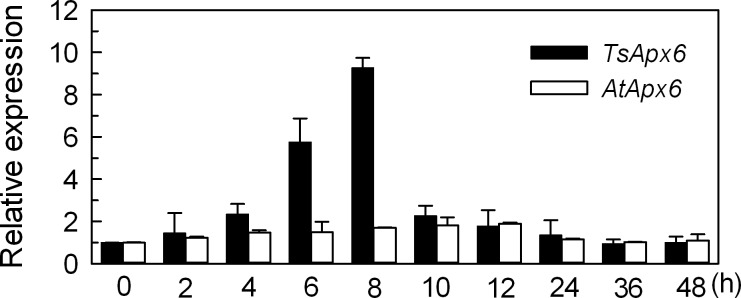
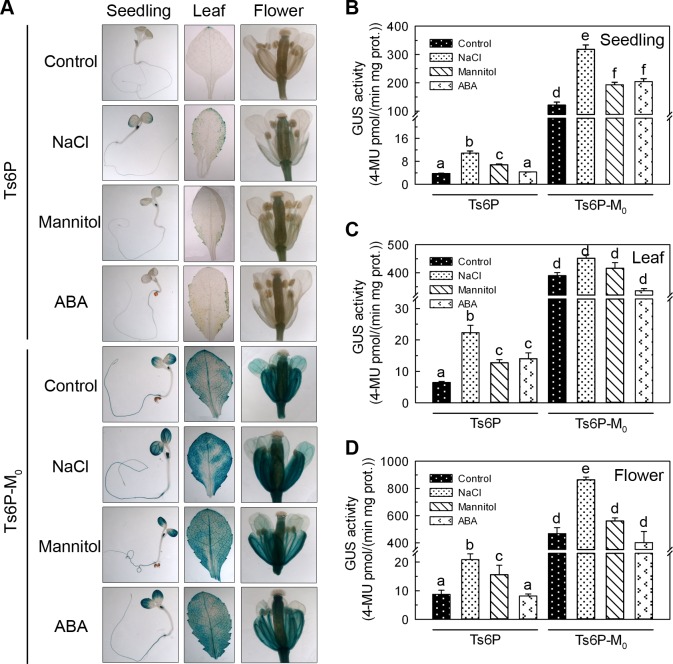
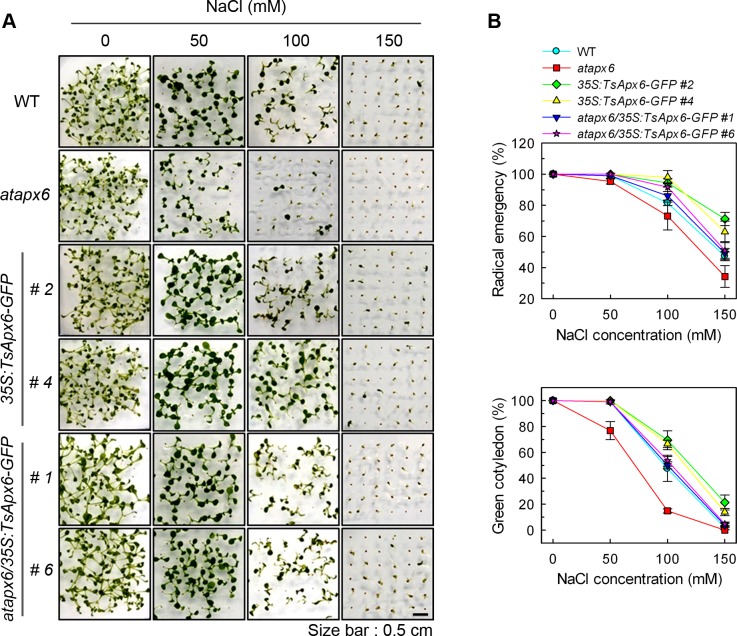
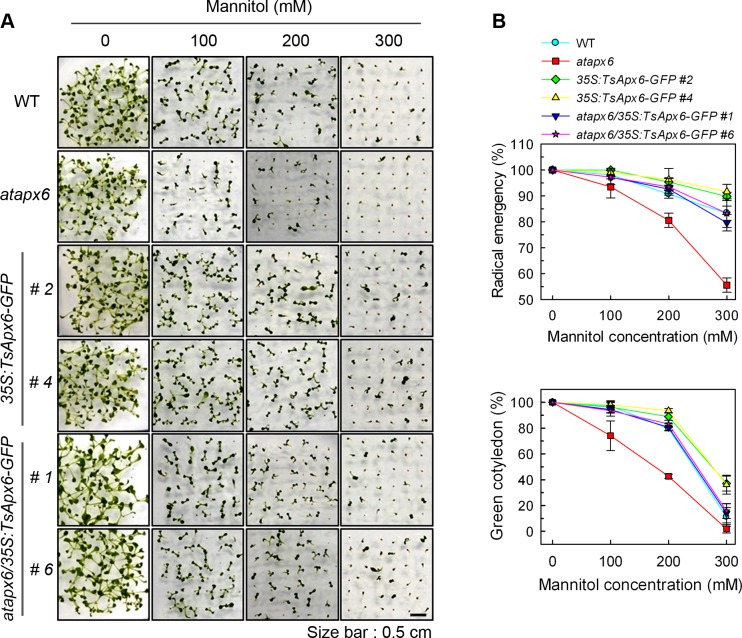
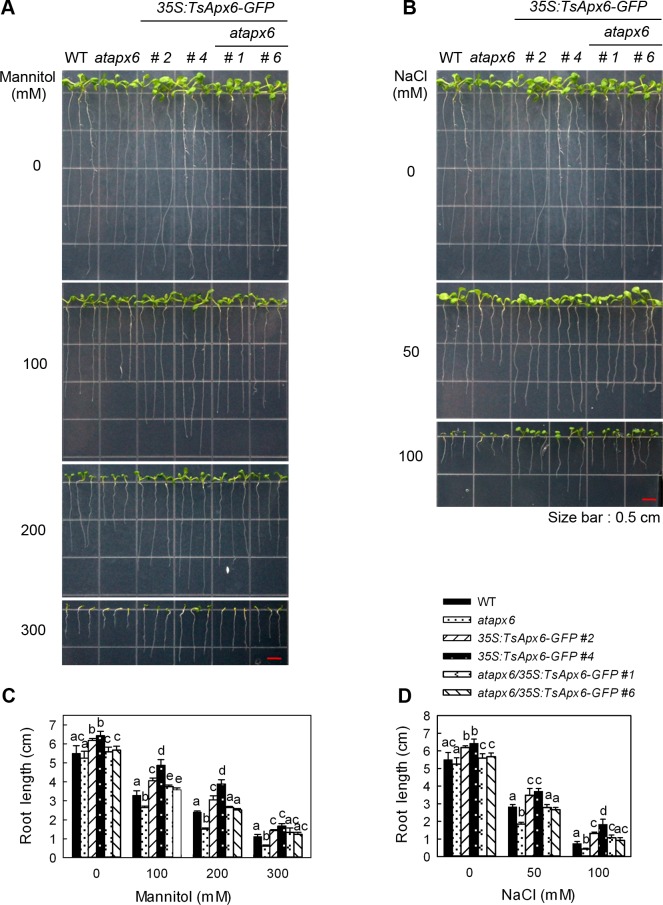
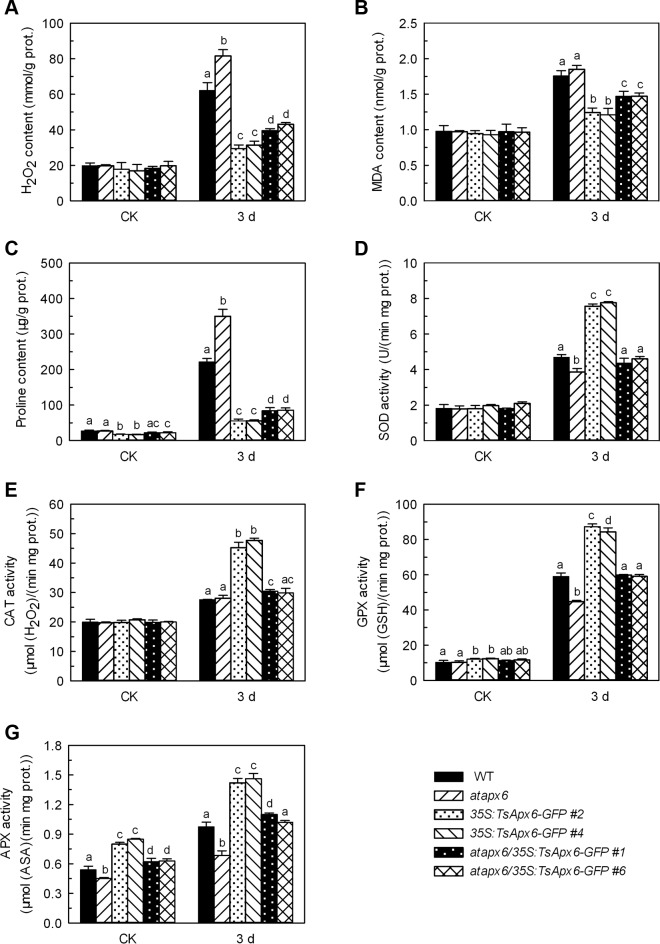
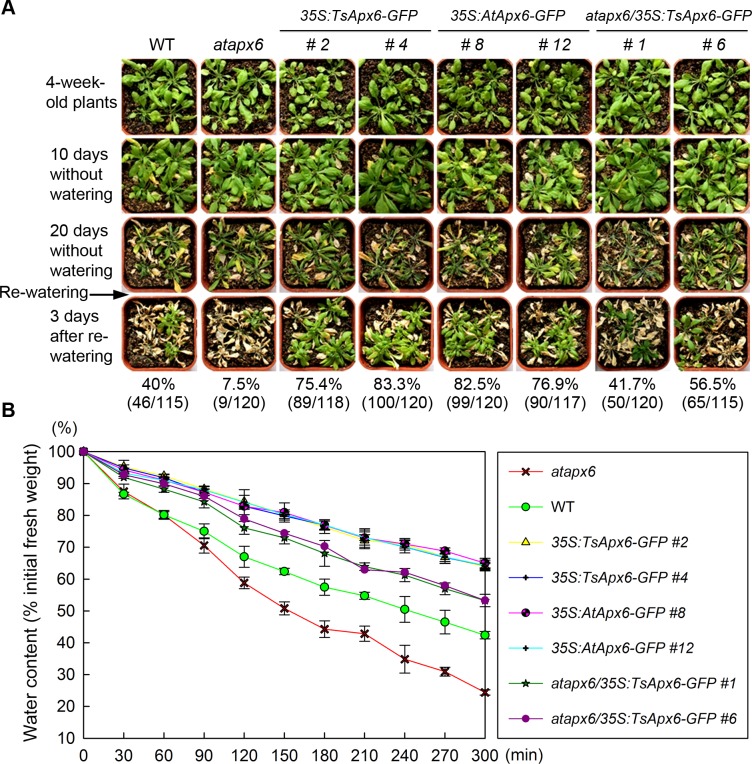
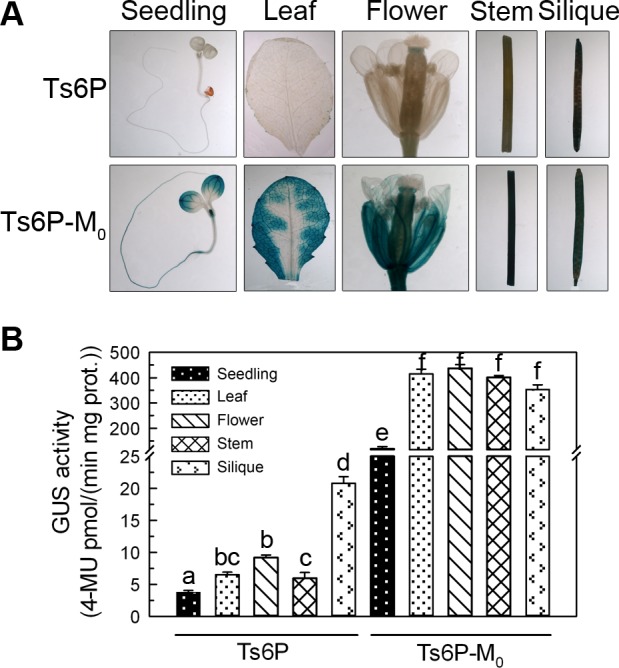
Soil salinization is a resource and ecological problem in the world. Thellungiella salsuginea is becoming a new model plant because it resembles its relative species, Arabidopsis thaliana, in small genome and short life cycle. It is highly tolerant to salinity and drought stresses. Ascorbate peroxidase (APX) is an enzyme that clears H2O2 in plants. The function and molecular and regulation mechanisms of APX in T. salsuginea have rarely been reported. In this study, an APX gene, TsApx6, was cloned from T. salsuginea and its responses to abiotic stresses in transgenic Arabidopsis were studied. Under high salinity treatment, the expression of TsApx6 was significantly induced. Under drought treatment, overexpression of TsApx6 increased the survival rate and reduced leaf water loss rate in Arabidopsis. Compared to the wild type plants, high salinity treatment reduced the concentrations of MDA, H2O2 and proline but elevated the activities of APX, GPX, CAT and SOD in the TsApx6-overexpressing plants. Meanwhile, germination rate, cotyledon greening, and root length were improved in the transgenic plants compared to the wild type plants under salt and water deficit conditions. Based on these findings, TsApx6 has an important function in the resistance of plants to certain abiotic stresses. The TsApx6 promoter sequence was obtained using Genome Walking technology. Bioinformatics analysis indicated that it contains some cis-acting elements related to stress response. The treatments of salt, dehydration, and ABA induced the expression of Gus gene under the regulation of the TsApx6 promoter. Mutation analysis showed that the MBS motif present in the TsApx6 promoter might be a key negative regulatory element which has an important effect on the growth and developmental process of plants.
土壤盐渍化是一个全球性的资源和生态问题。盐芥正成为一种新的模式植物,因为它在基因组小和生命周期短方面与它的近缘物种拟南芥相似。它对盐胁迫和干旱胁迫具有高度耐受性。抗坏血酸过氧化物酶(APX)是一种清除植物中H2O2的酶。关于盐芥中APX的功能、分子和调控机制鲜有报道。在本研究中,从盐芥中克隆了一个APX基因TsApx6,并研究了其在转基因拟南芥中对非生物胁迫的响应。在高盐处理下,TsApx6的表达被显著诱导。在干旱处理下,TsApx6的过表达提高了拟南芥的存活率并降低了叶片失水率。与野生型植株相比,高盐处理降低了过表达TsApx6植株中丙二醛、H2O2和脯氨酸的浓度,但提高了APX、GPX、CAT和SOD的活性。同时,在盐胁迫和水分亏缺条件下,转基因植株的发芽率、子叶绿化和根长均优于野生型植株。基于这些发现,TsApx6在植物对某些非生物胁迫的抗性中具有重要作用。利用基因组步移技术获得了TsApx6启动子序列。生物信息学分析表明,它含有一些与胁迫响应相关的顺式作用元件。盐、脱水和脱落酸处理在TsApx6启动子的调控下诱导了Gus基因的表达。突变分析表明,TsApx6启动子中存在的MBS基序可能是一个关键的负调控元件,对植物的生长发育过程具有重要影响。