Aslam Kiran, Hazbun Tony R
a Department of Medicinal Chemistry and Molecular Pharmacology and the Purdue University Center for Cancer Research , Purdue University , West Lafayette , IN , USA.
Prion. 2016 Mar 3;10(2):103-11. doi: 10.1080/19336896.2016.1141858.
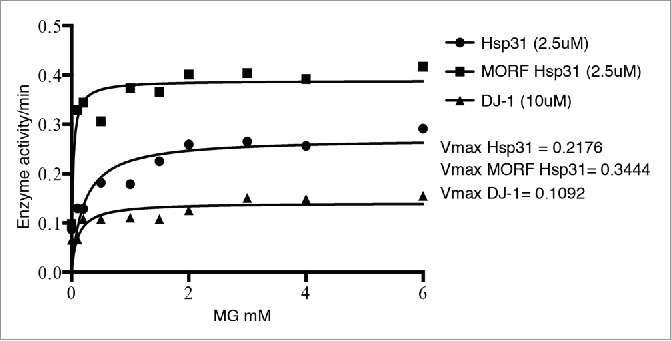
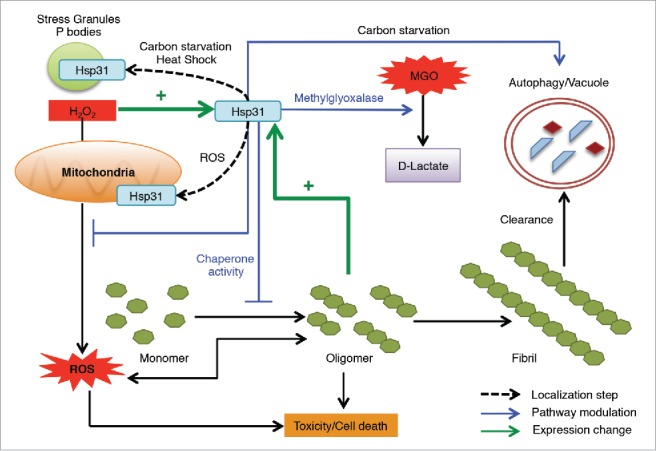
Among different types of protein aggregation, amyloids are a biochemically well characterized state of protein aggregation that are associated with a large number of neurodegenerative diseases including Parkinson's disease, Alzheimer and Creutzfeldt-Jakob disease. Yeast, Saccharomyces cerevisiae is an insightful model to understand the underlying mechanism of protein aggregation. Many yeast molecular chaperones can modulate aggregation and misfolding of proteins including α-Syn and the Sup35 prion. Hsp31 is a homodimeric protein structurally similar to human DJ-1, a Parkinson's disease-linked protein, and both are members of the DJ-1/ThiJ/PfpI superfamily. An emerging view is that Hsp31 and its associated superfamily members each have divergent multitasking functions that have the common theme of responding and managing various types of cellular stress. Hsp31 has several biochemical activities including chaperone and detoxifying enzyme activities that modulate at various points of a stress pathway such as toxicity associated with protein misfolding. However, we have shown the protective role of Hsp31's chaperone activity can operate independent of detoxifying enzyme activities in preventing the early stages of protein aggregate formation and associated cellular toxicities. We provide additional data that collectively supports the multiple functional roles that can be accomplished independent of each other. We present data indicating Hsp31 purified from yeast is more active compared to expression and purification from E. coli suggesting that posttranslational modifications could be important for Hsp31 to be fully active. We also compare the similarities and differences in activities among paralogs of Hsp31 supporting a model in which this protein family has overlapping but diverging roles in responding to various sources of cellular stresses.
在不同类型的蛋白质聚集中,淀粉样蛋白是一种在生物化学上特征明确的蛋白质聚集状态,与包括帕金森病、阿尔茨海默病和克雅氏病在内的大量神经退行性疾病相关。酿酒酵母是理解蛋白质聚集潜在机制的一个有洞察力的模型。许多酵母分子伴侣可以调节蛋白质的聚集和错误折叠,包括α-突触核蛋白和Sup35朊病毒。Hsp31是一种同二聚体蛋白,其结构与人类DJ-1(一种与帕金森病相关的蛋白)相似,二者都是DJ-1/ThiJ/PfpI超家族的成员。一种新出现的观点认为,Hsp31及其相关的超家族成员各自具有不同的多任务功能,其共同主题是响应和管理各种类型的细胞应激。Hsp31具有多种生化活性,包括伴侣活性和解毒酶活性,可在应激途径的各个点进行调节,如与蛋白质错误折叠相关的毒性。然而,我们已经表明,Hsp31的伴侣活性在预防蛋白质聚集体形成的早期阶段和相关细胞毒性方面可以独立于解毒酶活性发挥保护作用。我们提供的其他数据共同支持了可以相互独立完成的多种功能作用。我们提供的数据表明,从酵母中纯化的Hsp31比从大肠杆菌中表达和纯化的更具活性,这表明翻译后修饰可能对Hsp31充分发挥活性很重要。我们还比较了Hsp31旁系同源物之间活性的异同,支持了这样一种模型,即该蛋白家族在应对各种细胞应激源时具有重叠但不同的作用。