Gogia S, Sachdev H P S
Department of Pediatrics, Max Hospital, Gurgaon, Haryana, India.
Department of Pediatrics and Clinical Epidemiology, Sitaram Bhartia Institute of Science and Research, New Delhi, India.
J Perinatol. 2016 May;36 Suppl 1(Suppl 1):S55-73. doi: 10.1038/jp.2016.33.
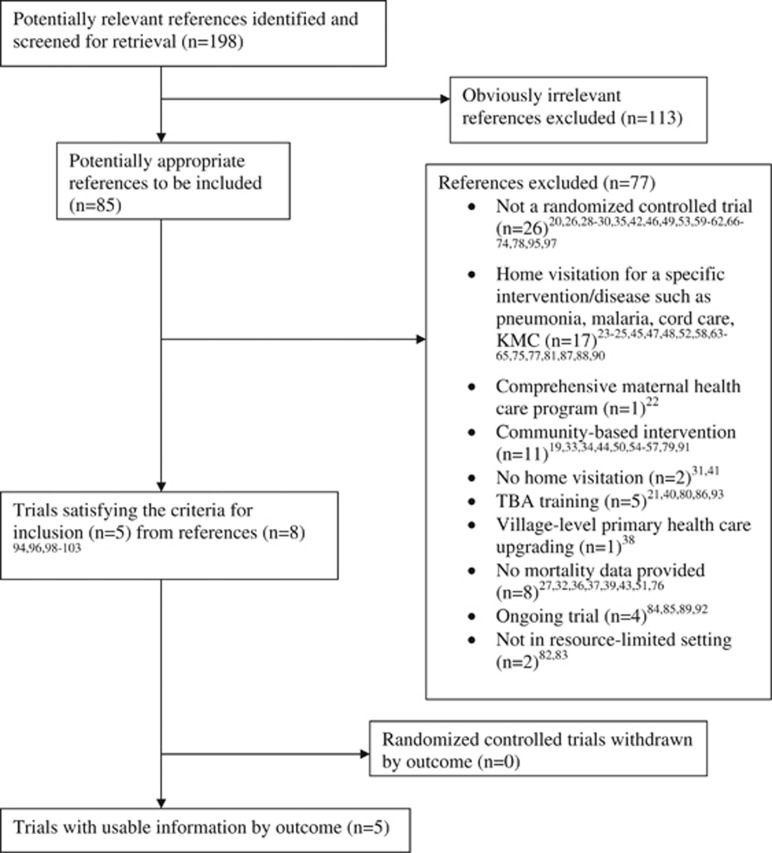
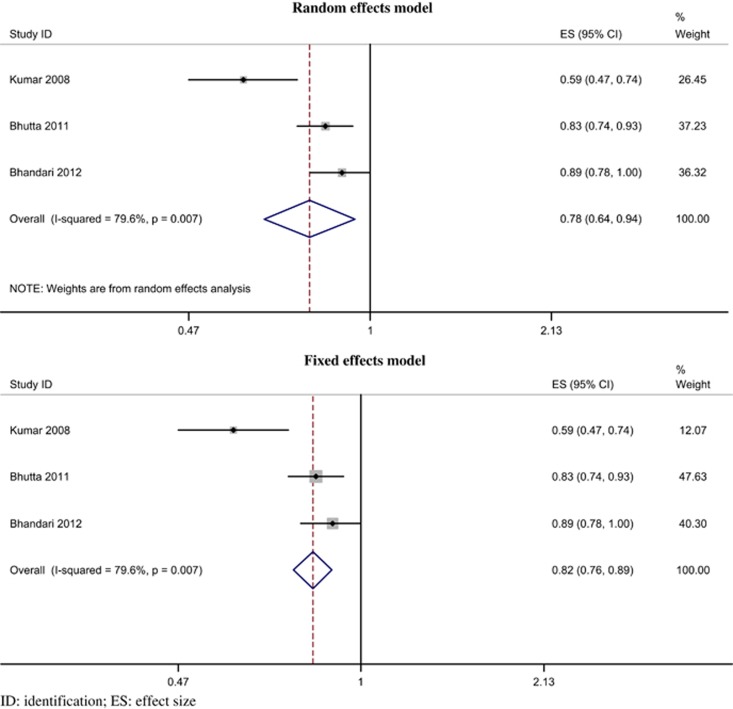
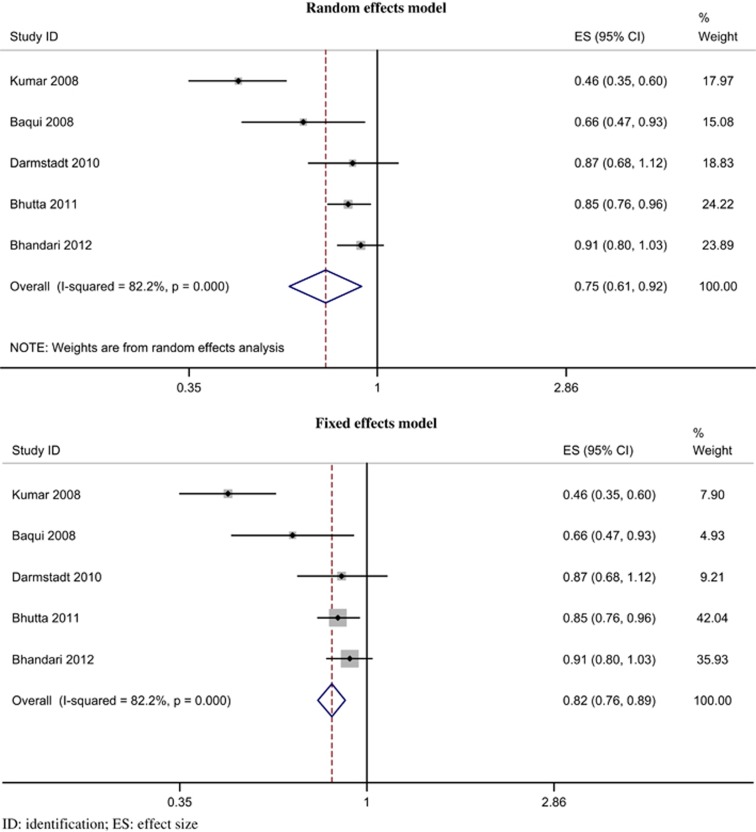
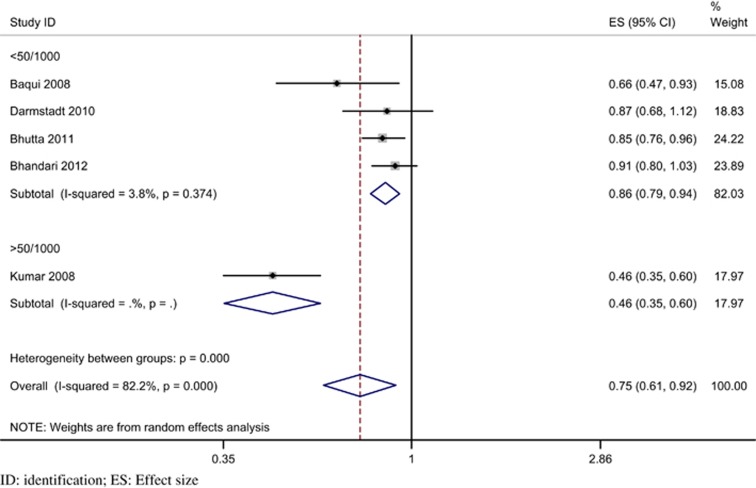
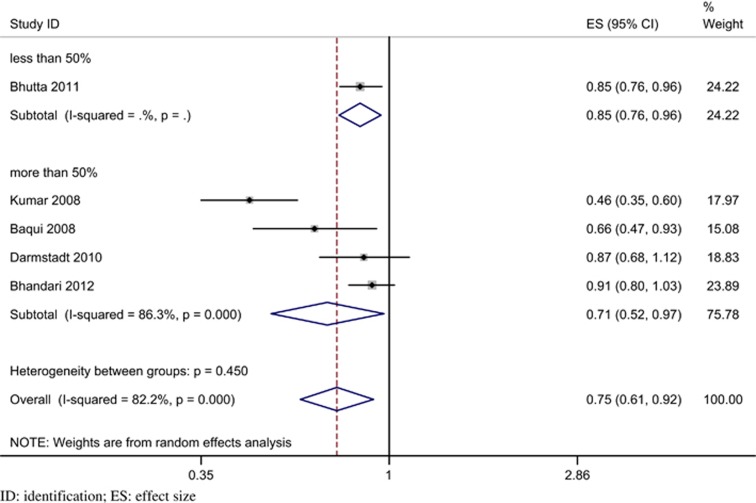
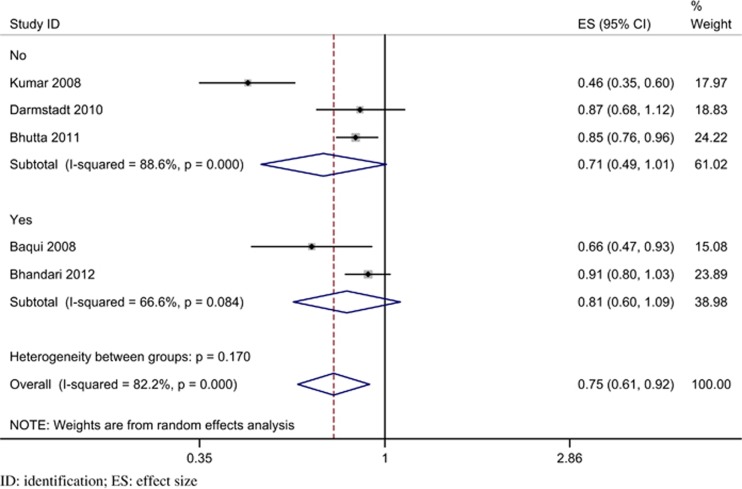
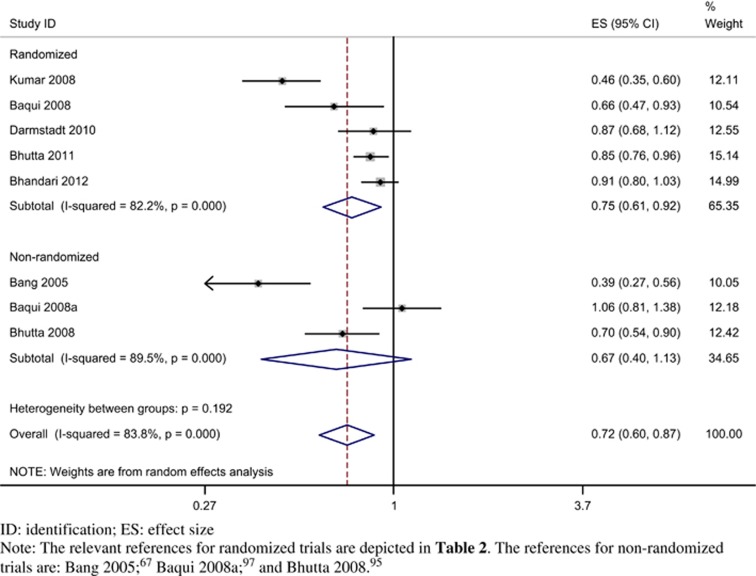
The objective of this review is to assess the effect of home-based neonatal care provided by community health workers (CHWs) for preventing neonatal, infant and perinatal mortality in resource-limited settings with poor access to health facility-based care. The authors conducted a systematic review, including meta-analysis and meta-regression of controlled trials. The data sources included electronic databases, with a hand search of reviews, abstracts and proceedings of conferences to search for randomized, or cluster randomized, controlled trials evaluating the effect of home-based neonatal care provided by CHWs for preventing neonatal, infant and perinatal mortality. Among the included trials, all from South Asian countries, information on neonatal, infant and perinatal mortality was available in five, one and three trials, respectively. The intervention package comprised three components, namely, home visits during pregnancy (four trials), home-based preventive and/or curative neonatal care (all trials) and community mobilization efforts (four trials). Intervention was associated with a reduced risk of mortality during the neonatal (random effects model relative risk (RR) 0.75; 95% confidence intervals (CIs) 0.61 to 0.92, P=0.005; I(2)=82.2%, P<0.001 for heterogeneity; high-quality evidence) and perinatal periods (random effects model RR 0.78; 95% CI 0.64 to 0.94, P=0.009; I(2)=79.6%, P=0.007 for heterogeneity; high-quality evidence). In one trial, a significant decline in infant mortality (RR 0.85; 95% CI 0.77 to 0.94) was documented. Subgroup and meta-regression analyses suggested a greater effect with a higher baseline neonatal mortality rate. The authors concluded that home-based neonatal care is associated with a reduction in neonatal and perinatal mortality in South Asian settings with high neonatal-mortality rates and poor access to health facility-based care. Adoption of a policy of home-based neonatal care provided by CHWs is justified in such settings.
本综述的目的是评估在难以获得基于医疗机构护理的资源有限环境中,社区卫生工作者(CHW)提供的家庭式新生儿护理对预防新生儿、婴儿和围产期死亡的效果。作者进行了一项系统综述,包括对对照试验的荟萃分析和荟萃回归。数据来源包括电子数据库,并通过手工检索综述、摘要和会议记录来查找评估社区卫生工作者提供的家庭式新生儿护理对预防新生儿、婴儿和围产期死亡效果的随机或整群随机对照试验。在所纳入的试验中,均来自南亚国家,分别有5项、1项和3项试验提供了有关新生儿、婴儿和围产期死亡率的信息。干预措施包括三个组成部分,即孕期家访(4项试验)、家庭式预防性和/或治疗性新生儿护理(所有试验)以及社区动员工作(4项试验)。干预措施与新生儿期(随机效应模型相对风险(RR)为0.75;95%置信区间(CI)为0.61至0.92,P = 0.005;I² = 82.2%,异质性P < 0.001;高质量证据)和围产期死亡率降低相关(随机效应模型RR为0.78;95% CI为0.64至0.94,P = 0.009;I² = 79.6%,异质性P = 0.007;高质量证据)。在一项试验中,记录到婴儿死亡率显著下降(RR为0.85;95% CI为0.7至0.94)。亚组分析和荟萃回归分析表明,基线新生儿死亡率较高时效果更佳。作者得出结论,在新生儿死亡率高且难以获得基于医疗机构护理的南亚环境中,家庭式新生儿护理与新生儿和围产期死亡率降低相关。在这种环境中,采用社区卫生工作者提供家庭式新生儿护理的政策是合理的。