Department of Clinical Neuroscience, Division of Psychology, Karolinska Institutet, Stockholm, Sweden Department of Clinical Neuroscience, Osher Center for Integrative Medicine, Karolinska Institutet, Stockholm, Sweden.
Department of Clinical Neuroscience, Division of Psychology, Karolinska Institutet, Stockholm, Sweden Department of Clinical Neuroscience, Division of Psychiatry, Karolinska Institutet, Stockholm, Sweden.
BMJ Open. 2016 Apr 25;6(4):e009327. doi: 10.1136/bmjopen-2015-009327.
Internet-delivered exposure-based cognitive behaviour therapy (ICBT) has been shown to be effective in the treatment of severe health anxiety. The health economic effects of the treatment have, however, been insufficiently studied and no prior study has investigated the effect of ICBT compared with an active psychological treatment. The aim of the present study was to investigate the cost effectiveness of ICBT compared with internet-delivered behavioural stress management (IBSM) for adults with severe health anxiety defined as Diagnostic and Statistical Manual of Mental Disorders, Fourth Edition (DSM-IV) hypochondriasis. ICBT was hypothesised to be the more cost-effective treatment.
This was a cost-effectiveness study within the context of a randomised controlled trial conducted in a primary care/university setting. Participants from all of Sweden could apply to participate.
Self-referred adults (N=158) with a principal diagnosis of DSM-IV hypochondriasis, of whom 151 (96%) provided baseline and post-treatment data.
ICBT or IBSM for 12 weeks.
The primary outcome was the Health Anxiety Inventory. The secondary outcome was the EQ-5D. Other secondary measures were used in the main outcome study but were not relevant for the present health economic analysis.
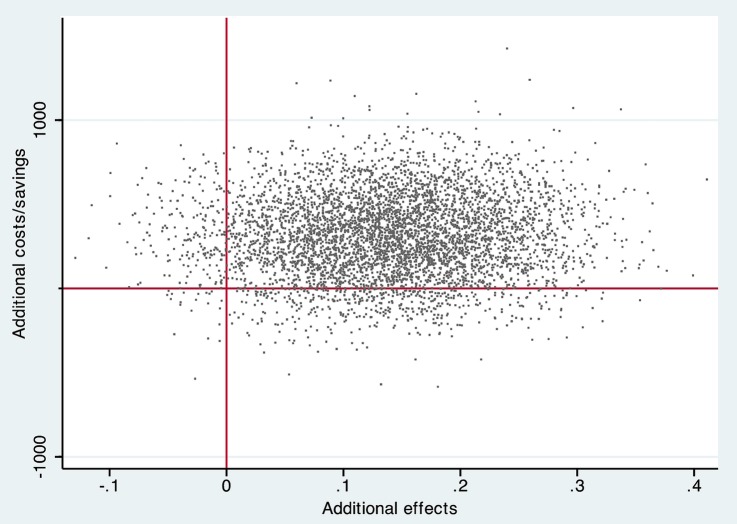
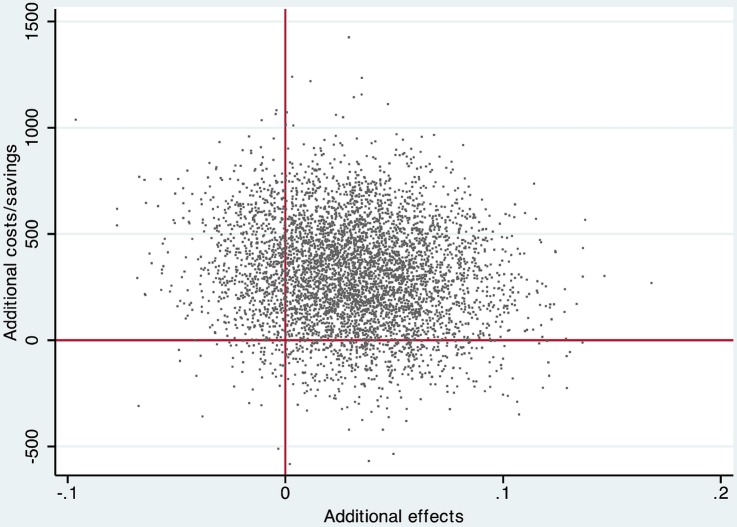
Both treatments led to significant reductions in gross total costs, costs of healthcare visits, direct non-medical costs and costs of domestic work cutback (p=0.000-0.035). The incremental cost-effectiveness ratio (ICER) indicated that the cost of one additional case of clinically significant improvement in ICBT compared with IBSM was $2214. The cost-utility ICER, that is, the cost of one additional quality-adjusted life year, was estimated to be $10,000.
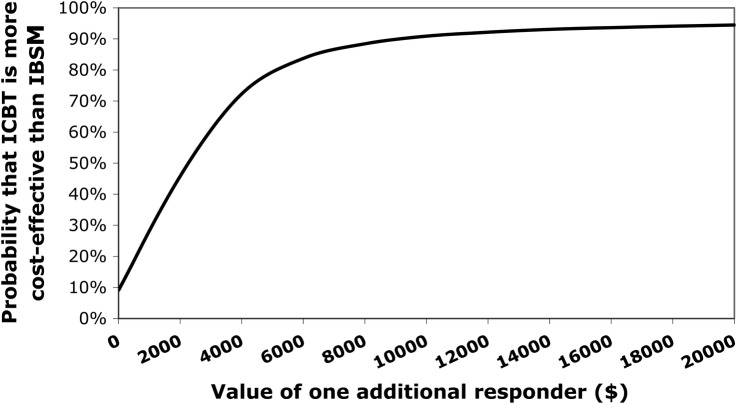
ICBT is a cost-effective treatment compared with IBSM and treatment costs are offset by societal net cost reductions in a short time. A cost-benefit analysis speaks for ICBT to play an important role in increasing access to effective treatment for severe health anxiety.
NCT01673035; Results.
基于互联网的暴露疗法认知行为疗法(ICBT)已被证明对严重健康焦虑症的治疗有效。然而,该治疗的健康经济学效果研究不足,并且之前没有研究调查过 ICBT 与积极的心理治疗相比的效果。本研究旨在调查与互联网提供的行为压力管理(IBSM)相比,ICBT 治疗严重健康焦虑症(定义为精神疾病诊断与统计手册,第四版(DSM-IV)疑病症)的成本效果。假设 ICBT 是更具成本效益的治疗方法。
这是在初级保健/大学环境中进行的随机对照试验的背景下进行的成本效益研究。来自瑞典各地的参与者都可以申请参加。
自我报告的成年人(N=158),其主要诊断为 DSM-IV 疑病症,其中 151 人(96%)提供了基线和治疗后数据。
ICBT 或 IBSM 治疗 12 周。
主要结果是健康焦虑量表。次要结果是 EQ-5D。其他次要措施用于主要结果研究,但与当前健康经济学分析无关。
两种治疗方法均导致总费用、医疗就诊费用、直接非医疗费用和家务劳动减少费用显著降低(p=0.000-0.035)。增量成本效果比(ICER)表明,与 IBSM 相比,ICBT 每增加一个临床显著改善的病例的成本为 2214 美元。成本效用 ICER,即每增加一个质量调整生命年的成本,估计为 10000 美元。
与 IBSM 相比,ICBT 是一种具有成本效益的治疗方法,并且在短时间内可以通过减少社会总成本来抵消治疗费用。成本效益分析表明,ICBT 在增加严重健康焦虑症有效治疗的可及性方面应发挥重要作用。
NCT01673035;结果。