Krupkova Olga, Handa Junichi, Hlavna Marian, Klasen Juergen, Ospelt Caroline, Ferguson Stephen John, Wuertz-Kozak Karin
Department of Health Sciences and Technology, Institute for Biomechanics, ETH Zurich, Hoenggerbergring 64, 8093 Zurich, Switzerland.
Department of Health Sciences and Technology, Institute for Biomechanics, ETH Zurich, Hoenggerbergring 64, 8093 Zurich, Switzerland; Department of Orthopaedic Surgery, Fukushima Medical University School of Medicine, Hikarigaoka, Fukushima City, Fukushima 960-1295, Japan.
Oxid Med Cell Longev. 2016;2016:7031397. doi: 10.1155/2016/7031397. Epub 2016 Mar 28.
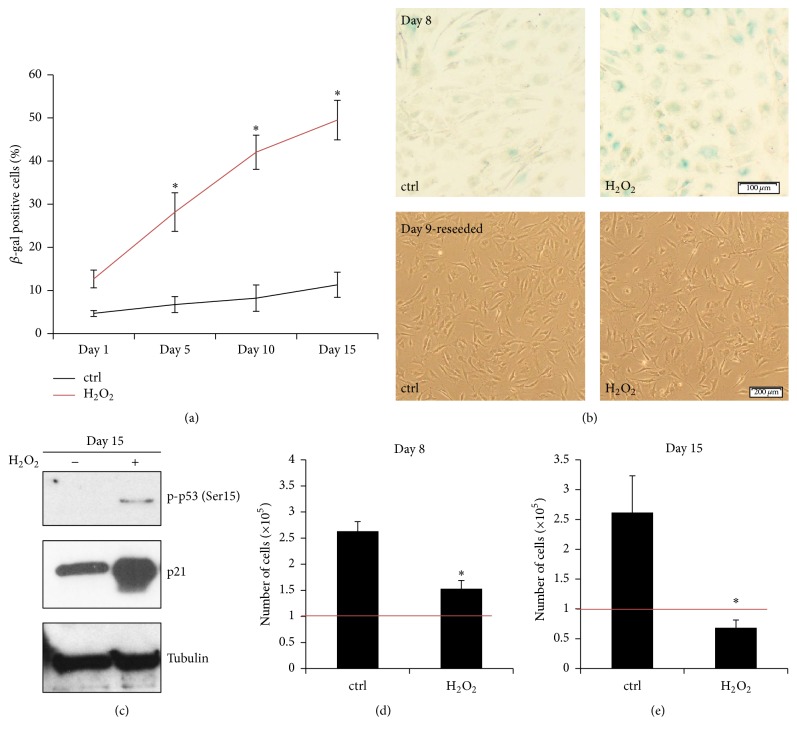
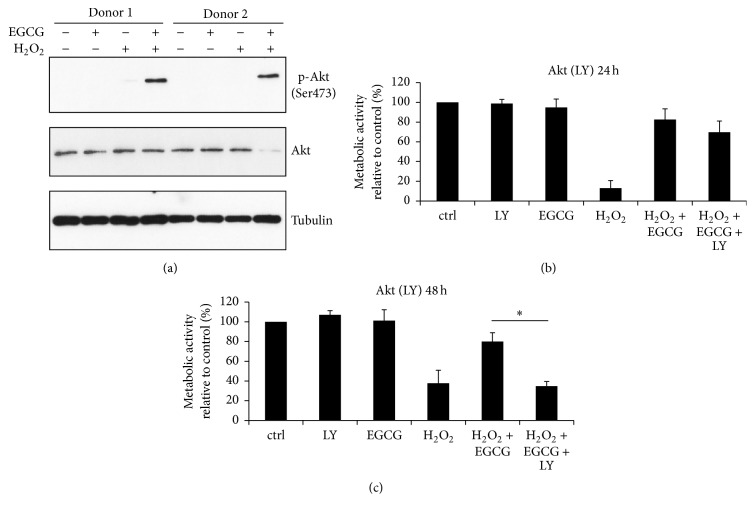
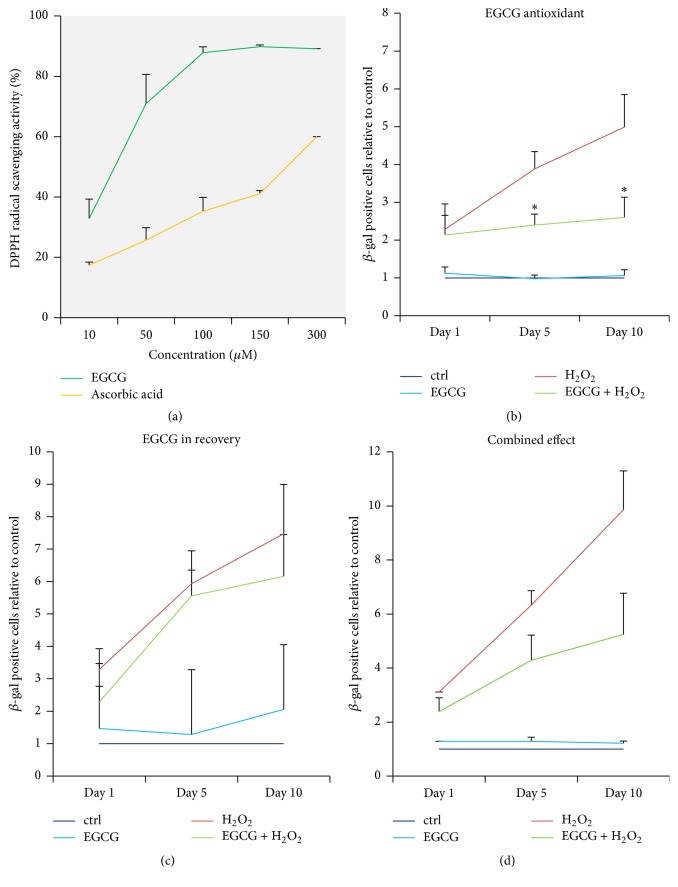
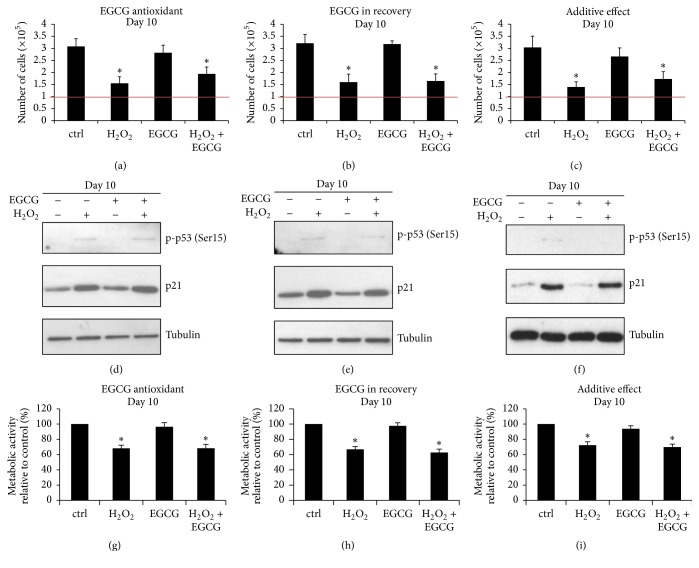
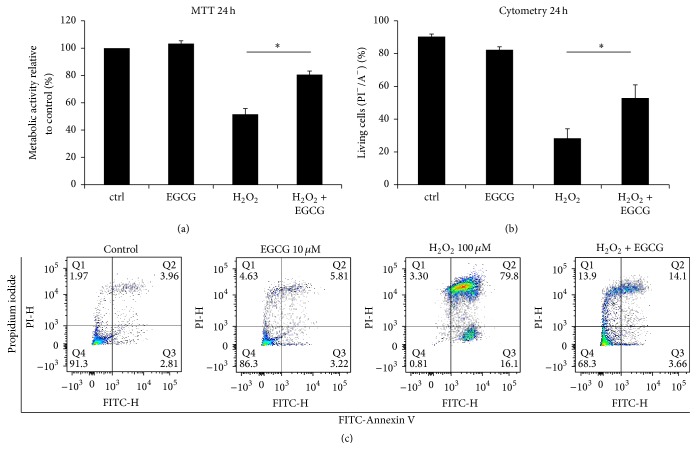
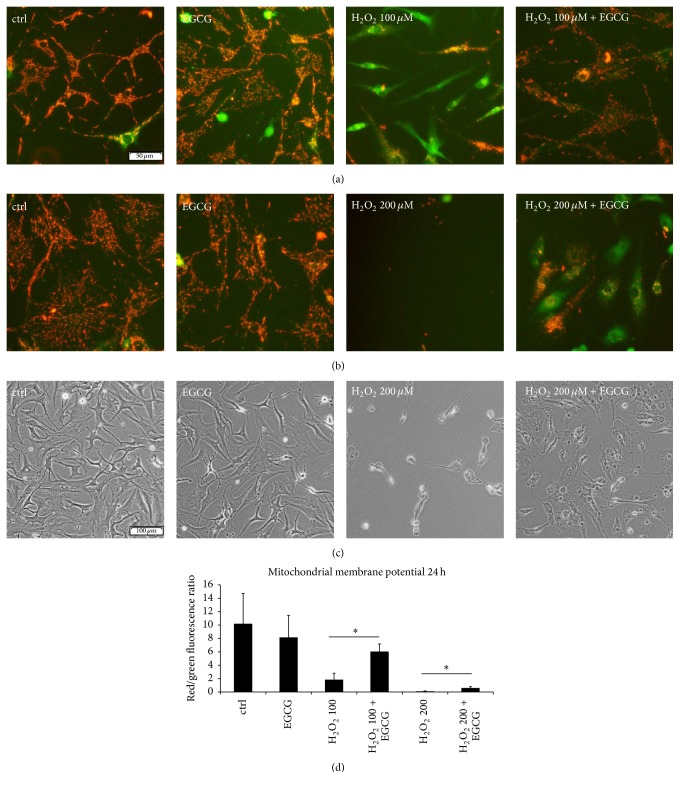
Oxidative stress-related phenotypic changes and a decline in the number of viable cells are crucial contributors to intervertebral disc degeneration. The polyphenol epigallocatechin 3-gallate (EGCG) can interfere with painful disc degeneration by reducing inflammation, catabolism, and pain. In this study, we hypothesized that EGCG furthermore protects against senescence and/or cell death, induced by oxidative stress. Sublethal and lethal oxidative stress were induced in primary human intervertebral disc cells with H2O2 (total n = 36). Under sublethal conditions, the effects of EGCG on p53-p21 activation, proliferative capacity, and accumulation of senescence-associated β-galactosidase were tested. Further, the effects of EGCG on mitochondria depolarization and cell viability were analyzed in lethal oxidative stress. The inhibitor LY249002 was applied to investigate the PI3K/Akt pathway. EGCG inhibited accumulation of senescence-associated β-galactosidase but did not affect the loss of proliferative capacity, suggesting that EGCG did not fully neutralize exogenous radicals. Furthermore, EGCG increased the survival of IVD cells in lethal oxidative stress via activation of prosurvival PI3K/Akt and protection of mitochondria. We demonstrated that EGCG not only inhibits inflammation but also can enhance the survival of disc cells in oxidative stress, which makes it a suitable candidate for the development of novel therapies targeting disc degeneration.
氧化应激相关的表型变化和活细胞数量的减少是椎间盘退变的关键因素。多酚表没食子儿茶素-3-没食子酸酯(EGCG)可通过减轻炎症、分解代谢和疼痛来干预疼痛性椎间盘退变。在本研究中,我们假设EGCG还可抵御氧化应激诱导的衰老和/或细胞死亡。用H2O2诱导原代人椎间盘细胞产生亚致死性和致死性氧化应激(共n = 36)。在亚致死条件下,测试EGCG对p53-p21激活、增殖能力和衰老相关β-半乳糖苷酶积累的影响。此外,在致死性氧化应激中分析EGCG对线粒体去极化和细胞活力的影响。应用抑制剂LY249002研究PI3K/Akt信号通路。EGCG抑制衰老相关β-半乳糖苷酶的积累,但不影响增殖能力的丧失,这表明EGCG不能完全中和外源性自由基。此外,EGCG通过激活促生存PI3K/Akt和保护线粒体来提高IVD细胞在致死性氧化应激中的存活率。我们证明,EGCG不仅能抑制炎症,还能提高椎间盘细胞在氧化应激中的存活率,这使其成为开发针对椎间盘退变的新型疗法的合适候选药物。