Sen Arundhuti, Knappy Christopher, Lewis Matthew R, Plumb Robert S, Wilson Ian D, Nicholson Jeremy K, Smith Norman W
Analytical and Environmental Sciences Division, Faculty of Life Sciences & Medicine, Franklin-Wilkins Building, King's College London, London SE1 9NH, United Kingdom; MRC-NIHR National Phenome Centre, Division of Computational and Systems Medicine, Department of Surgery and Cancer, IRDB Building, Imperial College London, Hammersmith Hospital, London W12 0NN, United Kingdom.
Analytical and Environmental Sciences Division, Faculty of Life Sciences & Medicine, Franklin-Wilkins Building, King's College London, London SE1 9NH, United Kingdom; Computational and Systems Medicine, Department of Surgery and Cancer, Faculty of Medicine, Sir Alexander Fleming Building, Imperial College London, South Kensington Campus, London SW7 2DD, United Kingdom; MRC-NIHR National Phenome Centre, Division of Computational and Systems Medicine, Department of Surgery and Cancer, IRDB Building, Imperial College London, Hammersmith Hospital, London W12 0NN, United Kingdom.
J Chromatogr A. 2016 Jun 3;1449:141-55. doi: 10.1016/j.chroma.2016.04.040. Epub 2016 Apr 19.
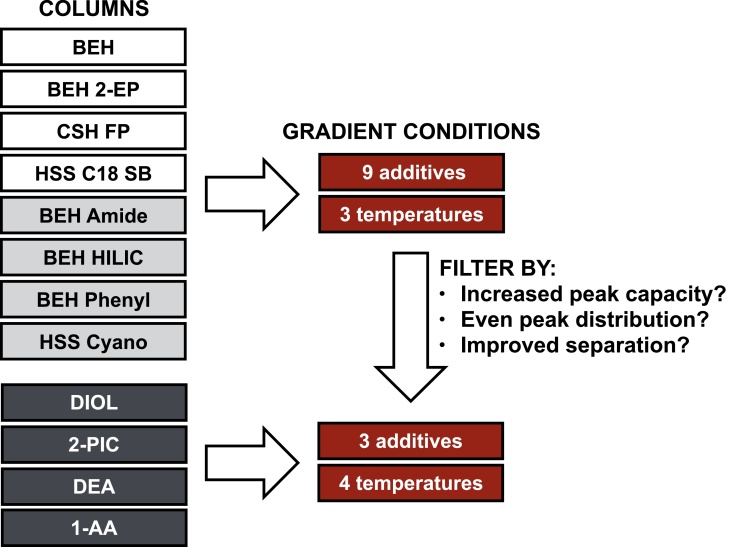
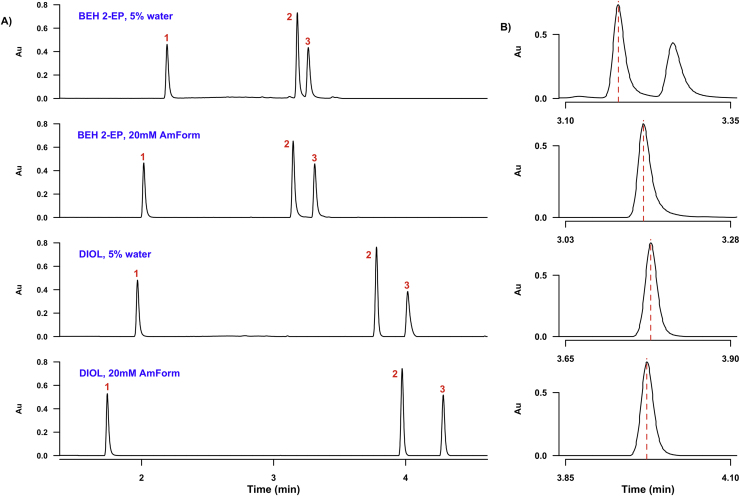
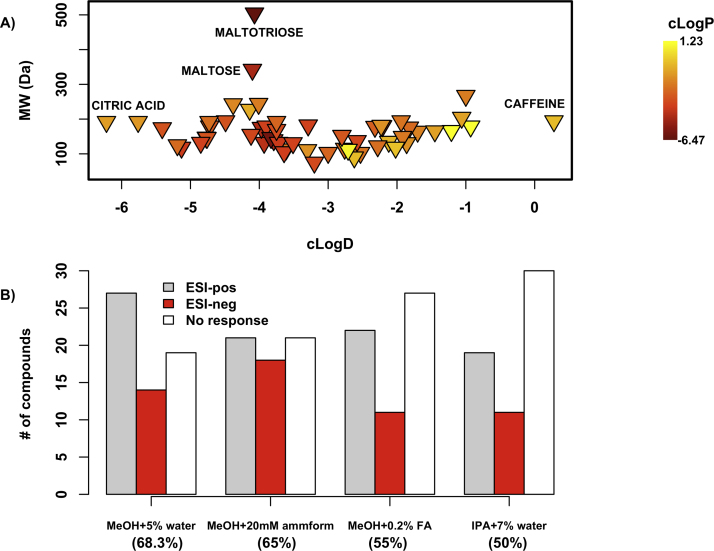
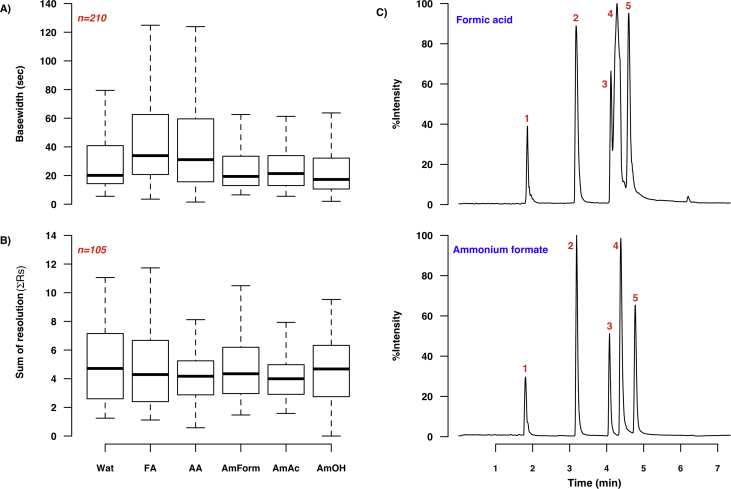
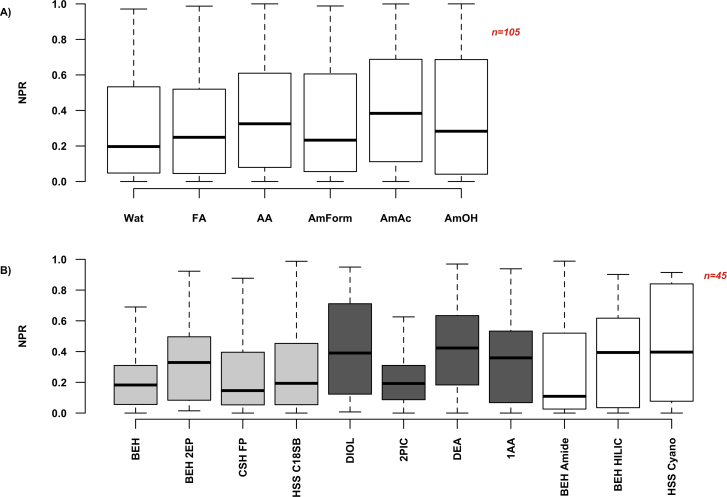
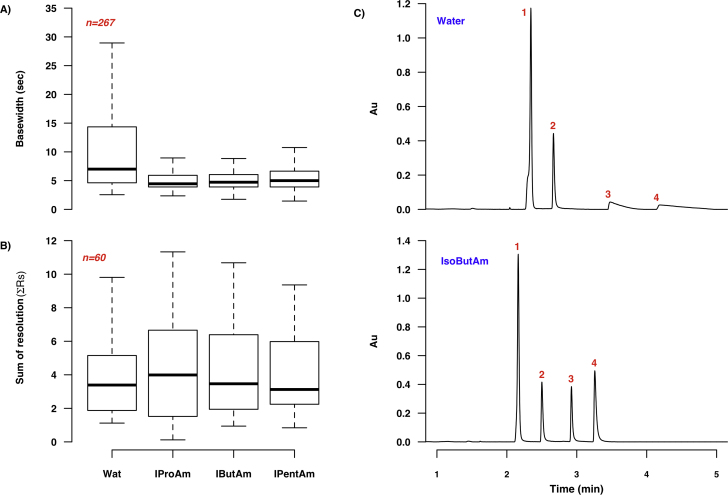
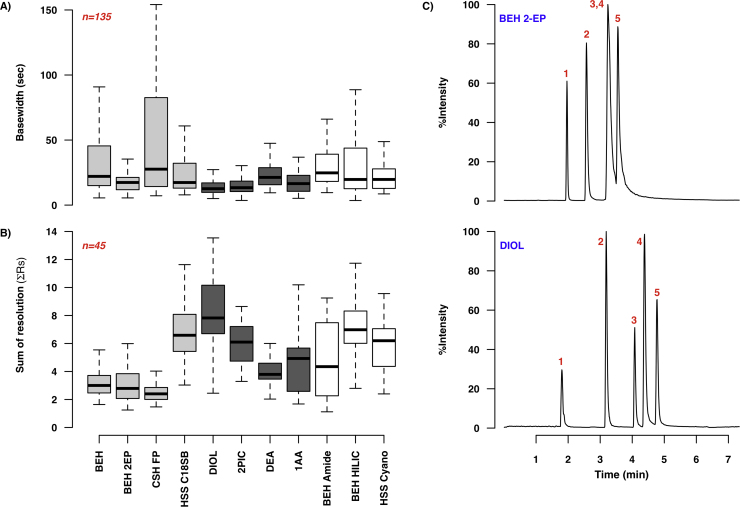
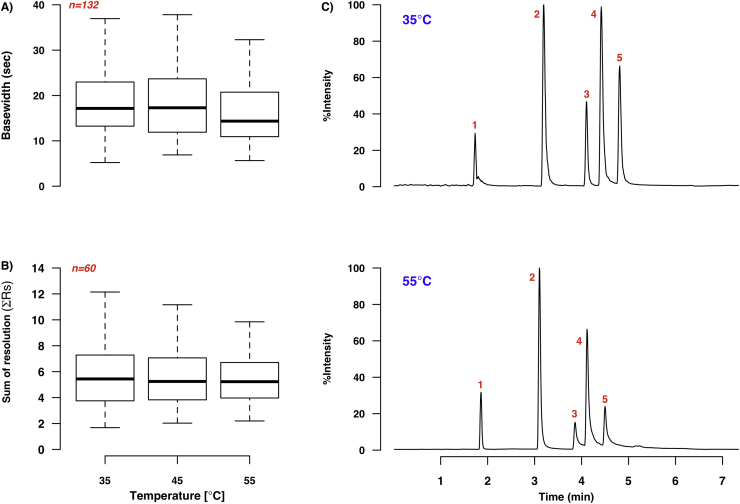
Supercritical fluid chromatography (SFC) is frequently used for the analysis and separation of non-polar metabolites, but remains relatively underutilised for the study of polar molecules, even those which pose difficulties with established reversed-phase (RP) or hydrophilic interaction liquid chromatographic (HILIC) methodologies. Here, we present a fast SFC-MS method for the analysis of medium and high-polarity (-7≤cLogP≤2) compounds, designed for implementation in a high-throughput metabonomics setting. Sixty polar analytes were first screened to identify those most suitable for inclusion in chromatographic test mixtures; then, a multi-dimensional method development study was conducted to determine the optimal choice of stationary phase, modifier additive and temperature for the separation of such analytes using SFC. The test mixtures were separated on a total of twelve different column chemistries at three different temperatures, using CO2-methanol-based mobile phases containing a variety of polar additives. Chromatographic performance was evaluated with a particular emphasis on peak capacity, overall resolution, peak distribution and repeatability. The results suggest that a new generation of stationary phases, specifically designed for improved robustness in mixed CO2-methanol mobile phases, can improve peak shape, peak capacity and resolution for all classes of polar analytes. A significant enhancement in chromatographic performance was observed for these urinary metabolites on the majority of the stationary phases when polar additives such as ammonium salts (formate, acetate and hydroxide) were included in the organic modifier, and the use of water or alkylamine additives was found to be beneficial for specific subsets of polar analytes. The utility of these findings was confirmed by the separation of a mixture of polar metabolites in human urine using an optimised 7min gradient SFC method, where the use of the recommended column and co-solvent combination resulted in a significant improvement in chromatographic performance.
超临界流体色谱法(SFC)常用于分析和分离非极性代谢物,但在极性分子研究中的应用仍相对较少,即使是那些在传统反相(RP)或亲水作用液相色谱(HILIC)方法中分析存在困难的极性分子。在此,我们提出一种快速SFC-MS方法,用于分析中高极性(-7≤cLogP≤2)化合物,该方法设计用于高通量代谢组学分析。首先筛选了60种极性分析物,以确定最适合纳入色谱测试混合物的分析物;然后,进行了多维方法开发研究,以确定使用SFC分离此类分析物时固定相、改性添加剂和温度的最佳选择。使用含有多种极性添加剂的基于CO2-甲醇的流动相,在三个不同温度下,在总共十二种不同的柱化学上分离测试混合物。评估了色谱性能,特别强调了峰容量、整体分辨率、峰分布和重复性。结果表明,专门为提高在混合CO2-甲醇流动相中的稳健性而设计的新一代固定相,可以改善所有类别的极性分析物的峰形、峰容量和分辨率。当有机改性剂中包含铵盐(甲酸盐、乙酸盐和氢氧化物)等极性添加剂时,在大多数固定相上观察到这些尿液代谢物的色谱性能有显著提高,并且发现使用水或烷基胺添加剂对特定子集极性分析物有益。通过使用优化的7分钟梯度SFC方法分离人尿中的极性代谢物混合物,证实了这些发现的实用性,其中使用推荐的柱和共溶剂组合可显著提高色谱性能。