O'Neill Maeghan, Mansour Abdelmoneim, DiCosty Utami, Geary James, Dzimianski Michael, McCall Scott D, McCall John W, Mackenzie Charles D, Geary Timothy G
Institute of Parasitology, McGill University, Ste-Anne-de-Bellevue, Quebec, Canada.
TRS Labs, Athens, Georgia, United States of America.
PLoS Negl Trop Dis. 2016 May 4;10(5):e0004698. doi: 10.1371/journal.pntd.0004698. eCollection 2016 May.
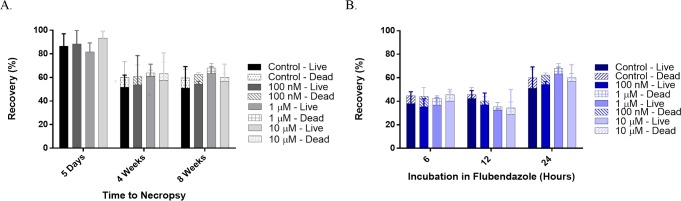
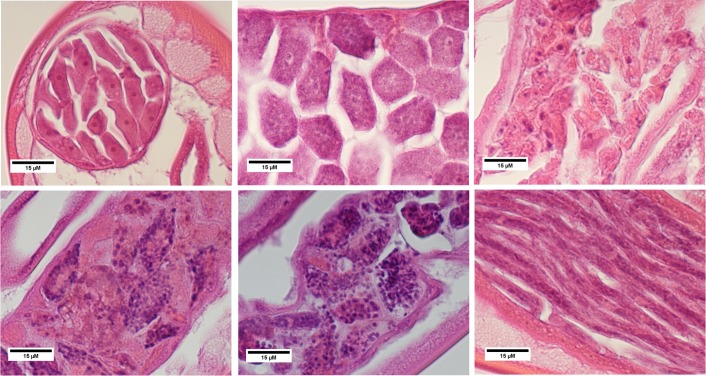
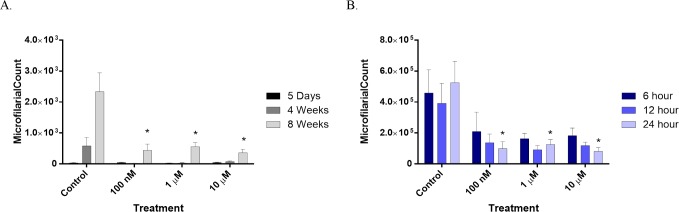
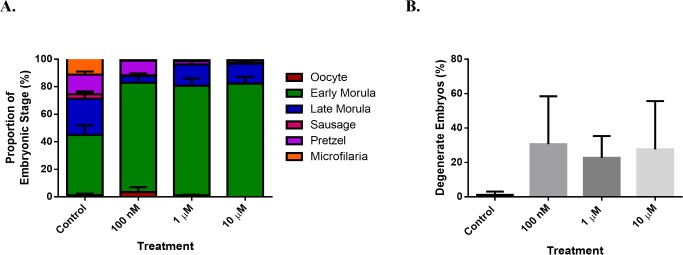
Current control strategies for onchocerciasis and lymphatic filariasis (LF) rely on prolonged yearly or twice-yearly mass administration of microfilaricidal drugs. Prospects for near-term elimination or eradication of these diseases would be improved by availability of a macrofilaricide that is highly effective in a short regimen. Flubendazole (FLBZ), a benzimidazole anthelmintic registered for control of human gastrointestinal nematode infections, is a potential candidate for this role. FLBZ has profound and potent macrofilaricidal effects in many experimental animal models of filariases and in one human trial for onchocerciasis after parental administration. Unfortunately, the marketed formulation of FLBZ provides very limited oral bioavailability and parenteral administration is required for macrofilaricidal efficacy. A new formulation that provided sufficient oral bioavailability could advance FLBZ as an effective treatment for onchocerciasis and LF. Short-term in vitro culture experiments in adult filariae have shown that FLBZ damages tissues required for reproduction and survival at pharmacologically relevant concentrations. The current study characterized the long-term effects of FLBZ on adult Brugia malayi by maintaining parasites in jirds for up to eight weeks following brief drug exposure (6-24 hr) to pharmacologically relevant concentrations (100 nM-10 μM) in culture. Morphological damage following exposure to FLBZ was observed prominently in developing embryos and was accompanied by a decrease in microfilarial output at 4 weeks post-exposure. Although FLBZ exposure clearly damaged the parasites, exposed worms recovered and were viable 8 weeks after treatment.
目前盘尾丝虫病和淋巴丝虫病(LF)的防治策略依赖于每年或每半年长时间大规模施用杀微丝蚴药物。若能获得一种在短疗程中高效的杀成虫药物,这些疾病在近期实现消除或根除的前景将会得到改善。氟苯达唑(FLBZ)是一种已注册用于控制人体胃肠道线虫感染的苯并咪唑驱虫药,是这一角色的潜在候选药物。在许多丝虫病实验动物模型以及一项盘尾丝虫病人体试验中,经肠胃外给药后,FLBZ显示出显著而强效的杀成虫作用。遗憾的是,市售的FLBZ制剂口服生物利用度非常有限,为实现杀成虫效果需要进行肠胃外给药。一种能提供足够口服生物利用度的新制剂可以推动将FLBZ作为盘尾丝虫病和LF的有效治疗药物。在成年丝虫的短期体外培养实验表明,在药理学相关浓度下,FLBZ会破坏繁殖和生存所需的组织。本研究通过在短暂药物暴露(6 - 24小时)于培养物中的药理学相关浓度(100 nM - 10 μM)后,将寄生虫在沙鼠体内维持长达8周,来表征FLBZ对成年马来布鲁线虫的长期影响。暴露于FLBZ后,发育中的胚胎出现明显的形态损伤,并在暴露后4周伴随着微丝蚴产出的减少。虽然FLBZ暴露明显损害了寄生虫,但受暴露的虫体在治疗8周后恢复并仍具有活力。