Li Shuai, Yue Wenhao, Wang Min, Qiu Wenmin, Zhou Lian, Shou Huixia
State Key Laboratory of Plant Physiology and Biochemistry, College of Life Sciences, Zhejiang UniversityHangzhou, China; College of Life Sciences, Qingdao Agricultural UniversityQingdao, China.
State Key Laboratory of Plant Physiology and Biochemistry, College of Life Sciences, Zhejiang University Hangzhou, China.
Front Plant Sci. 2016 Apr 18;7:465. doi: 10.3389/fpls.2016.00465. eCollection 2016.
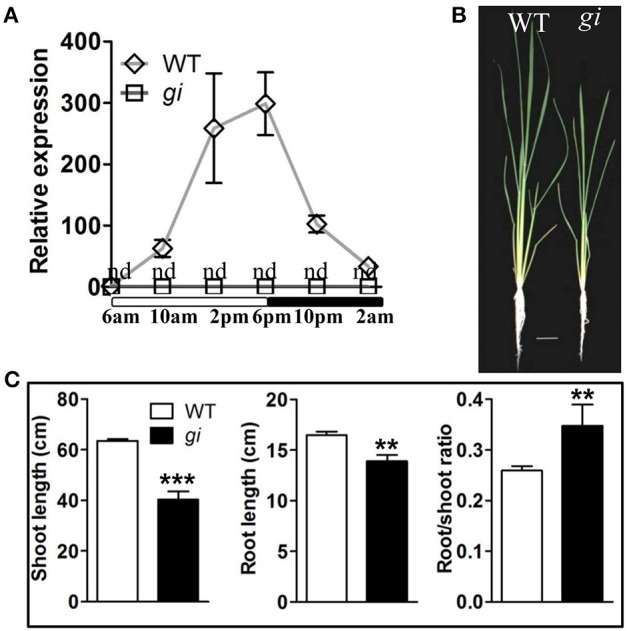
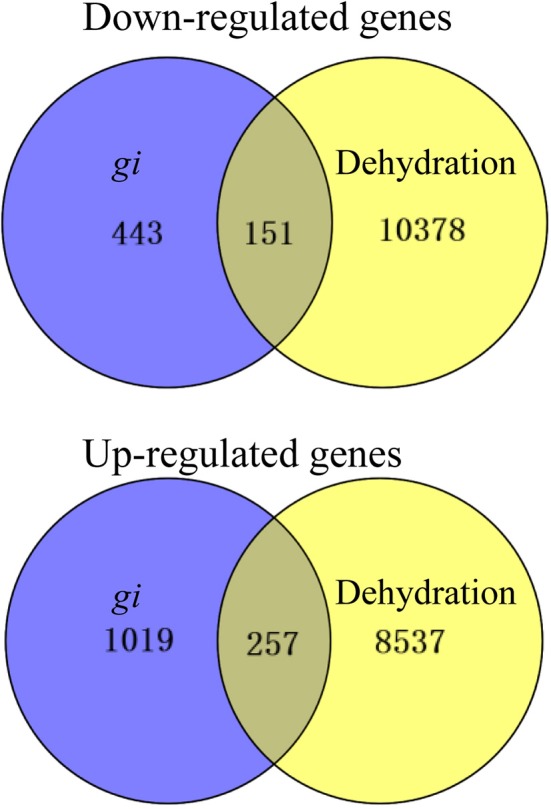
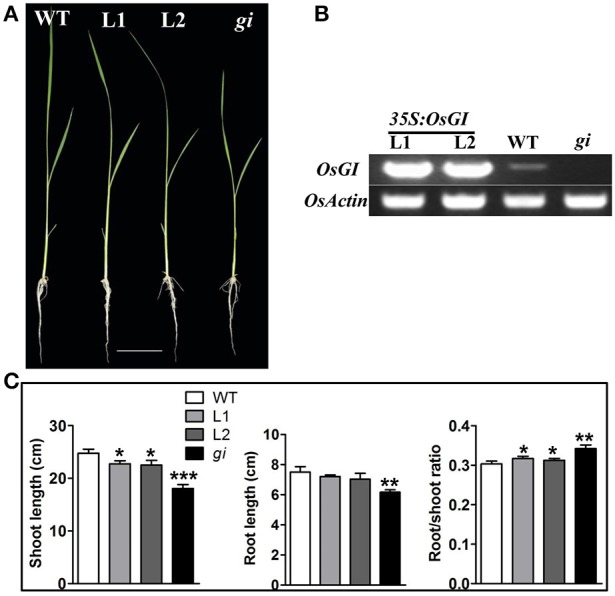
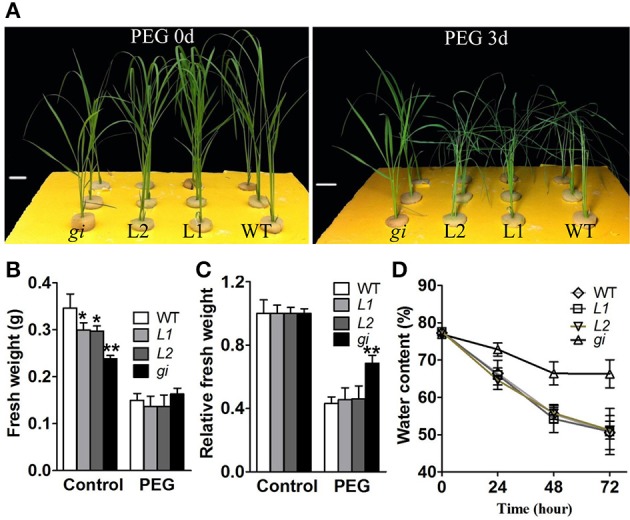
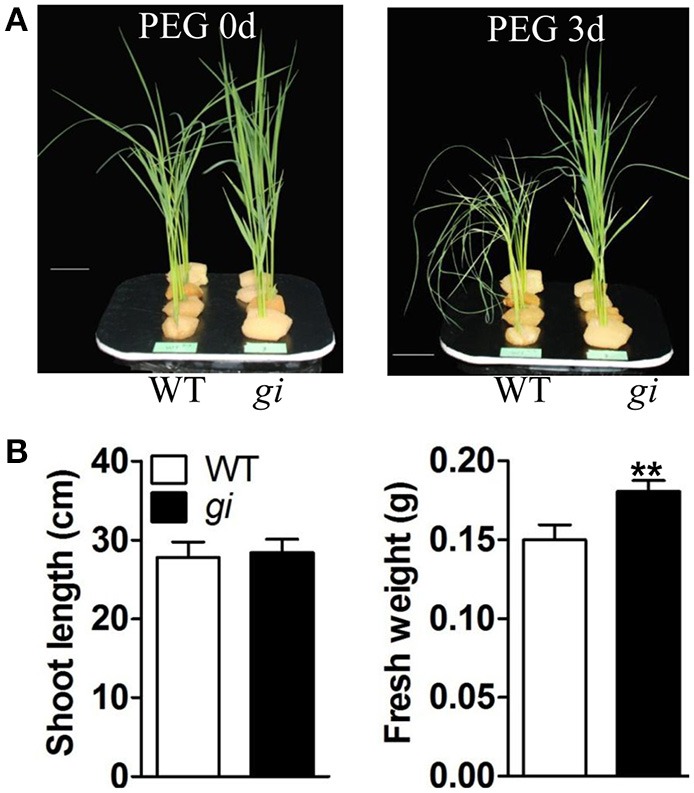
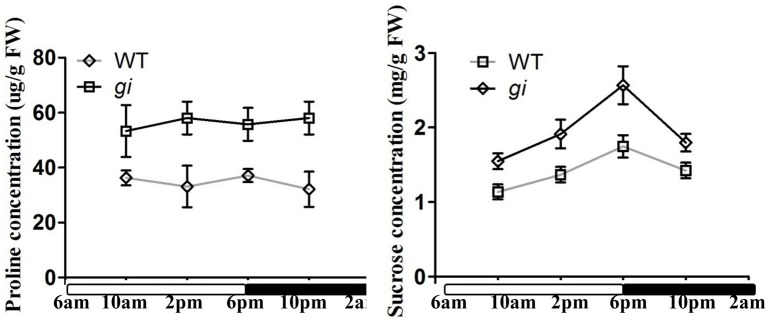
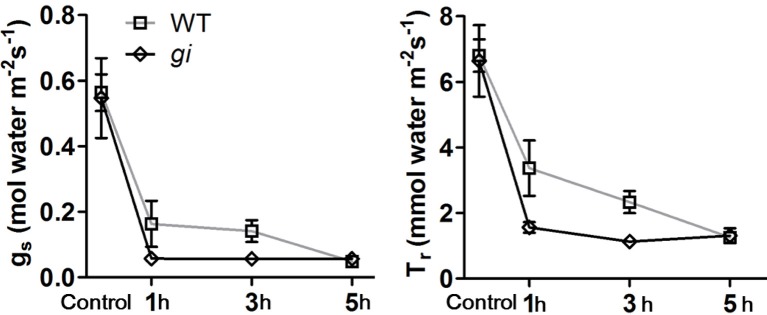
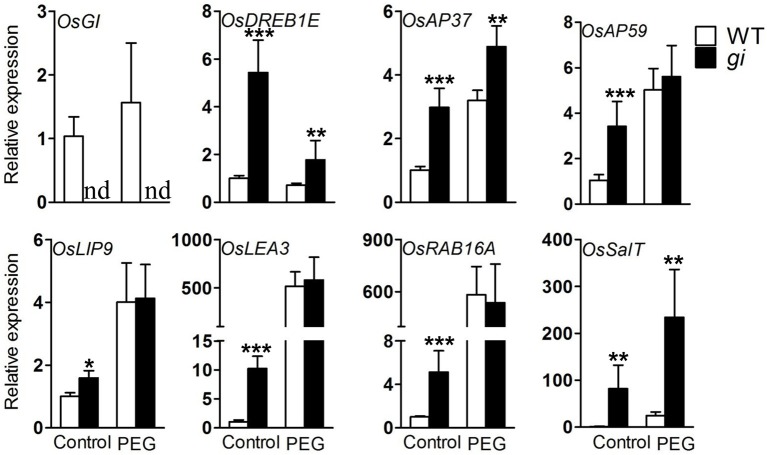
Water deficit is one of the most important environmental stresses limiting plant growth and crop yield. While the identification of many key factors involved in the plant water deficit response has greatly increased our knowledge about the regulation system, the mechanisms underlying dehydration tolerance in plants are still not well understood. In our current study, we investigated the roles of the key flowering time regulator, OsGIGANTEA (OsGI), in the osmotic stress tolerance in rice. Results showed that mutation of OsGI conferred tolerance to osmotic stress generated by polyethylene glycol (PEG), increased proline and sucrose contents, and accelerated stomata movement. In addition, qRT-PCR and microarray analysis revealed that the transcript abundance of some osmotic stress response genes, such as OsDREB1E, OsAP37, OsAP59, OsLIP9, OsLEA3, OsRAB16A, and OsSalT, was significantly higher in osgi than in WT plants, suggesting that OsGI might be a negative regulator in the osmotic stress response in rice.
水分亏缺是限制植物生长和作物产量的最重要环境胁迫之一。虽然对参与植物水分亏缺响应的许多关键因素的鉴定极大地增加了我们对调控系统的了解,但植物耐旱性的潜在机制仍未得到很好的理解。在我们目前的研究中,我们研究了关键开花时间调节因子OsGIGANTEA(OsGI)在水稻渗透胁迫耐受性中的作用。结果表明,OsGI的突变赋予了对聚乙二醇(PEG)产生的渗透胁迫的耐受性,增加了脯氨酸和蔗糖含量,并加速了气孔运动。此外,qRT-PCR和微阵列分析表明,一些渗透胁迫响应基因,如OsDREB1E、OsAP37、OsAP59、OsLIP9、OsLEA3、OsRAB16A和OsSalT,在osgi中的转录丰度显著高于野生型植物,这表明OsGI可能是水稻渗透胁迫响应中的负调节因子。