Cipolleschi Maria Grazia, Marzi Ilaria, Rovida Elisabetta, Dello Sbarba Persio
Department of Experimental and Clinical Biomedical Sciences "Mario Serio", Università degli Studi di Firenze , Florence , Italy.
Front Oncol. 2016 Apr 14;6:95. doi: 10.3389/fonc.2016.00095. eCollection 2016.
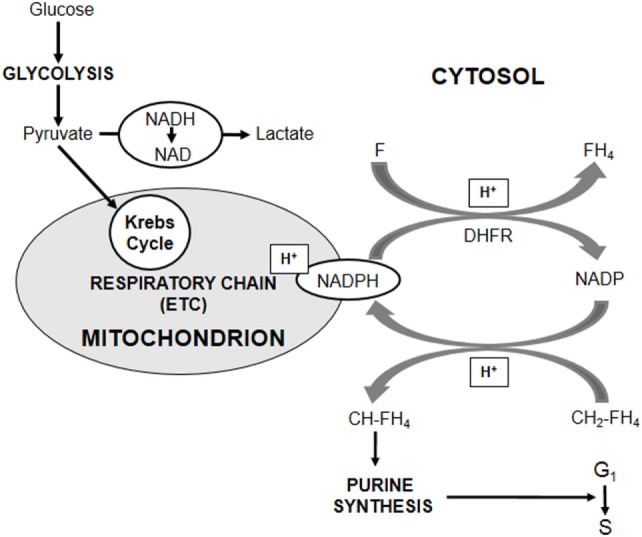
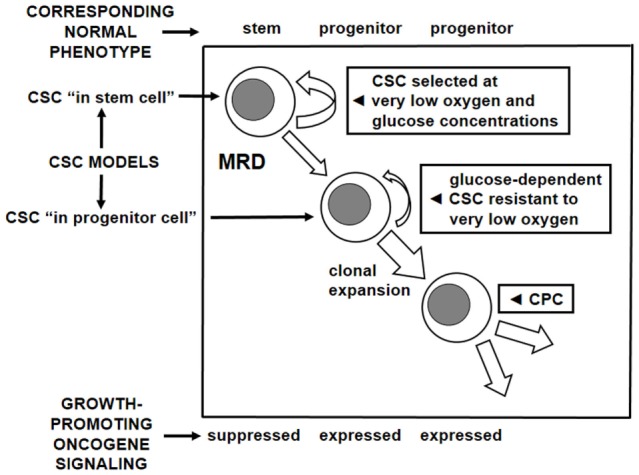
Low oxygen tension is a critical aspect of the stem cell niche where stem cells are long-term maintained. In "physiologically hypoxic" stem cell niches, low oxygen tension restrains the clonal expansion of stem cells without blocking their cycling, thereby contributing substantially to favor their self-renewal. The capacity of stem cells, hematopoietic stem cells in particular, to reside in low oxygen is likely due to their specific metabolic profile. A strong drive to the characterization of this profile emerges from the notion that cancer stem cells (CSC), like normal stem cells, most likely rely on metabolic cues for the balance between self-renewal/maintenance and clonal expansion/differentiation. Accordingly, CSC homing to low oxygen stem cell niches is the best candidate mechanism to sustain the so-called minimal residual disease. Thus, the metabolic profile of CSC impacts long-term cancer response to therapy. On that basis, strategies to target CSC are intensely sought as a means to eradicate neoplastic diseases. Our "metabolic" approach to this challenge was based on two different experimental models: (A) the Yoshida's ascites hepatoma AH130 cells, a highly homogeneous cancer cell population expressing stem cell features, used to identify, in CSC adapted to oxygen and/or nutrient shortage, metabolic features of potential therapeutic interest; (B) chronic myeloid leukemia, used to evaluate the impact of oxygen and/or nutrient shortage on the expression of an oncogenetic protein, the loss of which determines the refractoriness of CSC to oncogene-targeting therapies.
低氧张力是干细胞微环境的一个关键方面,干细胞在其中得以长期维持。在“生理性缺氧”的干细胞微环境中,低氧张力抑制干细胞的克隆扩增但不阻断其细胞周期,从而极大地有助于其自我更新。干细胞,尤其是造血干细胞,驻留在低氧环境中的能力可能归因于其特定的代谢特征。对这种特征进行表征的强烈驱动力源于这样一种观念,即癌症干细胞(CSC)与正常干细胞一样,很可能依赖代谢信号来维持自我更新/维持与克隆扩增/分化之间的平衡。因此,CSC归巢至低氧干细胞微环境是维持所谓微小残留病的最佳候选机制。因此,CSC的代谢特征影响癌症对治疗的长期反应。在此基础上,人们迫切寻求靶向CSC的策略,作为根除肿瘤疾病的一种手段。我们针对这一挑战的“代谢”方法基于两种不同的实验模型:(A)吉田腹水肝癌AH130细胞,这是一种高度同质的癌细胞群体,表达干细胞特征,用于识别适应缺氧和/或营养缺乏的CSC中具有潜在治疗意义的代谢特征;(B)慢性粒细胞白血病,用于评估缺氧和/或营养缺乏对一种致癌蛋白表达的影响,该蛋白的缺失决定了CSC对靶向癌基因疗法的耐药性。