Wang Lizhi, Ding Yan, Wei Lai, Zhao Dewei, Wang Ruoyu, Zhang Yuewei, Gu Xuesong, Wang Zhiqiang
From the Department of Otolaryngology (LW, LW, ZW); The Institute for Translational Medicine, Affiliated Zhongshan Hospital of Dalian University, Dalian, China (YD, DZ, RW, YZ); Genomic Future, Inc, Lexington, MA (YD); and Beth Israel Deaconess Medical Center, Harvard Medical School, Boston, MA (XG).
Medicine (Baltimore). 2016 May;95(18):e3536. doi: 10.1097/MD.0000000000003536.
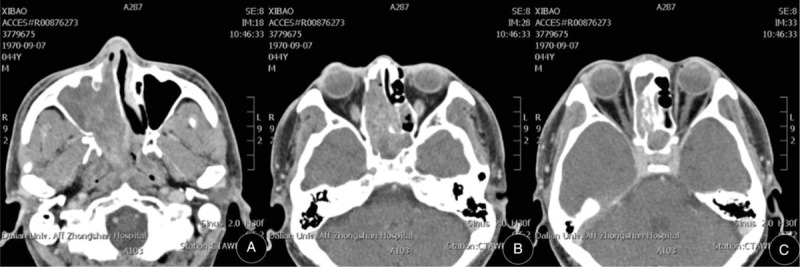
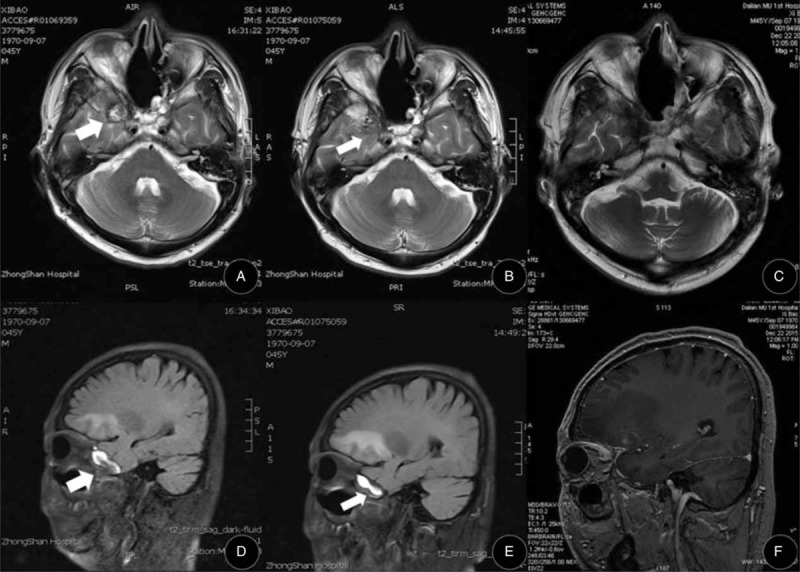
Olfactory neuroblastoma (ONB) is a rare cancer originating in the olfactory epithelium of the nasal vault. The recurrence rate of ONB is high, as the standard treatment of surgery followed by radiotherapy and/or chemotherapy is usually unsuccessful. The use of targeted therapy based on individual genomic variations after cancer relapse has not been reported. Here, we present the case of a 44-year-old man who was diagnosed with recurrent ONB and treated with a regimen developed using whole exome sequencing. Potential targets were first identified and then matched to appropriate drugs. Gene mutations in the genes encoding EGFR, FGFR2, KDR, and RET were discovered in the patient's tumor tissue by whole exome sequencing and the patient was treated with a combination of the targeted drugs cetuximab and sunitinib. Five days after treatment, enhancement magnetic resonance imaging showed a 65% reduction in tumor size, and the Visual analog scale headache scores went down to 2/10 from 10/10. Repeat imaging at 1 month showed a complete response.This study represents the first demonstration of an effective personalized treatment of ONB by targeted drugs, and sheds light on how precision medicine can be used to treat recurrent ONB that fails to respond to routine tumor resection, radiotherapy, and/or chemotherapy.
嗅神经母细胞瘤(ONB)是一种起源于鼻腔顶部嗅上皮的罕见癌症。ONB的复发率很高,因为手术 followed by放疗和/或化疗的标准治疗通常不成功。癌症复发后基于个体基因组变异的靶向治疗的应用尚未见报道。在此,我们报告一例44岁男性患者,他被诊断为复发性ONB,并接受了使用全外显子测序制定的治疗方案。首先确定潜在靶点,然后与合适的药物匹配。通过全外显子测序在患者肿瘤组织中发现了编码EGFR、FGFR2、KDR和RET的基因突变,该患者接受了靶向药物西妥昔单抗和舒尼替尼的联合治疗。治疗五天后,增强磁共振成像显示肿瘤大小缩小了65%,视觉模拟评分头痛分数从10/10降至2/10。1个月后的重复成像显示完全缓解。本研究首次证明了靶向药物对ONB进行有效个性化治疗,并阐明了精准医学如何用于治疗对常规肿瘤切除、放疗和/或化疗无反应的复发性ONB。