Sciani Juliana Mozer, Emerenciano Andrews Krupinski, Cunha da Silva José Roberto Machado, Pimenta Daniel Carvalho
Laboratory of Biochemistry and Biophysics, Butantan Institute, Av. Vital Brasil, 1500, São Paulo, SP CEP 05503-900 Brazil.
Laboratory of Evolutionary Histophysiology, Department of Cell and Developmental Biology, Institute of Biomedical Sciences, University of São Paulo (USP), São Paulo, SP Brazil.
J Venom Anim Toxins Incl Trop Dis. 2016 May 4;22:17. doi: 10.1186/s40409-016-0071-x. eCollection 2016.
Sea urchins can be found throughout the Brazilian coast and are reported to be one of the major causes of marine accidents on the shoreline. Although not lethal, these accidents are reported to be extremely painful. In order to understand the toxinology of the Brazilian urchins, a peptidomic approach was performed aiming to characterize the naturally occurring peptides in both the coelomic fluid and the spine.
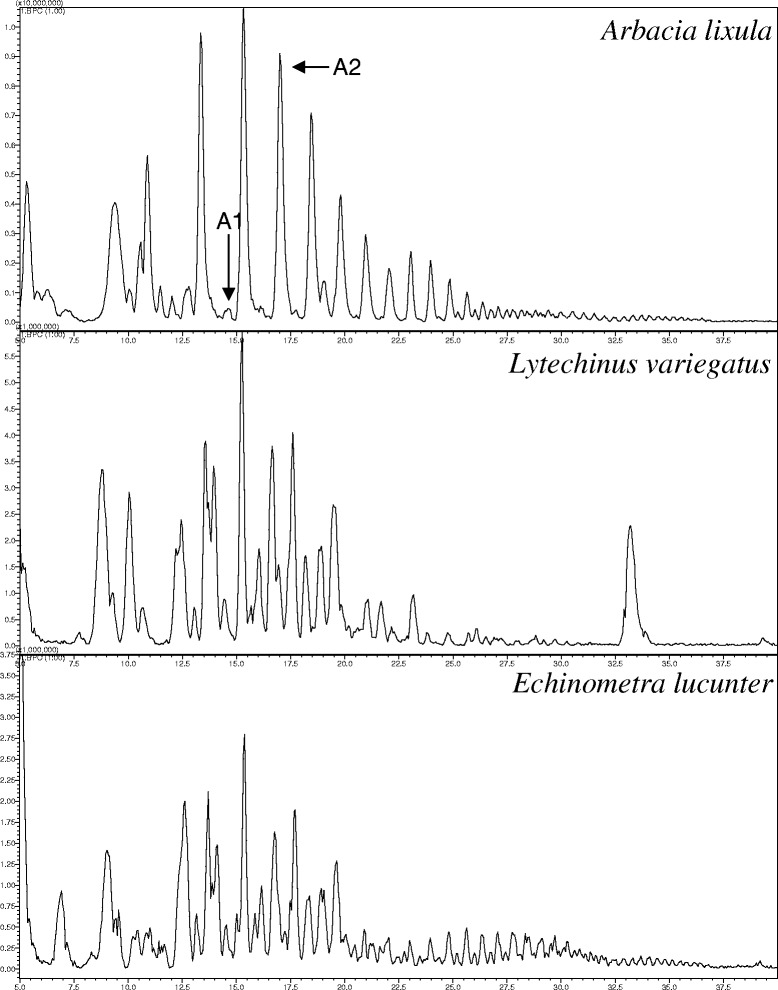
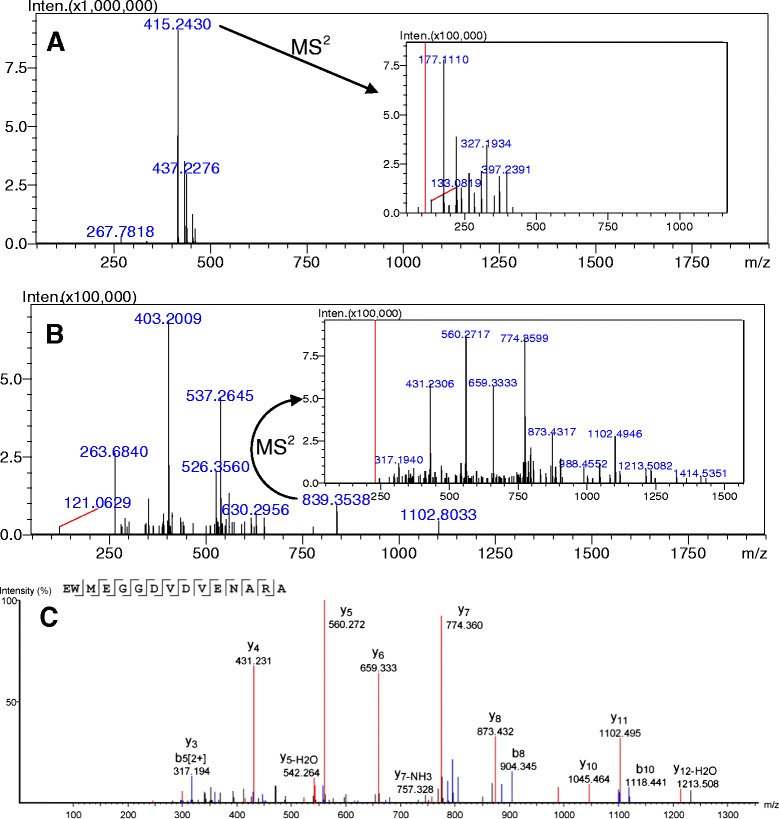
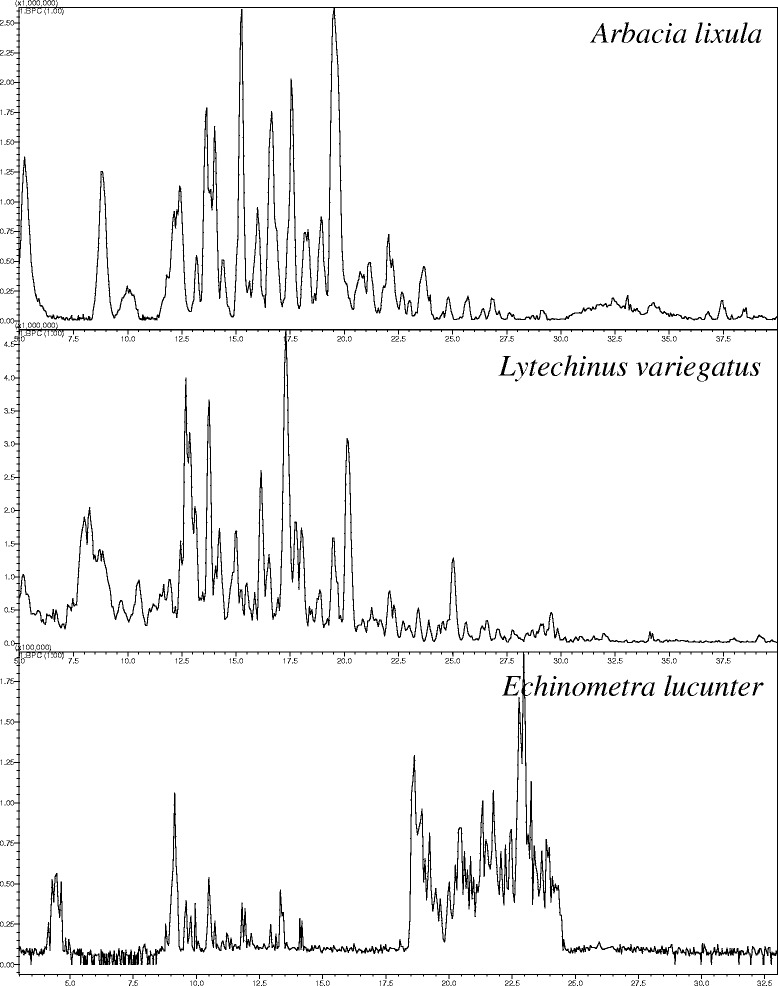
Animals were collected without gender distinction and samples of the coelomic fluid and spines extracted were analyzed by RP-HPLC and mass spectrometry for peptide de novo sequencing.
Several peptides were identified either in the coelomic fluid or the spine extract (except for E. lucunter). The peptide sequences were aligned with public deposited sequences and possible functions were inferred. Moreover, some peptides can be cryptides, since their sequences were identified within functional proteins, for example thymosin from Strongylocentrotus purpuratus.
Although preliminary, the peptidomic approach presented here reports, for the first time, the abundance of novel biological molecules derived from these animals. The discovery of such molecules may be of potential biotechnological application, as described for other organisms; nevertheless, further studies are required.
海胆在巴西海岸随处可见,据报道是海岸线上海洋事故的主要原因之一。尽管这些事故并不致命,但据报道会极其疼痛。为了了解巴西海胆的毒素学,采用了肽组学方法,旨在鉴定体腔液和刺中天然存在的肽。
无性别区分地收集动物,对提取的体腔液和刺样本进行反相高效液相色谱(RP-HPLC)和质谱分析,用于肽的从头测序。
在体腔液或刺提取物中鉴定出了几种肽(除了E. lucunter)。将肽序列与公共数据库中存储的序列进行比对,并推断其可能的功能。此外,一些肽可能是隐藏肽,因为它们的序列是在功能蛋白中鉴定出来的,例如紫球海胆的胸腺素。
尽管这里介绍的肽组学方法是初步的,但首次报告了这些动物来源的大量新型生物分子。正如对其他生物的描述那样,这些分子的发现可能具有潜在的生物技术应用;然而,还需要进一步研究。