Lombardo Giusy, Dentelli Patrizia, Togliatto Gabriele, Rosso Arturo, Gili Maddalena, Gallo Sara, Deregibus Maria Chiara, Camussi Giovanni, Brizzi Maria Felice
Department of Medical Sciences, University of Turin, Italy.
Sci Rep. 2016 May 9;6:25689. doi: 10.1038/srep25689.
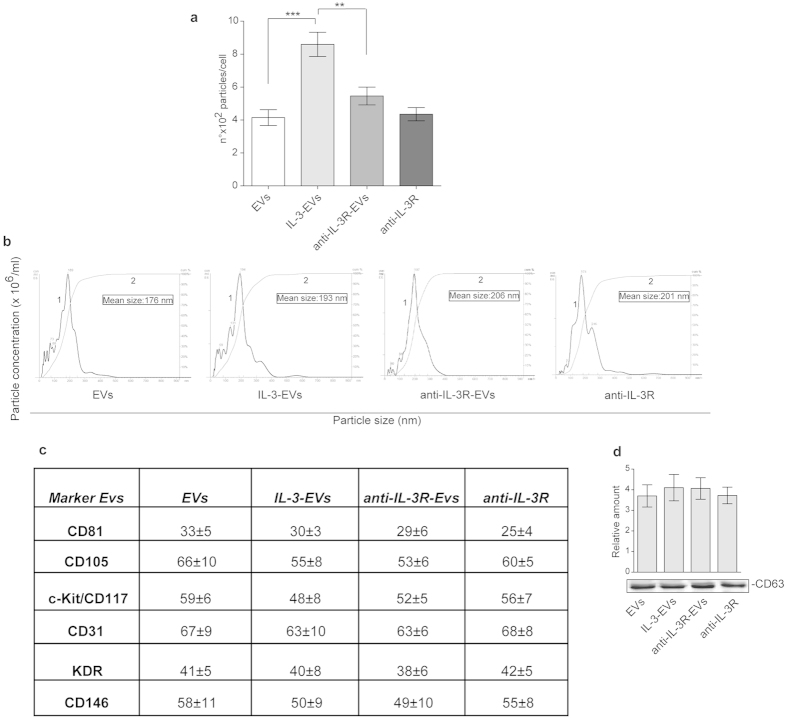
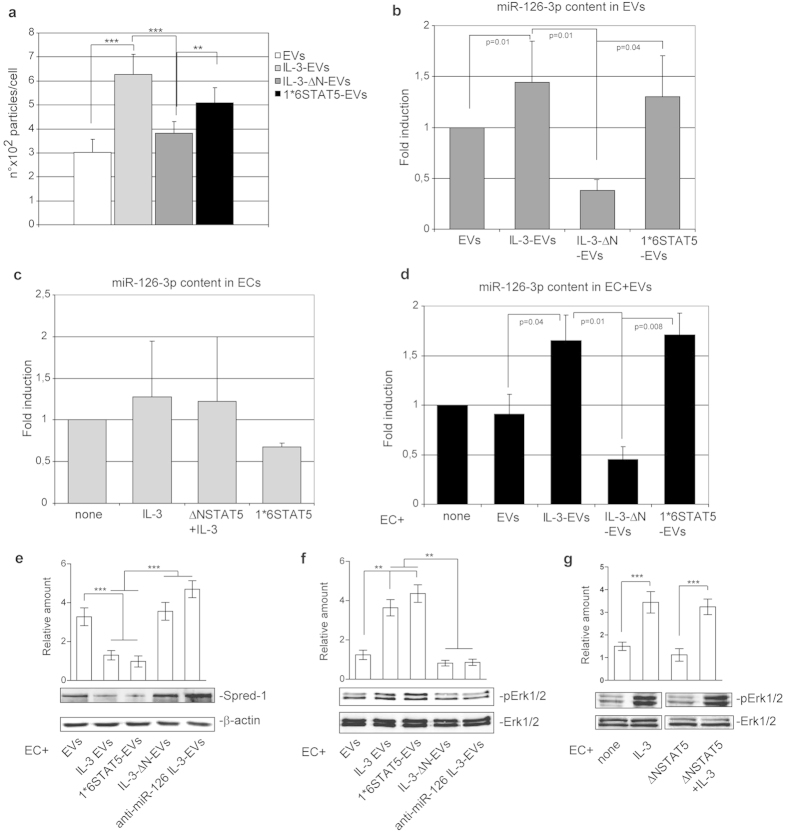
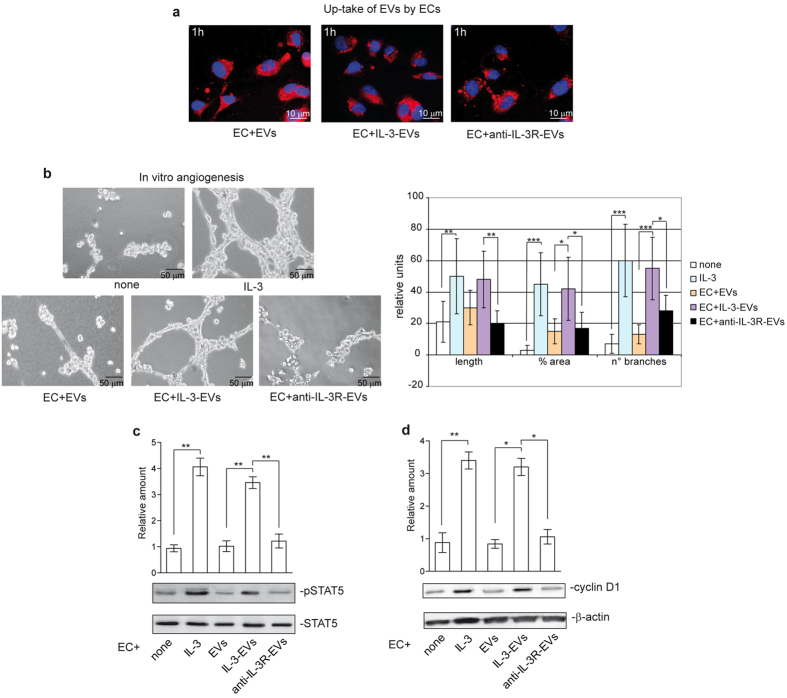
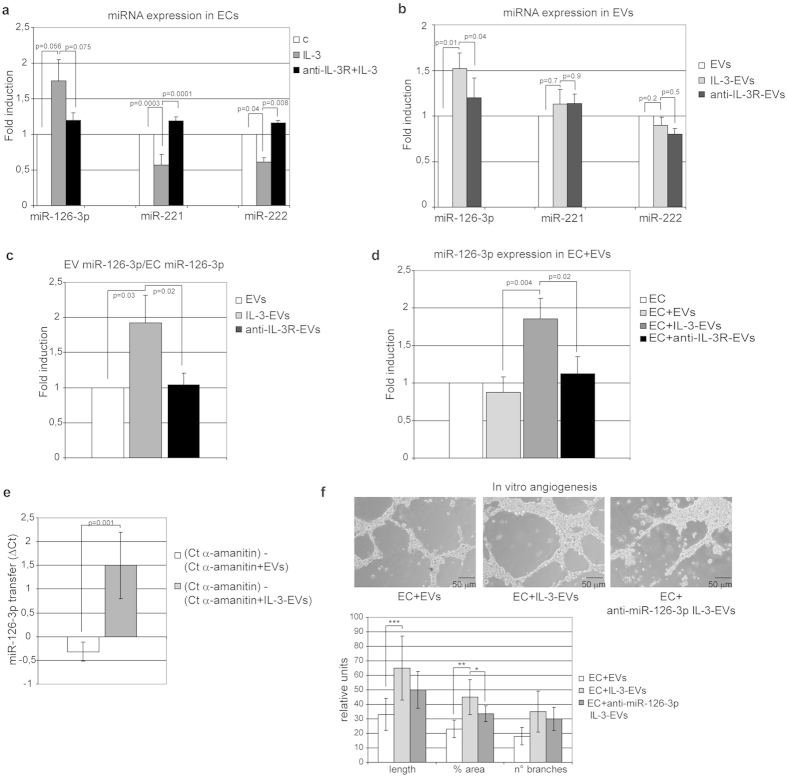
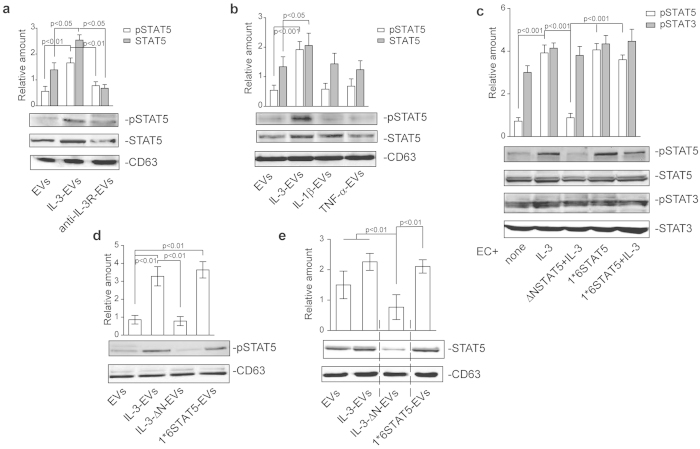
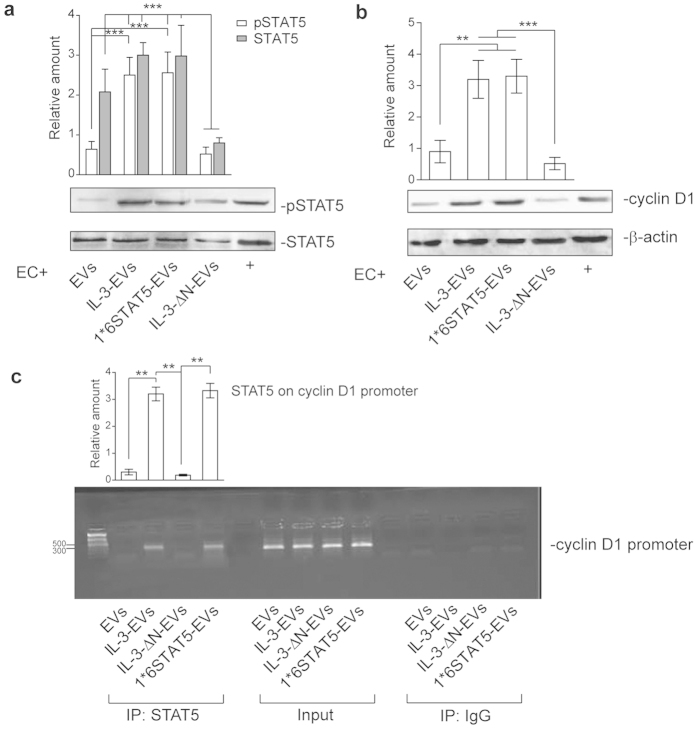
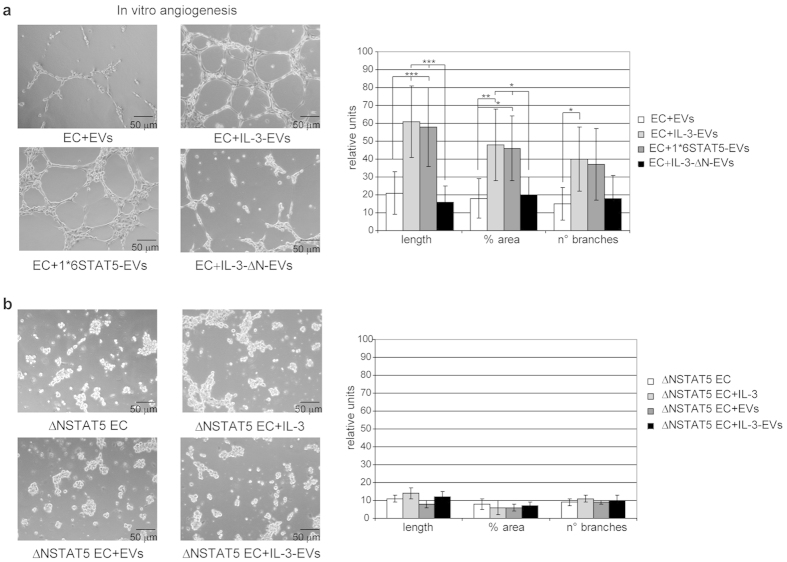
Soluble factors and cell-derived extracellular vesicles (EVs) control vascular cell fate during inflammation. The present study investigates the impact of Interleukin 3 (IL-3) on EV release by endothelial cells (ECs), the mechanisms involved in EV release and paracrine actions. We found that IL-3 increases EV release, which is prevented by IL-3Ralpha blockade. EVs released upon IL-3 stimulation were able to induce pro-angiogenic signals as shown by chromatin immunoprecipitation (ChIP) assay performed on the promoter region of cyclin D1 and tridimensional tube-like structure formation. We herein demonstrate that these effects rely on the transfer of miR-126-3p, pre-miR-126 and, more importantly, of activated signal transduction and activator of transcription 5 (pSTAT5) from IL-3-EV cargo into recipient ECs. We show, using the dominant negative form (ΔN)STAT5 and an activated STAT5 (1*6STAT5) constructs, that STAT5 drives IL-3-mediated EV release, miR-126-3p and pSTAT5 content. Finally, using EVs recovered from ΔNSTAT5 expressing ECs, we provide evidence that miR-126-3p and pSTAT5 trafficking is relevant for IL-3-mediated paracrine pro-angiogenic signals. These results indicate that IL-3 regulates EC-EV release, cargo and IL-3 angiogenic paracrine action via STAT5. Moreover, these results provide evidence that EC-derived IL-3-EVs can serve as pro-angiogenic clinical delivery wound healing devices.
可溶性因子和细胞衍生的细胞外囊泡(EVs)在炎症过程中控制血管细胞命运。本研究调查了白细胞介素3(IL-3)对内皮细胞(ECs)释放EVs的影响、EVs释放所涉及的机制以及旁分泌作用。我们发现IL-3增加了EVs的释放,而IL-3Rα阻断可阻止这种释放。通过对细胞周期蛋白D1启动子区域进行染色质免疫沉淀(ChIP)分析和三维管状结构形成显示,IL-3刺激后释放的EVs能够诱导促血管生成信号。我们在此证明,这些作用依赖于miR-126-3p、前体miR-126,更重要的是,依赖于激活的信号转导和转录激活因子5(pSTAT5)从IL-3-EV货物转移到受体ECs中。我们使用显性负性形式(ΔN)STAT5和激活的STAT5(1*6STAT5)构建体表明,STAT5驱动IL-3介导的EVs释放、miR-126-3p和pSTAT5含量。最后,使用从表达ΔNSTAT5的ECs中回收的EVs,我们提供证据表明miR-126-3p和pSTAT5的运输与IL-3介导的旁分泌促血管生成信号相关。这些结果表明,IL-3通过STAT5调节EC-EV释放、货物和IL-3血管生成旁分泌作用。此外,这些结果提供证据表明,EC衍生的IL-3-EVs可作为促血管生成的临床递送伤口愈合装置。