Wang Yiqin, Zhou Xianrong, Xu Midie, Weng Weiwei, Zhang Qiongyan, Yang Yusi, Wei Ping, Du Xiang
Department of Pathology, Obstetrics and Gynecology Hospital of Fudan University, Shanghai 200044, China.
Department of Pathology, Fudan University Shanghai Cancer Center, Shanghai 200032, China.
Oncotarget. 2016 Jun 14;7(24):36681-36697. doi: 10.18632/oncotarget.9160.
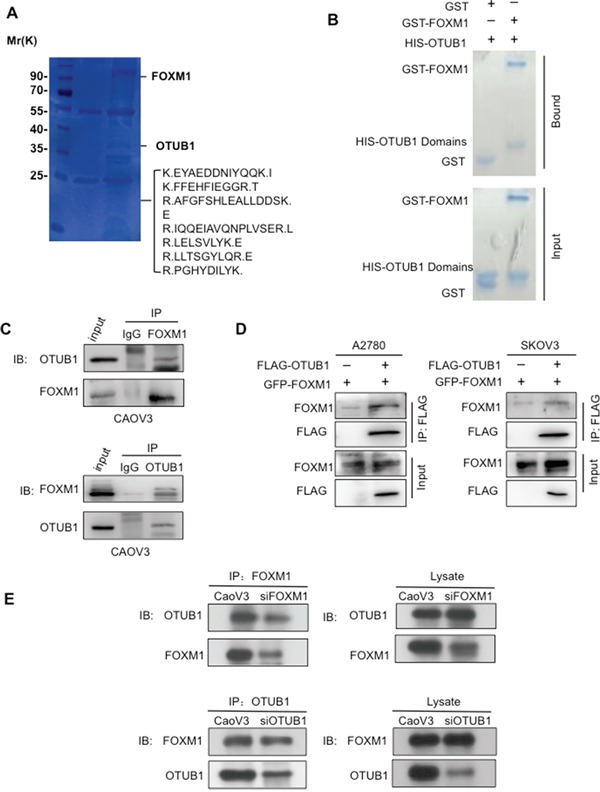
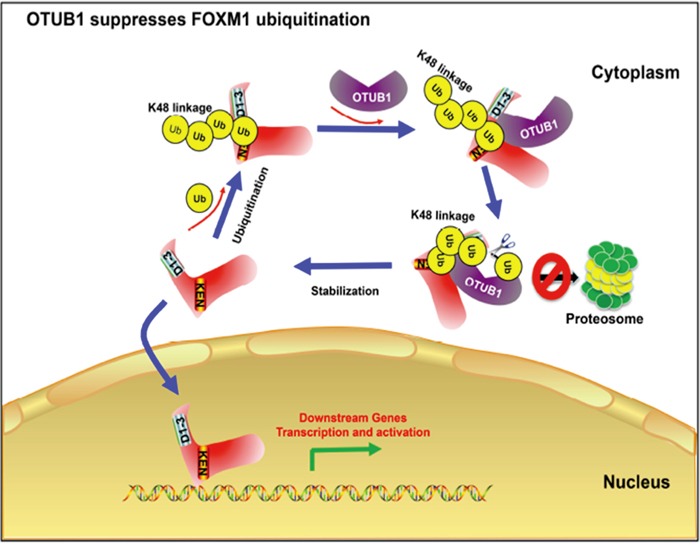
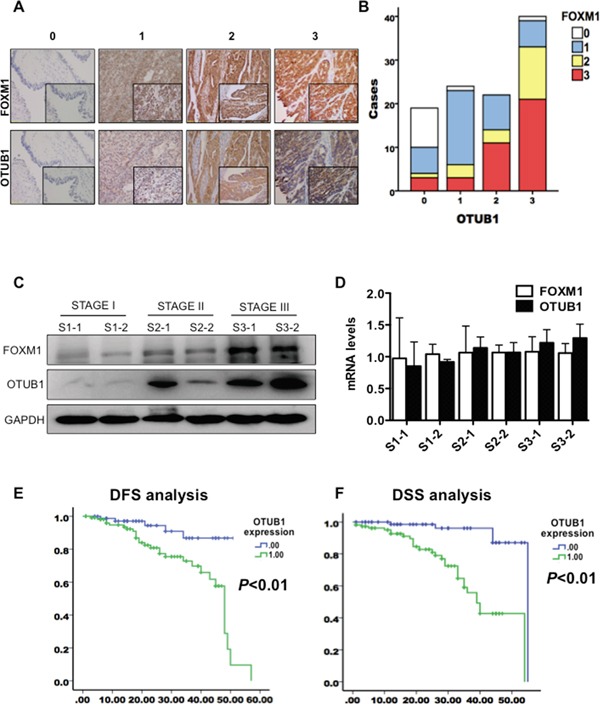
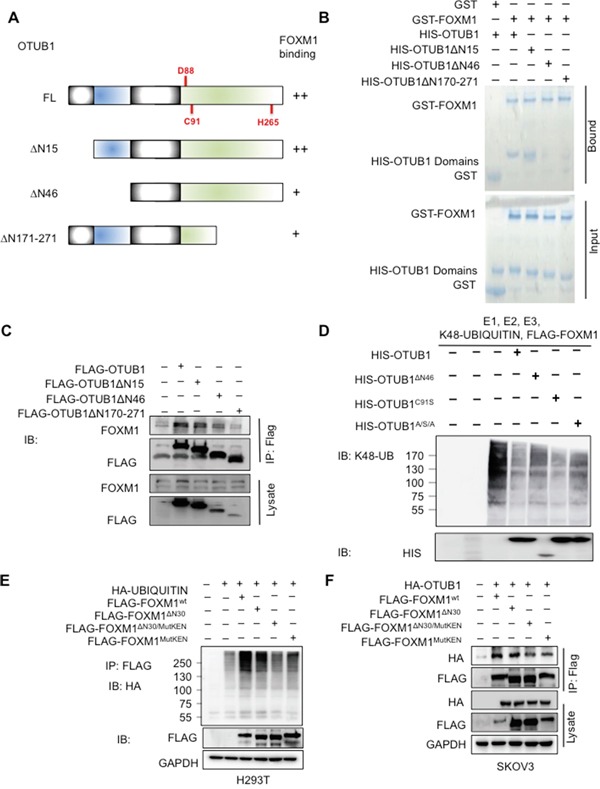
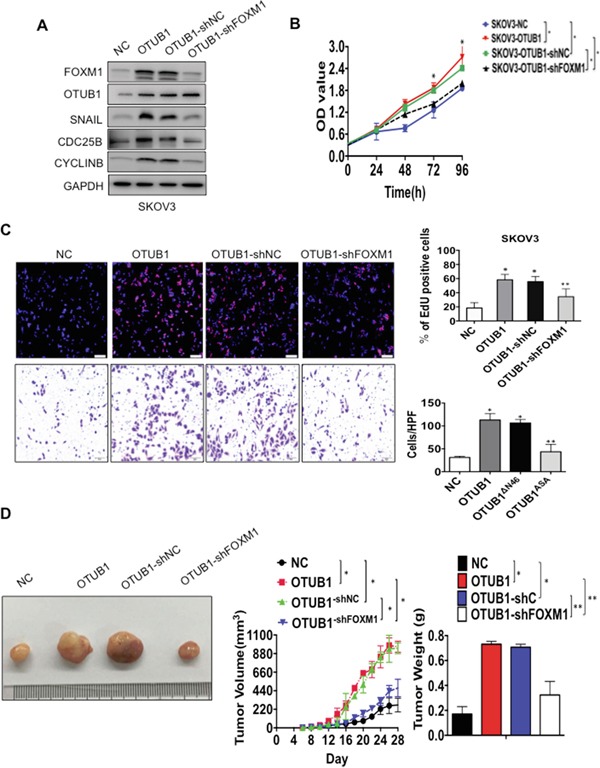
Ubiquitination is essential for regulation of cell physiology, protein stability, and signal transduction [1]. Its dysregulation is an important factor in many diseases, including cancer. We explored the potential OTUB1-catalyzed deubiquitination of FOXM1, a transcription factor linked to carcinogenesis, and the biological consequence of that interaction in ovarian cancer. We found that FOXM1 is ubiquitinated by multiple polyUb chains and targeted for proteosomal degradation in a reaction dependent on its ubiquitination-required KEN box. Additionally, the OTUB1 N-terminus and catalytic triad bind to FOXM1, specifically catalyzing cleavage of the K48-specific ubiquitin linkage from FOXM1. Moreover, OTUB1-FOXM1 interaction drives tumor progression and OTUB1 expression predicts a poor prognosis in ovarian cancer. Our study suggests that inhibiting OTUB1-FOXM1 interaction is a potential new avenue for ovarian cancer therapy.
泛素化对于细胞生理学、蛋白质稳定性和信号转导的调节至关重要[1]。其失调是包括癌症在内的许多疾病的重要因素。我们探究了OTUB1催化的、与致癌作用相关的转录因子FOXM1的去泛素化作用,以及该相互作用在卵巢癌中的生物学后果。我们发现,FOXM1被多个多聚泛素链泛素化,并在依赖于其泛素化所需KEN框的反应中被靶向蛋白酶体降解。此外,OTUB1的N末端和催化三联体与FOXM1结合,特异性催化从FOXM1上切割K48特异性泛素连接。而且,OTUB1-FOXM1相互作用驱动肿瘤进展,OTUB1表达预示卵巢癌预后不良。我们的研究表明,抑制OTUB1-FOXM1相互作用是卵巢癌治疗的一个潜在新途径。