Aubdool Aisah A, Kodji Xenia, Abdul-Kader Nayaab, Heads Richard, Fernandes Elizabeth S, Bevan Stuart, Brain Susan D
Cardiovascular Division, BHF Centre of Excellence, King's College London, London, UK.
Programa de Pós-graduação, Universidade CEUMA, São Luís, MA, Brazil.
Br J Pharmacol. 2016 Aug;173(15):2419-33. doi: 10.1111/bph.13519. Epub 2016 Jun 21.
Transient receptor potential ankyrin-1 (TRPA1) activation is known to mediate neurogenic vasodilatation. We investigated the mechanisms involved in TRPA1-mediated peripheral vasodilatation in vivo using the TRPA1 agonist cinnamaldehyde.
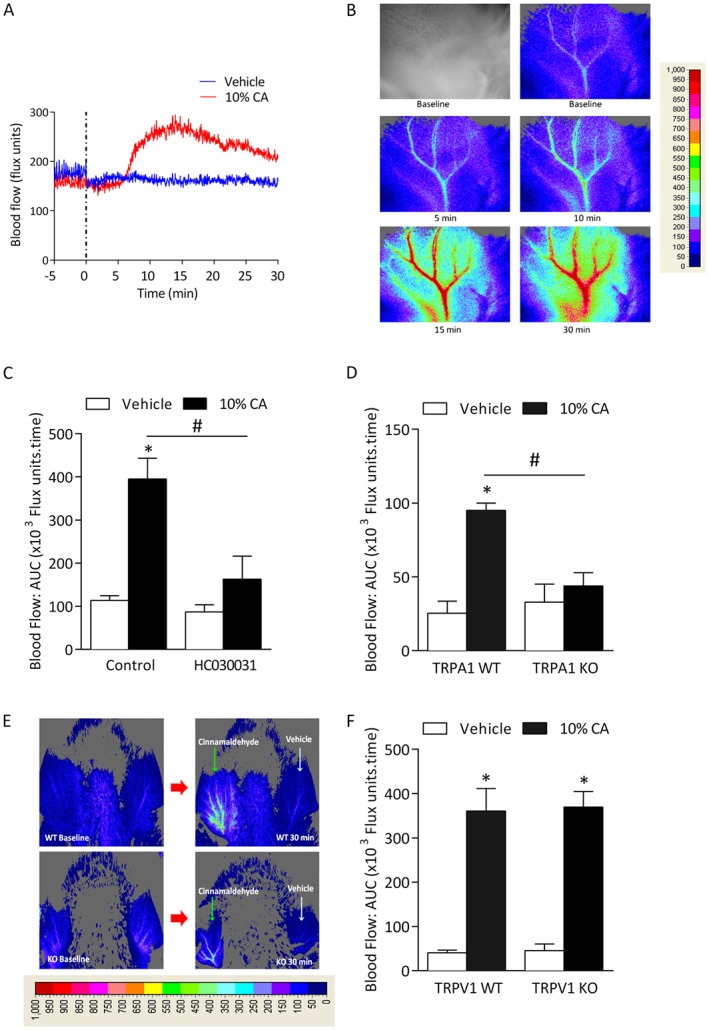
Changes in vascular ear blood flow were measured in anaesthetized mice using laser Doppler flowmetry.
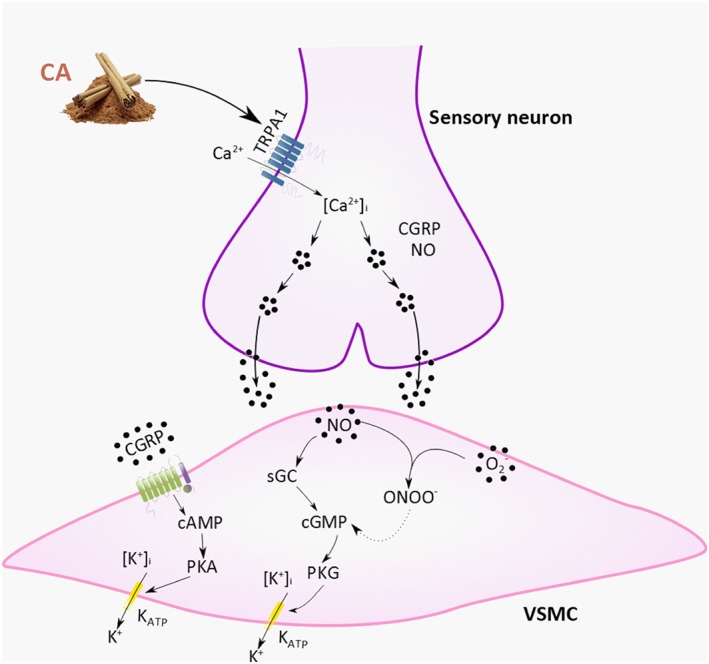
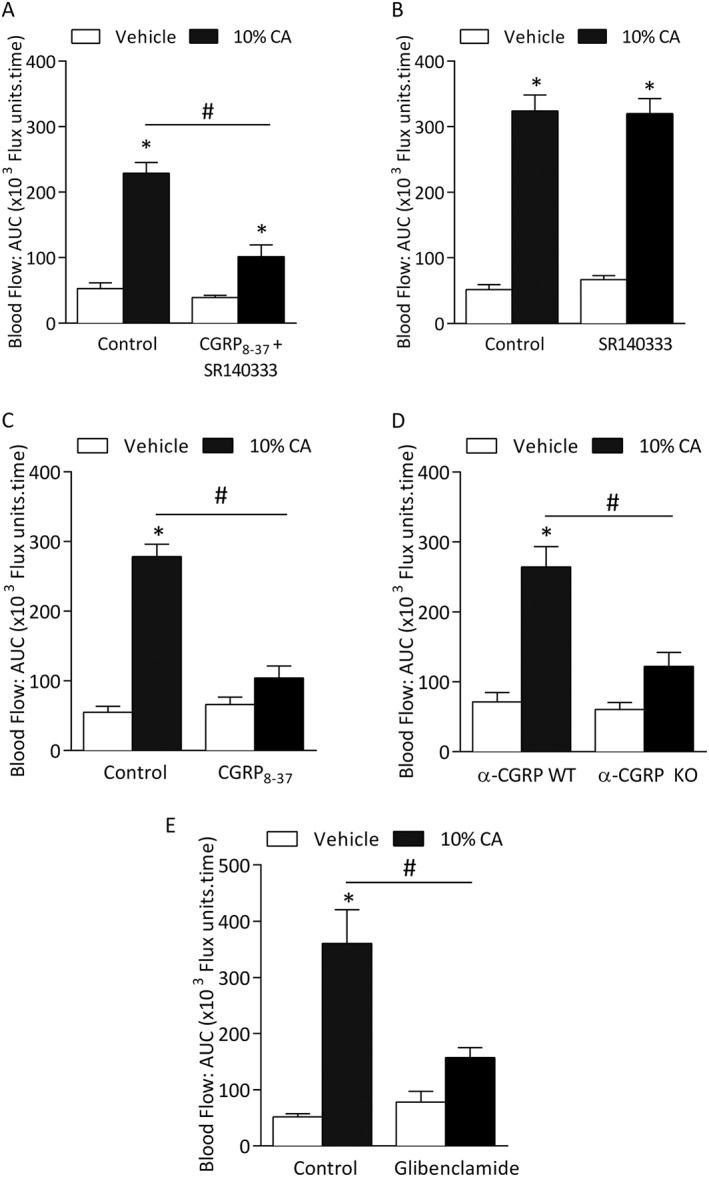
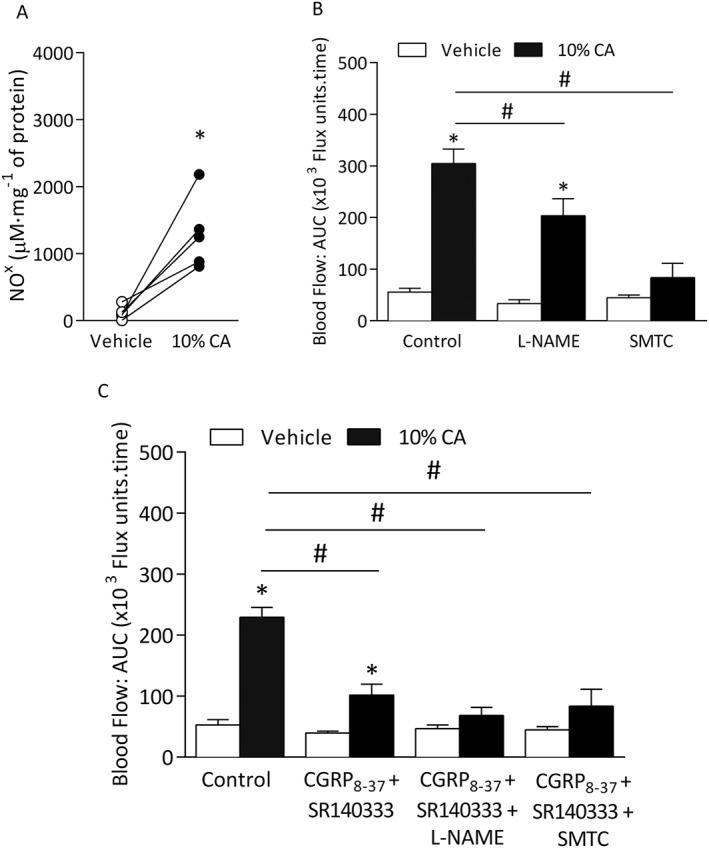
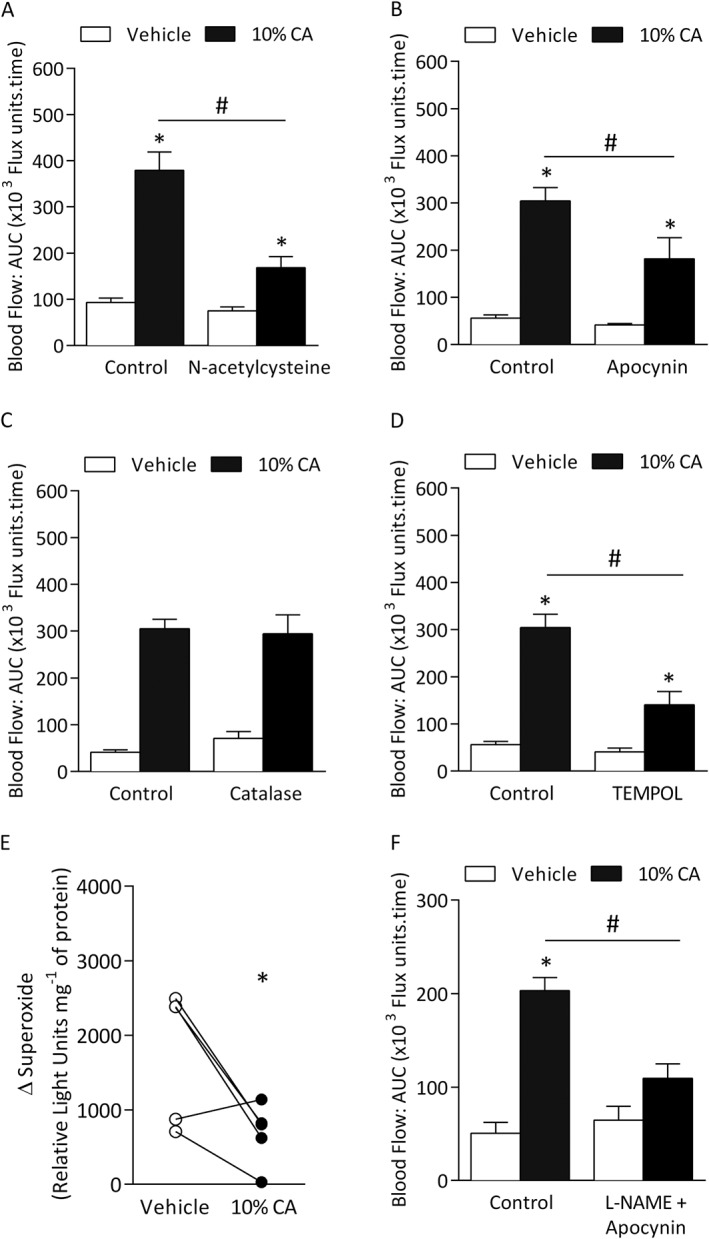
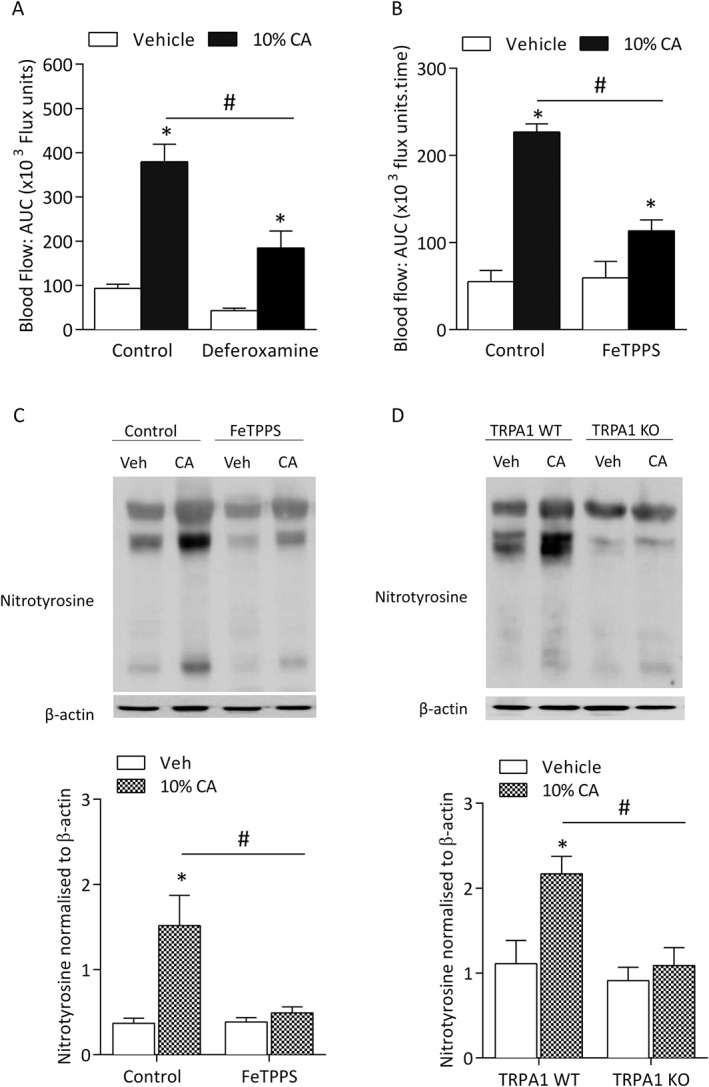
Topical application of cinnamaldehyde to the mouse ear caused a significant increase in blood flow in the skin of anaesthetized wild-type (WT) mice but not in TRPA1 knockout (KO) mice. Cinnamaldehyde-induced vasodilatation was inhibited by the pharmacological blockade of the potent microvascular vasodilator neuropeptide CGRP and neuronal NOS-derived NO pathways. Cinnamaldehyde-mediated vasodilatation was significantly reduced by treatment with reactive oxygen nitrogen species (RONS) scavenger such as catalase and the SOD mimetic TEMPOL, supporting a role of RONS in the downstream vasodilator TRPA1-mediated response. Co-treatment with a non-selective NOS inhibitor L-NAME and antioxidant apocynin further inhibited the TRPA1-mediated vasodilatation. Cinnamaldehyde treatment induced the generation of peroxynitrite that was blocked by the peroxynitrite scavenger FeTPPS and shown to be dependent on TRPA1, as reflected by an increase in protein tyrosine nitration in the skin of WT, but not in TRPA1 KO mice.
This study provides in vivo evidence that TRPA1-induced vasodilatation mediated by cinnamaldehyde requires neuronal NOS-derived NO, in addition to the traditional neuropeptide component. A novel role of peroxynitrite is revealed, which is generated downstream of TRPA1 activation by cinnamaldehyde. This mechanistic pathway underlying TRPA1-mediated vasodilatation may be important in understanding the role of TRPA1 in pathophysiological situations.
已知瞬时受体电位锚蛋白1(TRPA1)激活可介导神经源性血管舒张。我们使用TRPA1激动剂肉桂醛研究了体内TRPA1介导的外周血管舒张所涉及的机制。
在麻醉的小鼠中使用激光多普勒血流仪测量耳部血管血流变化。
将肉桂醛局部应用于小鼠耳部可使麻醉的野生型(WT)小鼠皮肤中的血流显著增加,但在TRPA1基因敲除(KO)小鼠中则无此现象。强效微血管舒张剂神经肽降钙素基因相关肽(CGRP)和神经元型一氧化氮合酶(nNOS)衍生的一氧化氮(NO)途径的药理学阻断可抑制肉桂醛诱导的血管舒张。用活性氧氮物种(RONS)清除剂如过氧化氢酶和超氧化物歧化酶模拟物TEMPOL处理可显著降低肉桂醛介导的血管舒张,这支持了RONS在下游血管舒张剂TRPA1介导的反应中的作用。用非选择性一氧化氮合酶抑制剂L-NAME和抗氧化剂白杨素共同处理可进一步抑制TRPA1介导的血管舒张。肉桂醛处理可诱导过氧亚硝酸盐的产生,过氧亚硝酸盐清除剂FeTPPS可阻断该过程,并且该过程显示依赖于TRPA1,这表现为野生型小鼠皮肤中蛋白质酪氨酸硝化增加,而TRPA1基因敲除小鼠皮肤中则无此现象。
本研究提供了体内证据,表明肉桂醛介导的TRPA1诱导的血管舒张除了传统的神经肽成分外,还需要神经元型一氧化氮合酶衍生的一氧化氮。揭示了过氧亚硝酸盐的新作用,其在肉桂醛激活TRPA1的下游产生。TRPA1介导的血管舒张的这一机制途径可能对理解TRPA1在病理生理情况下的作用很重要。