Choksawangkarn Waeowalee, Graham Lauren M, Burke Meghan, Lee Sang Bok, Ostrand-Rosenberg Suzanne, Fenselau Catherine, Edwards Nathan J
Department of Chemistry and Biochemistry, University of Maryland, College Park, MD, USA.
Department of Biochemistry, Faculty of Science, Burapha University, Chonburi, Thailand.
Proteomics. 2016 Jul;16(13):1881-8. doi: 10.1002/pmic.201500102.
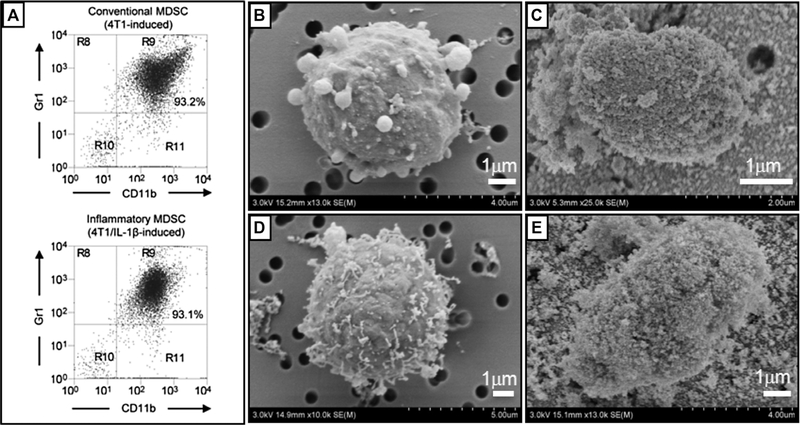
A better understanding of molecular signaling between myeloid-derived suppressor cells (MDSC), tumor cells, T-cells, and inflammatory mediators is expected to contribute to more effective cancer immunotherapies. We focus on plasma membrane associated proteins, which are critical in signaling and intercellular communication, and investigate changes in their abundance in MDSC of tumor-bearing mice subject to heightened versus basal inflammatory conditions. Using spectral counting, we observed statistically significant differential abundances for 35 proteins associated with the plasma membrane, most notably the pro-inflammatory proteins S100A8 and S100A9 which induce MDSC and promote their migration. We also tested whether the peptides associated with canonical pathways showed a statistically significant increase or decrease subject to heightened versus basal inflammatory conditions. Collectively, these studies used bottom-up proteomic analysis to identify plasma membrane associated pro-inflammatory molecules and pathways that drive MDSC accumulation, migration, and suppressive potency.
对髓系来源的抑制性细胞(MDSC)、肿瘤细胞、T细胞和炎症介质之间分子信号传导的更好理解,有望为更有效的癌症免疫疗法做出贡献。我们聚焦于质膜相关蛋白,其在信号传导和细胞间通讯中至关重要,并研究在炎症加剧与基础炎症条件下荷瘤小鼠MDSC中其丰度的变化。使用光谱计数法,我们观察到35种质膜相关蛋白存在统计学上显著的差异丰度,最显著的是促炎蛋白S100A8和S100A9,它们可诱导MDSC并促进其迁移。我们还测试了与经典途径相关的肽在炎症加剧与基础炎症条件下是否显示出统计学上显著的增加或减少。总体而言,这些研究采用自下而上的蛋白质组学分析来鉴定驱动MDSC积累、迁移和抑制能力的质膜相关促炎分子和途径。