Czapiewski Rafal, Robson Michael I, Schirmer Eric C
The Wellcome Trust Centre for Cell Biology and Institute of Cell Biology, University of Edinburgh Edinburgh, UK.
Front Genet. 2016 May 6;7:82. doi: 10.3389/fgene.2016.00082. eCollection 2016.
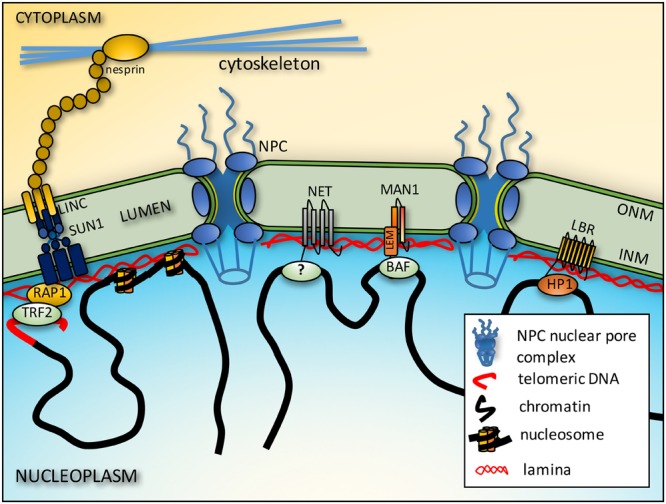
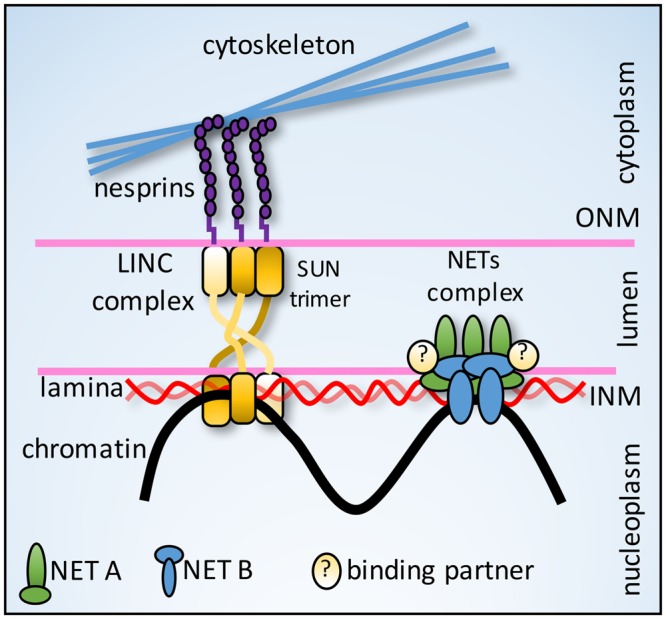
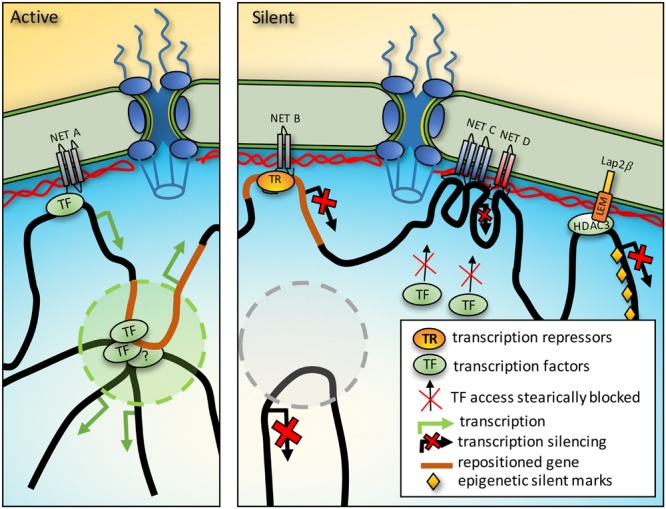
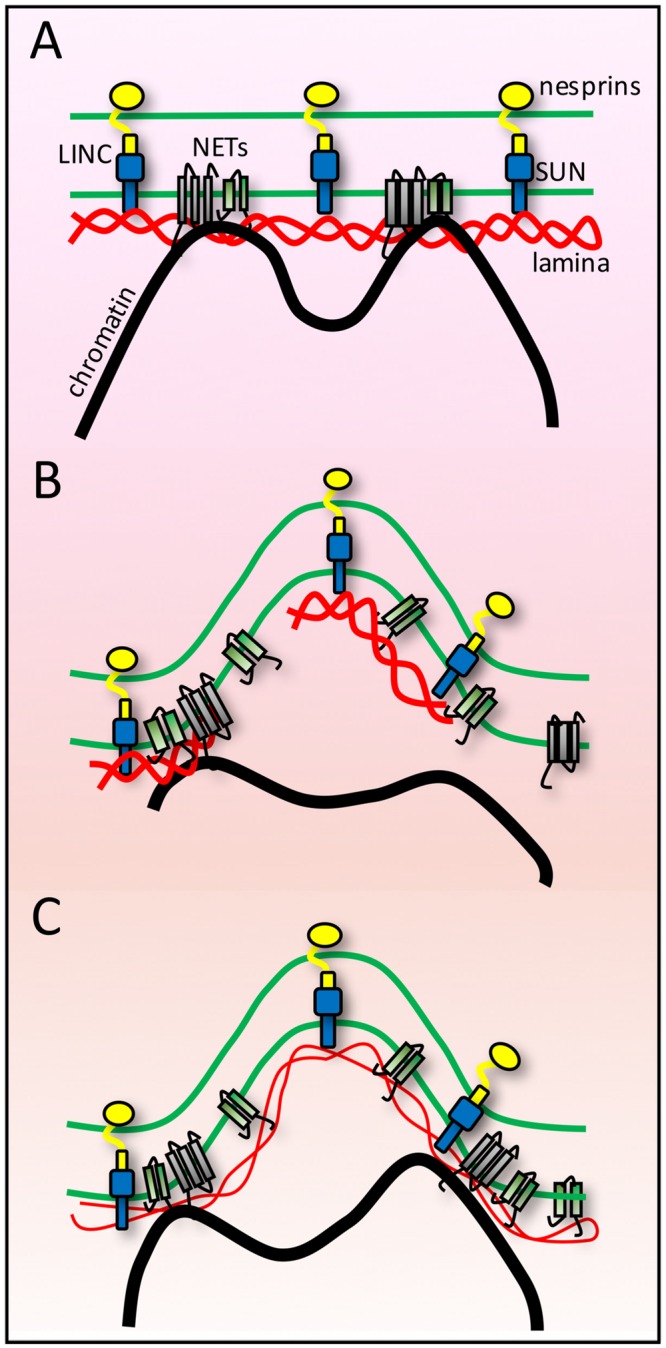
It is well established that the nuclear envelope has many distinct direct connections to chromatin that contribute to genome organization. The functional consequences of genome organization on gene regulation are less clear. Even less understood is how interactions of lamins and nuclear envelope transmembrane proteins (NETs) with chromatin can produce anchoring tethers that can withstand the physical forces of and on the genome. Chromosomes are the largest molecules in the cell, making megadalton protein structures like the nuclear pore complexes and ribosomes seem small by comparison. Thus to withstand strong forces from chromosome dynamics an anchoring tether is likely to be much more complex than a single protein-protein or protein-DNA interaction. Here we will briefly review known NE-genome interactions that likely contribute to spatial genome organization, postulate in the context of experimental data how these anchoring tethers contribute to gene regulation, and posit several hypotheses for the physical nature of these tethers that need to be investigated experimentally. Significantly, disruption of these anchoring tethers and the subsequent consequences for gene regulation could explain how mutations in nuclear envelope proteins cause diseases ranging from muscular dystrophy to lipodystrophy to premature aging progeroid syndromes. The two favored hypotheses for nuclear envelope protein involvement in disease are (1) weakening nuclear and cellular mechanical stability, and (2) disrupting genome organization and gene regulation. Considerable experimental support has been obtained for both. The integration of both mechanical and gene expression defects in the disruption of anchoring tethers could provide a unifying hypothesis consistent with both.
核膜与染色质存在许多独特的直接连接,这一点已得到充分证实,这些连接有助于基因组的组织。基因组组织对基因调控的功能后果尚不清楚。人们对核纤层蛋白和核膜跨膜蛋白(NETs)与染色质的相互作用如何产生能够承受基因组内外物理力的锚定连接了解得更少。染色体是细胞中最大的分子,相比之下,像核孔复合体和核糖体这样的兆道尔顿蛋白质结构显得很小。因此,为了承受来自染色体动态变化的强大力量,锚定连接可能比单一的蛋白质 - 蛋白质或蛋白质 - DNA相互作用复杂得多。在这里,我们将简要回顾已知的可能有助于空间基因组组织的核膜 - 基因组相互作用,结合实验数据推测这些锚定连接如何对基因调控起作用,并提出几个关于这些连接物理性质的假说,需要通过实验进行研究。值得注意的是,这些锚定连接的破坏以及随后对基因调控的影响可以解释核膜蛋白突变如何导致从肌肉萎缩症到脂肪营养不良再到早衰类早衰综合征等一系列疾病。关于核膜蛋白参与疾病的两个备受青睐的假说是:(1)削弱核和细胞的机械稳定性,(2)破坏基因组组织和基因调控。这两种假说都获得了大量的实验支持。锚定连接破坏中机械和基因表达缺陷的整合可能提供一个与两者都一致的统一假说。